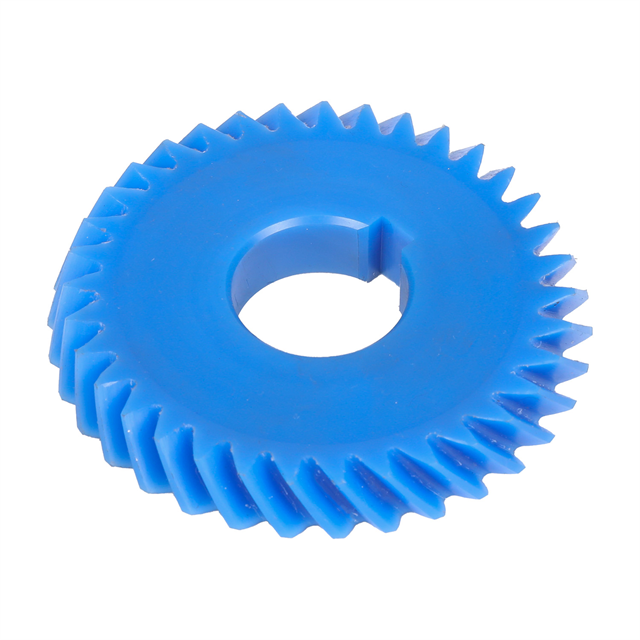
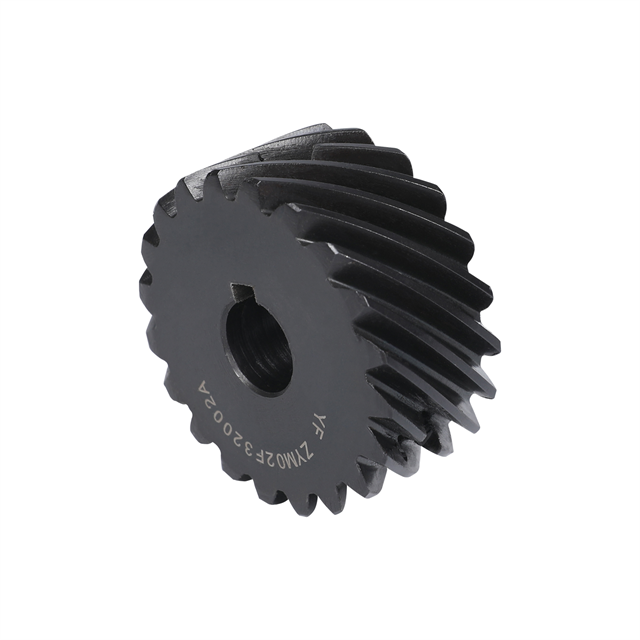
Plastic straight bevel gears are conical mechanical components designed to transmit rotational motion and power between intersecting shafts, typically at a 90-degree angle. Unlike spiral bevel gears with curved teeth, straight bevel gears use straight tapered teeth to provide a simple and efficient method for changing the direction of mechanical power transmission.
Manufactured from advanced engineering plastics such as POM (Polyacetal), Nylon (Polyamide), and Polyketone (PK), plastic straight bevel gears offer excellent advantages including lightweight construction, low friction, quiet operation, corrosion resistance, and self-lubricating performance.
Compared with traditional metal bevel gears, plastic straight bevel gears are especially suitable for applications requiring clean operation, reduced maintenance, and compact mechanical design, including automation equipment, small actuators, food processing machinery, robotics, and precision instruments.
As a professional custom plastic gear manufacturer, we provide OEM plastic straight bevel gears through precision injection molding, CNC machining, and customized production based on customer drawings and application requirements.
Plastic straight bevel gears transmit rotational power between two intersecting shafts through straight teeth arranged along a conical gear surface.
When two bevel gears mesh together, the driving gear transfers torque to the driven gear while changing the rotation direction, commonly at 90 degrees.
The compact right-angle structure allows engineers to optimize space utilization in mechanical assemblies.
Benefits include:
Compact gearbox design
Efficient motion conversion
Flexible installation options
Compared with spiral bevel gears, straight bevel gears feature a simpler tooth structure.
Advantages:
Easier manufacturing process
Cost-effective production
Reliable mechanical performance
Suitable for general transmission systems
Plastic materials significantly reduce gear weight compared with steel alternatives.
This helps:
Reduce rotating inertia
Lower motor load
Improve equipment efficiency
Bevel gears are commonly divided into three main categories according to their tooth design and operating characteristics.
Straight bevel gears use straight tapered teeth and provide simple, reliable power transmission between intersecting shafts.
Advantages:
Simple structure
Lower manufacturing cost
Suitable for moderate-speed applications
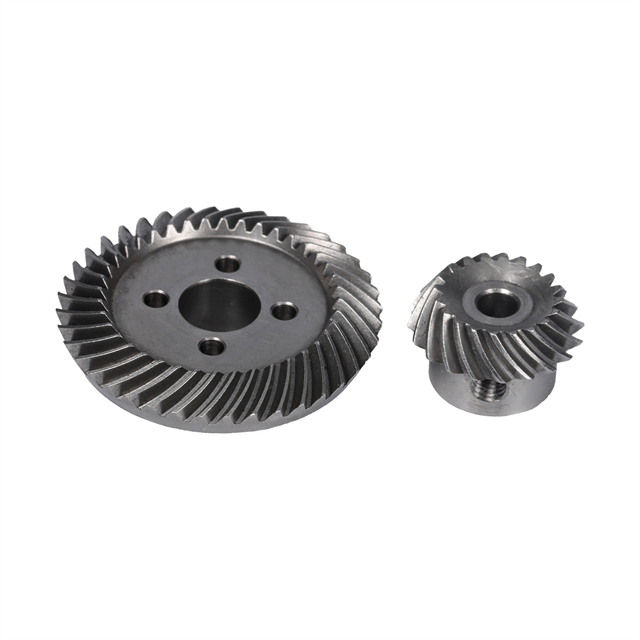
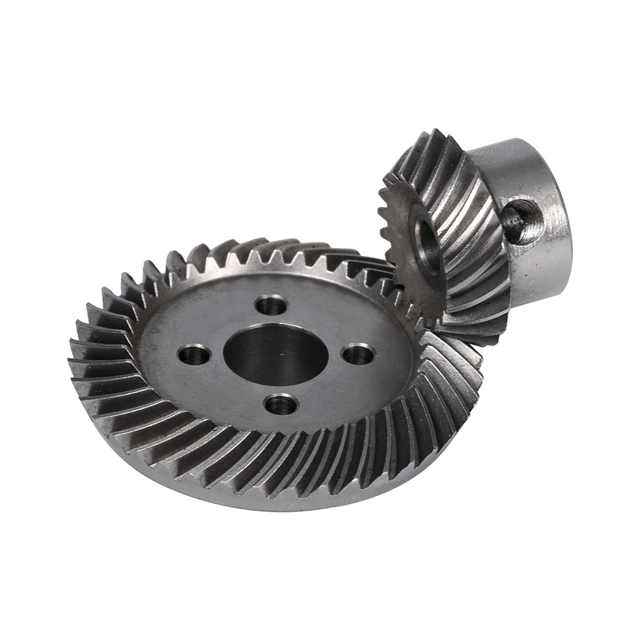
Spiral bevel gears use curved teeth that create gradual tooth engagement.
Advantages:
Lower vibration
Reduced operating noise
Higher transmission smoothness
Hypoid gears feature an offset shaft arrangement, allowing higher torque transmission and compact installation.
They are commonly used in automotive differential systems.
Feature | Plastic Straight Bevel Gear | Plastic Spiral Bevel Gear |
|---|---|---|
Tooth Design | Straight tapered teeth | Curved spiral teeth |
Manufacturing Difficulty | Lower | Higher |
Cost | More economical | Higher |
Noise Level | Standard | Lower |
Transmission Smoothness | Good | Excellent |
Application Focus | General transmission, automation | Precision and high-speed systems |
Plastic straight bevel gears are preferred when customers need:
Cost-effective transmission
Lightweight design
Simple mechanical structures
Reliable right-angle power transfer
Material selection directly affects gear strength, wear resistance, temperature performance, and service life.
We offer multiple engineering plastic options according to different operating environments.
POM is one of the most commonly used materials for precision plastic gears.
Advantages:
High hardness
Low friction coefficient
Excellent dimensional stability
Good wear resistance
Low moisture absorption
Recommended applications:
Precision mechanisms
Automation equipment
Small transmission systems
Nylon provides excellent toughness and impact resistance.
Advantages:
Higher mechanical strength
Good shock resistance
Strong wear performance
Recommended applications:
Industrial equipment
Moderate-load transmission systems
Polyketone is an advanced engineering polymer designed for demanding gear applications.
Advantages:
Superior wear resistance
Lower friction
Longer service life
Reduced operating noise
Recommended applications:
High-cycle mechanical systems
Continuous operation equipment
Parameter | Specification |
|---|---|
Product Type | Plastic Straight Bevel Gear |
Gear Structure | Conical gear with straight teeth |
Axis Angle | 90° Standard |
Pressure Angle | 20° Standard |
Transmission Ratio | 1:1, 1:2, 1:3, 1:5 |
Materials | POM, Nylon, PK, Engineering Plastics |
Temperature Range | -40°C to +140°C (Material Dependent) |
Lubrication | Self-Lubricating / Dry Running Available |
Manufacturing Process | Injection Molding / CNC Machining |
Customization | OEM Available |
Engineering plastics naturally provide low-friction characteristics, reducing the need for external lubrication.
Benefits:
Lower maintenance requirements
Cleaner operation
Reduced friction wear
Longer service intervals
Plastic materials absorb vibration during gear engagement.
Compared with metal gears, they provide:
Reduced mechanical noise
Smoother operation
Better working environment
Plastic bevel gears are ideal for lightweight mechanical systems.
Advantages:
Reduced equipment weight
Lower energy consumption
Faster response movement
Plastic gears do not rust and provide excellent resistance against:
Moisture
Cleaning agents
Mild chemicals
Humid environments
Plastic straight bevel gears are widely used in:
Automated machinery
Small transmission systems
Motion control equipment
Advantages:
Lightweight
Low friction
Reliable operation
In robotics and automated guided vehicles, reducing rotational weight is critical.
Applications:
Steering mechanisms
Robotic joints
Compact actuators
Benefits:
Lower inertia
Reduced energy consumption
Smooth movement
Plastic gears are suitable for hygienic environments.
Advantages:
No rust
Reduced lubrication requirements
Easy cleaning
Applications:
Packaging machines
Filling equipment
Conveyor systems
Plastic bevel gears provide:
Low operating noise
Lightweight design
Non-magnetic characteristics
Applications:
Medical instruments
Laboratory devices
Precision equipment
Plastic straight bevel gears are commonly used in:
Toys
Small actuators
Compact devices
Electrical equipment
For large-volume production, injection molding provides:
High production efficiency
Consistent dimensions
Stable quality
For prototypes and customized requirements:
Flexible production
High precision
Short development cycle
We support customized tooling based on:
Gear dimensions
Tooth profile
Material requirements
Each gear is inspected for:
Tooth accuracy
Dimensional tolerance
Runout
Assembly compatibility
Different applications require different gear dimensions, materials, and performance characteristics.
We provide customized solutions according to:
Product drawings
CAD models
Samples
Technical specifications
Module
Number of teeth
Pressure angle
Transmission ratio
Bore size
Shaft connection
Mounting structure
Overall dimensions
Available materials:
POM
Nylon PA
Polyketone PK
Other engineering plastics
Feature | Plastic Gear | Metal Gear |
|---|---|---|
Weight | Lightweight | Heavy |
Noise | Lower | Higher |
Lubrication | Often maintenance-free | Usually required |
Corrosion Resistance | Excellent | Depends on material |
Cost | Lower | Higher |
Load Capacity | Moderate | Higher |
Plastic straight bevel gears are ideal for applications where low noise, lightweight design, and maintenance-free operation are more important than extreme load capacity.

Straight bevel gears are used to transmit motion and power between intersecting shafts, commonly at a 90-degree angle.
Plastic straight bevel gears are widely used in:
Automation equipment
Small actuators
Food processing machinery
Robotics
Consumer products
The three main types of bevel gears are:
Straight bevel gears
Spiral bevel gears
Hypoid bevel gears
Common materials include:
POM (Acetal)
Nylon (PA)
Polyketone (PK)
Many engineering plastic bevel gears can operate without external lubrication due to their self-lubricating properties.
Plastic bevel gears are suitable for lightweight, low-noise, corrosion-resistant applications. Metal gears remain preferred for extremely high torque and heavy-duty conditions.
Yes. Food-grade engineering plastics can be selected for applications requiring clean and maintenance-free operation.
Yes. We provide OEM custom plastic straight bevel gears based on drawings, samples, and technical specifications.