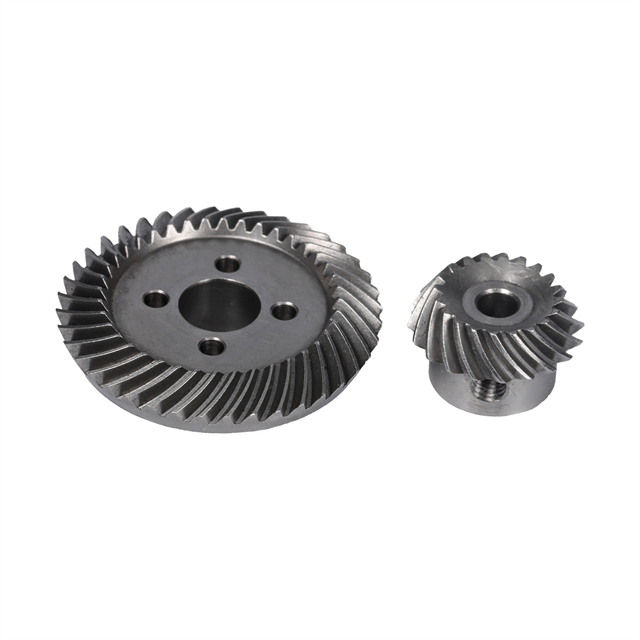
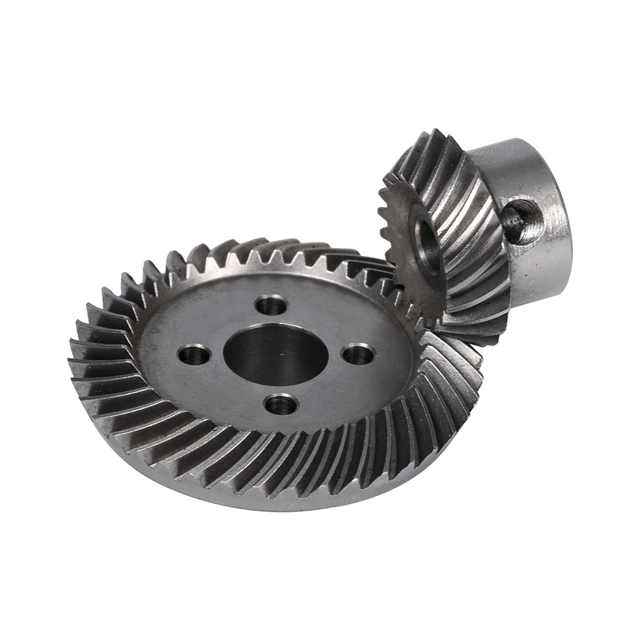
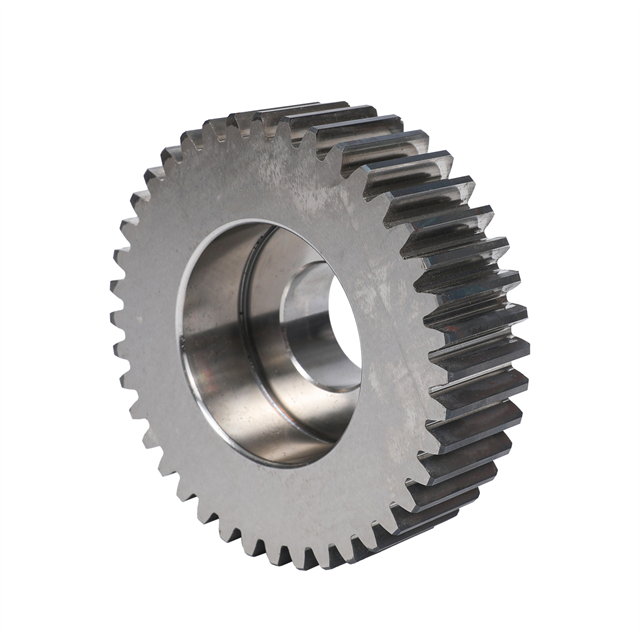
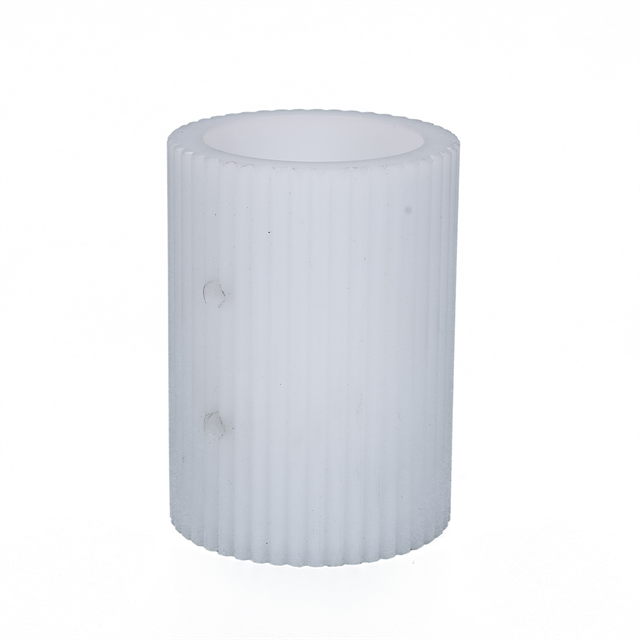
Plastic spiral bevel gears are lightweight precision transmission components designed to transfer rotational motion between intersecting shafts, typically at a 90-degree angle. Unlike traditional metal bevel gears, plastic spiral bevel gears combine curved tooth geometry with advanced engineering polymers to achieve smooth operation, low noise, corrosion resistance, and maintenance-free performance.
As a professional plastic gear manufacturer, we provide customized plastic spiral bevel gears made from high-performance materials including POM, nylon, PA and other engineering plastics. Through precision injection molding, CNC machining, and strict dimensional inspection, our plastic gears deliver reliable performance for automation equipment, medical devices, food processing machinery, and precision mechanical systems.
A plastic spiral bevel gear operates through the interaction between spiral teeth on two intersecting gears. The curved tooth profile creates a smoother engagement process compared with straight bevel gears.
The spiral tooth structure increases the contact ratio between gears, allowing multiple teeth to carry the load at the same time.
Benefits include:
Reduced mechanical impact
Lower vibration
Improved transmission stability
Extended gear service life
Engineering plastics naturally absorb vibration generated during gear meshing.
Combined with spiral tooth geometry, plastic spiral bevel gears provide:
Quiet running performance
Reduced mechanical noise
Smoother motion transmission
Compared with steel gears, plastic gears significantly reduce rotating mass.
This helps:
Lower motor load
Improve response speed
Reduce energy consumption
Engineering plastic gears are increasingly used as alternatives to metal gears in applications where low noise, clean operation, and corrosion resistance are critical.
Many engineering plastics contain excellent self-lubricating properties, reducing friction between tooth surfaces without requiring additional grease or oil.
Advantages:
Reduced maintenance frequency
Lower operating costs
Cleaner working environment
Longer service intervals
Unlike steel gears, plastic spiral bevel gears do not rust and provide excellent resistance against:
Moisture
Chemicals
Cleaning agents
Humid environments
Plastic gears are suitable for applications where external lubrication may cause contamination risks.
Typical industries include:
Food processing
Medical equipment
Laboratory instruments
Semiconductor manufacturing
The flexible characteristics of polymer materials absorb vibration and impact forces, creating quieter operation compared with metal transmission systems.
Material selection directly affects gear strength, wear resistance, temperature performance, and service life.
We provide different engineering plastic solutions based on application requirements.
Material | Key Features | Recommended Applications |
|---|---|---|
POM (Acetal) | Low friction, excellent dimensional stability, wear resistance | Precision automation, instruments |
Nylon PA | High strength, impact resistance, good durability | Industrial equipment |
PEEK | High temperature and chemical resistance | Medical and semiconductor equipment |
UHMW-PE | Excellent wear resistance and self-lubrication | Continuous operation systems |
POM gears are widely used for precision transmission because of:
Low friction coefficient
High dimensional stability
Smooth operation
Excellent machinability
Nylon gears provide:
Higher impact resistance
Good mechanical strength
Long service life under moderate loads
PEEK gears are suitable for demanding environments requiring:
High temperature resistance
Chemical resistance
Advanced performance stability
Producing accurate plastic spiral bevel gears requires precise manufacturing technology and strict quality control.
For high-volume production, precision injection molding provides:
Consistent gear dimensions
High production efficiency
Stable product quality
For prototypes and customized requirements, CNC machining provides:
Flexible production
High dimensional accuracy
Short development cycles
We support rapid prototype production based on:
CAD drawings
Samples
Technical specifications
Each plastic spiral bevel gear is inspected to ensure:
Tooth profile accuracy
Gear dimensions
Tooth thickness
Assembly compatibility
Surface quality
Engineering plastics reduce friction between contacting surfaces, improving transmission efficiency and reducing wear.
Plastic gears reduce overall equipment weight and rotational inertia, making them suitable for compact mechanical systems.
The combination of spiral teeth and polymer material provides quieter operation compared with traditional metal gears.
Plastic gears perform reliably in environments exposed to:
Water
Cleaning solutions
Chemicals
Corrosive conditions
Self-lubricating materials reduce the need for regular lubrication, helping customers reduce maintenance costs.
Plastic spiral bevel gears are ideal for food equipment requiring:
Clean operation
Lubrication-free transmission
Corrosion resistance
Applications:
Packaging machines
Filling equipment
Conveyor systems
Advantages:
Low operating noise
Lightweight design
Non-magnetic properties
Applications:
Medical instruments
Laboratory equipment
Diagnostic devices
Plastic bevel gears provide:
Smooth movement
Low inertia
Reliable positioning
Applications:
Robotic systems
Automated assembly equipment
Precision machinery
Suitable for clean environments requiring:
Low particle generation
Chemical resistance
Stable operation
Parameter | Specification |
|---|---|
Product Type | Plastic Spiral Bevel Gear |
Material | POM, Nylon, PA, PEEK, Engineering Plastics |
Gear Angle | 90° Standard |
Gear Ratio | 1:1 to 1:5 Customized |
Manufacturing Process | Injection Molding / CNC Machining |
Lubrication | Self-Lubricating Available |
Production | Prototype to Mass Production |
Customization | OEM Available |
Every application has different requirements for load capacity, operating environment, and service life.
We provide customized plastic spiral bevel gear solutions based on:
Product drawings
Samples
Technical specifications
Equipment requirements
Number of teeth
Module
Pressure angle
Spiral angle
Transmission ratio
Outer diameter
Bore size
Shaft connection
Mounting structure
Available materials:
POM
Nylon PA
PEEK
Customized engineering plastics
Support:
Prototype development
Small batch manufacturing
Large-scale production
Evaluate:
Torque requirements
Rotation speed
Working cycle
Shock loads
Select materials according to:
Temperature
Moisture
Chemical exposure
Cleaning requirements
Requirement | Recommended Material |
|---|---|
Precision transmission | POM |
Higher mechanical strength | Nylon PA |
High temperature environment | PEEK |
High wear resistance | UHMW-PE |
We specialize in custom engineering plastic gears for industrial transmission applications.
Supporting:
Custom drawings
Prototype development
Small batch orders
Mass production
Our team helps customers select suitable materials according to:
Load requirements
Temperature conditions
Chemical environment
Every gear undergoes strict inspection to ensure stable performance and consistent quality.、

Spiral bevel gears and hypoid gears are both used for transmitting power between intersecting or offset shafts, but their structures are different.
A spiral bevel gear uses curved teeth on a conical gear surface, and the two shafts usually intersect at a common point, commonly at a 90-degree angle. This design provides smooth tooth engagement, high efficiency, and low operating noise.
A hypoid gear has an offset shaft arrangement where the pinion axis does not intersect with the gear axis. This allows larger pinion sizes and higher torque capacity but introduces more sliding contact between teeth, requiring specialized lubrication.
Compared with hypoid gears, spiral bevel gears generally offer higher efficiency and lower sliding losses, while hypoid gears are preferred when higher reduction ratios, greater torque capacity, or specific packaging advantages are required.
Although spiral bevel gears provide excellent performance, they also have some limitations:
Higher manufacturing complexity:
The curved tooth geometry requires advanced machining processes and precision equipment.
Higher production cost:
Compared with straight bevel gears, spiral bevel gears require more complex cutting, grinding, and inspection procedures.
Sensitive to installation accuracy:
Proper alignment, backlash adjustment, and tooth contact are important for achieving optimal performance.
Requires proper lubrication:
For high-load metal gear applications, suitable lubrication is necessary to reduce wear and maintain service life.
However, the advantages of smoother operation, higher load capacity, and reduced vibration make spiral bevel gears widely used in precision and heavy-duty transmission systems.
The best material depends on the application requirements, including load, speed, environment, and expected service life.
Common bevel gear materials include:
Material | Advantages | Typical Applications |
|---|---|---|
20CrMnTi Alloy Steel | High hardness and excellent fatigue resistance | Automotive and heavy-duty transmission |
40Cr Steel | High strength and wear resistance | Industrial machinery |
Stainless Steel | Corrosion resistance and durability | Food, medical, marine equipment |
Nylon / Engineering Plastic | Lightweight, low noise, self-lubricating | Automation and precision equipment |
For high-load applications, alloy steels are commonly selected because of their strength and wear resistance. For environments requiring corrosion resistance or clean operation, stainless steel and engineering plastics are often preferred.
Yes. Spiral bevel gears are highly efficient transmission components, especially when properly designed, manufactured, and lubricated.
Their curved tooth profile allows gradual engagement between mating gears, increasing contact ratio and reducing impact during operation. This results in:
High torque transmission efficiency
Reduced vibration
Lower operating noise
Improved mechanical stability
In precision manufacturing conditions, spiral bevel gear systems can achieve very high transmission efficiency, making them suitable for automotive differentials, industrial machinery, robotics, and precision transmission equipment.
Yes. Spiral bevel gears are normally designed and manufactured as a matched gear pair consisting of a driving pinion and a driven gear.
Because the tooth geometry, contact pattern, backlash, and load distribution must match precisely, individual gears from different sets usually cannot be randomly combined.
A matched spiral bevel gear set ensures:
Accurate tooth contact
Smooth power transmission
Reduced noise and vibration
Longer service life
For customized applications, manufacturers usually produce the complete gear pair according to required ratio, dimensions, and operating conditions.
Yes. Custom spiral bevel gears can be manufactured according to:
Gear ratio
Number of teeth
Module
Pressure angle
Material requirements
Bore size
Mounting dimensions
Accuracy grade
OEM customization is commonly used for automotive systems, industrial machinery, robotics, and special transmission equipment.
The main difference is the tooth design.
Straight bevel gears have straight teeth that engage suddenly, making them suitable for lower-speed and simpler applications.
Spiral bevel gears use curved teeth that engage gradually, providing:
Smoother operation
Lower noise
Higher load capacity
Better performance at higher speeds
For precision transmission systems and heavy-duty machinery, spiral bevel gears are usually preferred.