




loading


✓ Custom Manufacturing Available
OEM production based on drawings, samples, or specifications
✓ High Precision Tooth Machining
ISO/DIN/AGMA standard gear accuracy for reliable meshing
✓ Large Diameter Capability
Manufacturing internal gears up to 2000 mm OD
✓ Wide Material Selection
C45, 42CrMo4, 20CrMnTi, Stainless Steel options
✓ Advanced Heat Treatment
Carburizing & quenching for high wear resistance
✓ Applications
Planetary Gearboxes | Robotics | Automotive | Industrial Equipment
| Availability: | |
|---|---|
| Quantity: | |
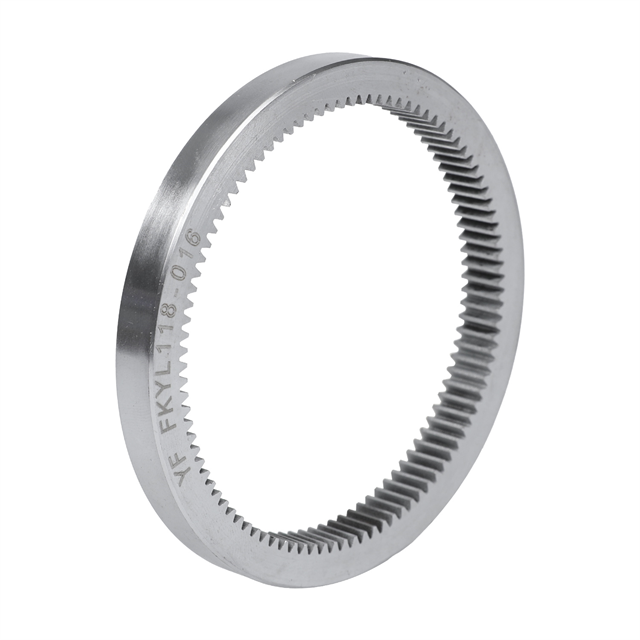
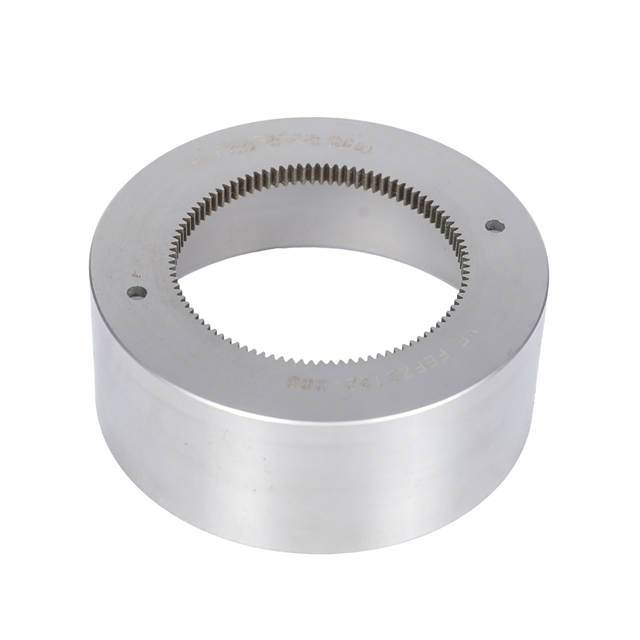
Precision internal ring gears are critical power transmission components used in planetary gearboxes, robotics, automotive transmissions and industrial machinery. As a professional internal gear manufacturer, we produce custom internal ring gears with high-precision tooth profiles, advanced heat treatment and strict quality inspection to meet demanding torque and durability requirements.
An internal gear, frequently referred to as an annular gear, represents a highly specialized power transmission component where the gear teeth are precisely machined into the inner circumference of a steel cylinder or ring. Rather than interacting on the outside, this configuration allows a smaller external pinion to operate entirely within the ring's boundaries. The immediate physical result is a significantly reduced mechanical footprint. When handling these components, engineers immediately notice the substantial weight and the cool, exacting finish of the inner teeth, designed to lock together with mating gears without any jarring metallic clatter. This structural layout is essential for machinery that demands intense torque output but suffers from strict spatial limitations, ensuring continuous, fluid rotation under heavy loads.
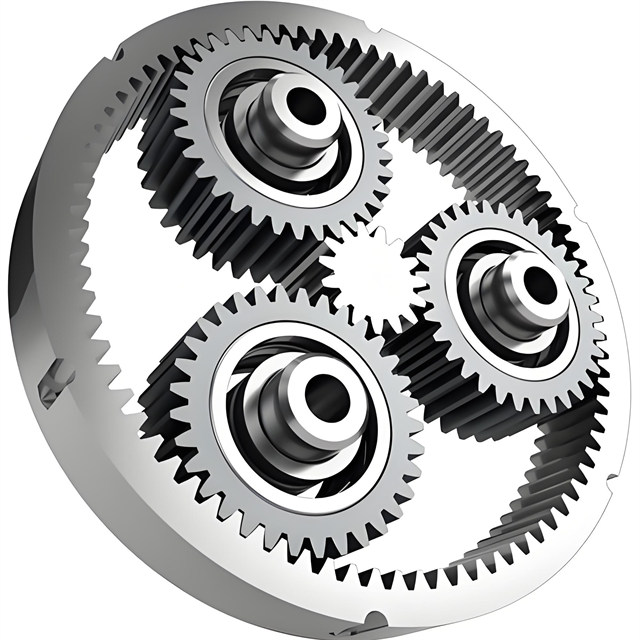
The foundational geometry of an internal gear relies on a circular ring featuring evenly distributed involute teeth along its inner diameter. This concave tooth profile inherently wraps around the convex teeth of the mating pinion, creating a shorter center distance compared to standard parallel-axis external gears. To ensure flawless system integration, particularly within complex planetary gearboxes, our engineering process heavily emphasizes anti-interference design optimization.
Involute Interference Prevention: We apply precise profile shifting to eliminate the risk of the pinion tip digging into the internal gear root during rotation, ensuring a fluid meshing cycle.
Tip Clearance Optimization: Edge modification and tip relief techniques are utilized to prevent secondary contact as the teeth enter and exit the meshing zone.
Load Distribution: The enveloping nature of the internal teeth means multiple teeth share the mechanical load simultaneously, drastically reducing localized stress concentrations.
Parameter | Manufacturing Capability |
|---|---|
Gear Type | Internal Spur Gear / Internal Helical Gear |
Module Range | Module 0.5 - Module 20 |
Maximum Outer Diameter | Up to 2000 mm |
Material Options | C45, 1045, 42CrMo4, 20CrMnTi, Stainless Steel |
Precision Grade | ISO / DIN / AGMA Standards |
Heat Treatment | Carburizing, Quenching, Tempering |
Customization | OEM and Custom Manufacturing Available |
Selecting the proper metal alloy dictates the lifespan and load-bearing capacity of the gear. The manufacturing floor processes a variety of industrial-grade metals, each chosen for specific operational environments. We utilize advanced heat treatments, such as carburizing and quenching, to create a component with a diamond-hard exterior to resist friction wear, while maintaining a ductile core that absorbs sudden mechanical shocks without fracturing.
Material Type | Common Grades | Primary Advantages |
|---|---|---|
Medium Carbon Steel | 1045, C45 | Excellent machinability, cost-effective for standard industrial drives. |
Alloy Steel | 42CrMo4, 20CrMnTi | Superior core toughness and fatigue resistance for heavy-duty cycles. |
Stainless Steel | 304, 316L | Exceptional resistance to oxidation and moisture in harsh environments. |
Integrating an annular gear into a drive mechanism fundamentally changes how power is transferred, offering distinct physical and operational benefits that directly impact the bottom line by reducing maintenance intervals and optimizing space.
Because the pinion sits inside the ring, the overall outer dimensions of the gearbox shrink dramatically. This allows engineers to design smaller, lighter equipment enclosures without sacrificing power output, accelerating assembly lines and reducing material costs.
The concave-to-convex contact between the internal gear and external pinion creates a larger surface area for power transmission. This wider contact patch lowers the pressure on individual teeth, preventing premature wear and extending the operational life of the entire assembly.
The enveloping design naturally contains the noise generated by tooth engagement. Instead of the sharp grinding sounds often associated with heavy machinery, these gears produce a low, steady hum, making them ideal for noise-sensitive environments like medical facilities or precision laboratories.
The unique geometry and power density of internal gears make them indispensable across a wide spectrum of demanding industrial sectors. In the heavy construction and mining equipment sector, they serve as the backbone for slewing drives in excavators and cranes, managing immense rotational forces while exposed to constant vibration, dust, and heavy impact loads. The automotive sector relies heavily on these components within automatic transmissions; they form the outer boundary of planetary gear sets, enabling multiple speed ratios within a highly confined transmission housing.
Furthermore, the renewable energy sector utilizes large-scale internal rings in wind turbine pitch and yaw drives, where they must perform without fail for decades under extreme weather conditions. In industrial automation and robotics, miniaturized versions of these gears dictate the exact, repeatable movements of robotic arms, ensuring zero backlash and immediate response times on fast-paced manufacturing floors.
Transforming a raw steel forging into a precision internal gear requires a strictly controlled sequence of machining operations. The factory floor utilizes advanced CNC gear shaping and broaching machines, filling the air with the scent of synthetic cutting fluids as hardened tools carve exact involute profiles into the metal. After initial cutting, the gears undergo thermal processing to lock in structural hardness, followed by precision grinding to remove any microscopic distortions caused by the heat.
Module Range: Capable of producing fine-pitch gears starting from Module 0.5 up to heavy-duty Module 20.
Size Capacity: Machining outer diameters (OD) reaching up to 2,000 mm for large-scale industrial applications.
Tooth Profiles: Full manufacturing support for both standard straight spur teeth and angled helical teeth for smoother engagement.
Surface Finish: Precision grinding to achieve exceptional surface smoothness, minimizing friction and heat generation during operation.
Successful integration begins long before manufacturing starts. We provide extensive technical support and engineering resources to empower your design teams. This includes access to downloadable 2D and 3D CAD models, comprehensive selection manuals, and direct consultation for complex planetary system layouts. To eliminate guesswork and accelerate the procurement cycle, we have standardized the information required for custom manufacturing.
To generate an accurate and rapid quotation, please provide our engineering team with the following critical parameters:
Tooth Specifications: Total number of teeth, module, and pressure angle.
Dimensions: Face width, inner diameter, outer diameter, and any specific mounting hole patterns.
Material & Hardness: Required steel grade and target surface hardness (e.g., HRC 58-62).
Precision Standard: Target accuracy grade (e.g., ISO Grade 6, DIN Grade 7).
Every internal gear leaving the facility carries a quantifiable guarantee of precision. We manufacture strictly according to internationally recognized precision standards, including AGMA, DIN, ISO, and JIS. Utilizing advanced Coordinate Measuring Machines (CMM), technicians verify pitch deviation, tooth profile accuracy, and radial runout, ensuring that every component will mesh perfectly upon installation and perform reliably under stress.
We understand the complexities of global supply chains and have structured our commercial terms to provide maximum flexibility and security. We support adaptable Minimum Order Quantities (MOQ) for initial prototyping, backed by a scalable annual production capacity to fulfill large continuous orders. Standardized payment methods are available to streamline transactions. To ensure your components arrive in pristine condition, ready for immediate assembly, we employ industrial-grade packaging. Each gear is treated with premium anti-rust oil, sealed within moisture-barrier vacuum plastics, and firmly secured inside reinforced wooden crates to prevent any collision or environmental degradation during overseas transit.
An internal ring gear is a gear component with teeth machined on the inside diameter of a ring. It works with external gears or planetary gears to provide compact and efficient power transmission.
Internal ring gears are widely used in planetary gearboxes, automotive transmissions, robotics, construction equipment, automation systems, and renewable energy machinery.
Yes. We provide OEM custom internal gear manufacturing based on customer drawings, dimensions, materials, and performance requirements.
Common materials include C45, 1045 carbon steel, 42CrMo4 alloy steel, 20CrMnTi, and stainless steel options.
We manufacture internal ring gears according to ISO, DIN, JIS, and AGMA precision requirements.