
Views: 0 Author: Site Editor Publish Time: 2026-06-16 Origin: Site


Have you ever wondered why gears sometimes make noise or slip? The answer often lies in gear backlash. Gear backlash is the small gap between gear teeth that affects how machines perform.
Understanding gear backlash is crucial for smooth and precise gear operation. It impacts everything from noise to the accuracy of machinery.
In this post, you’ll learn what gear backlash is, why it matters, and how it influences gear performance and safety.
Table of Contents
Gear backlash is the small clearance or play between the teeth of two meshing gears. Even though gears appear to fit tightly, a tiny gap always exists. This gap allows a bit of free movement before the teeth fully engage when the gear direction changes. This free movement is called backlash.
When you reverse gear rotation, the input shaft may start turning, but the output shaft doesn’t move immediately. Instead, it slips slightly until the gear teeth mesh again. This slip happens because of the clearance between the teeth. It’s like a small delay or looseness in the gear connection.
Backlash happens in all types of gear arrangements. For example, in external meshing gears, two gears with teeth on the outside mesh together. The clearance exists between their teeth. But backlash also occurs in systems using internal and external gear combinations. Internal gears have teeth on the inside of a ring, meshing with an external gear inside it. The play between these teeth also causes backlash.
This clearance is important because it prevents the teeth from binding or jamming due to manufacturing tolerances, thermal expansion, or lubrication film thickness. Without backlash, gears could seize up or wear out quickly. However, too much backlash can reduce precision and cause noise or vibration.
In summary, gear backlash is the unavoidable space between gear teeth that allows slight free movement. It occurs both in external-to-external and internal-to-external gear pairings. Understanding this helps engineers balance smooth operation and positional accuracy in gear systems.

Backdrive in gear systems means force applied at the output shaft moves back to the input shaft. Normally, motors drive gears forward. But backdrive lets external forces on the output shaft turn the input shaft in reverse. This feature affects how machines behave when pushed or moved from outside.
Backdrive happens because of the gear design and backlash. When some clearance exists between gear teeth, as in backlash, the gear can slip slightly. This slip lets force travel backward through the gear train. Without backlash or with very tight gears, backdrive becomes difficult or impossible. The gear locks the output in place, stopping reverse movement.
Think of a powered wheelchair. If the battery dies, a caregiver might try pushing it. If the wheelchair’s reducer allows backdrive, the wheels turn, letting the chair move manually. This is a safety benefit. The caregiver can push the chair out of harm’s way easily. Without backdrive, the wheels lock, and the wheelchair won’t move, which can be dangerous in emergencies.
However, backdrive isn’t always helpful. In lifts or elevators, backdrive could let heavy loads slip down if external forces push the output shaft. This would be hazardous. So, designers often restrict backdrive in such systems to keep loads stable and safe.
Here are some key points about backdrive and gear backlash:
Backdrive means output force moves backward to input.
Backlash clearance helps enable backdrive by allowing slight gear tooth play.
Backdrive is useful in systems needing manual override or safety movement.
It can be a hazard in machines needing load holding or precise positioning.
Designers choose whether to allow or block backdrive based on application needs.
Understanding the relationship between backlash and backdrive helps engineers balance safety, usability, and performance. Backdrive adds flexibility but can reduce control if not managed properly. Backlash, while often seen as a flaw, can enable backdrive and protect gears from damage.
Many people think backlash and backdrive are just engineering problems to fix. That’s not always true. Both have important roles depending on the machine’s purpose and how it’s used.
Backlash is often seen as a mistake or defect in gear design because it means some play or looseness. Backdrive can seem like a problem since it allows force to move backward through the gear system. However, these features are not always flaws. They can be intentional and useful parts of a design.
If backlash is too large or backdrive happens unexpectedly, machines may move when they shouldn’t. That can cause safety or control issues. But completely removing backlash or blocking backdrive can make machines rigid, harder to control, or impossible to move manually in emergencies.
Some machines need very precise movement. Surgical robots and semiconductor manufacturing equipment are good examples. They must position parts exactly, often within tiny fractions of a millimeter. Even small backlash can cause errors, reducing accuracy and repeatability.
In these cases, engineers design gears with minimal backlash. They use high-precision manufacturing and careful assembly to keep play very low. Backdrive is usually limited or blocked to maintain exact control.
Other machines benefit from some backlash and backdrive. Autonomous mobile robots (AMRs) or automated guided vehicles (AGVs) that carry heavy loads need strong torque and durability. They face vibration, speed changes, and frequent starts and stops. A small amount of backlash helps reduce stress on gears, improving smoothness and longevity.
Backdrive can add safety and convenience. Imagine an elevator: if power fails, passengers must open doors manually. Allowing some backdrive lets them move parts by hand safely. Similarly, powered wheelchairs with backdrive let caregivers push them when batteries die.
Elevators show a clear balance. Backdrive is restricted during normal operation to prevent doors from opening or the cabin from moving unexpectedly. But in emergencies, some backdrive allows manual operation for safety.
Industrial robots working alongside humans also need balanced backlash and backdrive. Too little backlash risks binding or wear. Too much reduces precision and control. Designers adjust these factors based on task requirements and safety needs.
Gear ratio plays a crucial role in how backlash and backdrive behave in a gear system. The gear ratio is the relationship between the number of teeth on the input gear and the output gear. It determines how many times the input shaft must turn to make the output shaft complete one rotation.
When a gear system has a high reduction ratio, the output shaft turns slower but with more torque. This means the input gear turns many times for one output turn. In such setups, backdrive becomes much harder. The reason is simple: the force needed to turn the input shaft backward from the output side grows with the reduction ratio. So, a higher gear ratio usually means less chance for backdrive to occur.
For example, if a gear reducer has a ratio of 100:1, the output must apply a very large force to overcome the internal friction and gear resistance to backdrive the input. This is why many heavy machinery and lifts use high gear ratios to prevent unintentional movement caused by backdrive.
Designing gears involves balancing precision, responsiveness, and backdrive performance. Lower backlash improves positional accuracy but may reduce backdrive ability. If backlash is too small, the gear teeth mesh tightly, making it difficult for external forces to rotate the input shaft backward.
On the other hand, some backlash allows slight play, which helps absorb shocks and enable smoother transitions during direction changes. This also makes backdrive easier, improving responsiveness when external forces act on the output.
However, too much backlash reduces precision and can cause vibration or noise. It also makes the system less predictable, which is problematic for tasks requiring exact positioning. Therefore, designers must find the right balance based on the application’s needs.
When choosing a gear ratio, engineers consider the desired balance between torque, speed, precision, and backdrive. Some key points include:
For applications needing high positional accuracy, choose lower backlash and moderate gear ratios to maintain control and limit backdrive.
For systems requiring manual override or safety features like backdrive, select gear ratios and backlash values that allow smooth force transmission backward.
Consider the operating environment, load characteristics, and safety requirements before finalizing gear ratio and backlash settings.
Use housing rigidity and brake mechanisms to further control backdrive and backlash effects.
In practice, no single gear ratio or backlash value fits all machines. Each design must be tailored to optimize performance, safety, and reliability.
Designing gear systems requires a clear understanding of the product’s purpose and the environment where it will operate. Every machine has unique needs, so managing backlash and backdrive must be tailored accordingly.
Start by asking key questions:
What function does the machine perform?
What precision level is needed?
Will the machine face heavy loads, vibrations, or frequent starts and stops?
Are safety or manual override features necessary?
Answers guide how much backlash and backdrive the system should allow.
For example, a cooking robot in a restaurant doesn’t need ultra-precise positioning. Some backlash or backdrive won’t harm its performance. But a collaborative robot working alongside humans in a factory must be accurate and safe. It needs tight backlash control and carefully managed backdrive.
Backlash isn’t always a flaw—it can protect gears from stress and wear. But too much backlash reduces accuracy. Designers must balance these trade-offs.
Similarly, backdrive can be a safety feature or a hazard. Allowing backdrive helps in emergencies, like pushing a powered wheelchair when its battery dies. But in lifts or heavy load systems, backdrive might cause dangerous slips.
Adjust backlash and backdrive levels to fit these needs. Some applications benefit from minimal backlash and restricted backdrive. Others require some play and backdrive to improve flexibility and safety.
Several design elements influence backlash and backdrive:
Reducer Structure: Different gear types (e.g., planetary, cycloidal) have varying backlash characteristics.
Gear Ratio: Higher ratios reduce backdrive likelihood but may increase backlash impact.
Housing Rigidity: Stiff housings reduce gear misalignment, controlling backlash.
Brake Mechanisms: Brakes can prevent unwanted backdrive in safety-critical systems.
Selecting the right combination depends on the machine’s function and operating conditions.
Cooking Robots: Require reliable repetitive motion, tolerate moderate backlash, and don’t need backdrive.
Collaborative Robots: Demand high precision, minimal backlash, and controlled backdrive for safety.
Powered Wheelchairs: Need some backdrive for manual movement during power loss.
Elevators: Restrict backdrive during operation but allow limited backdrive for emergency manual control.
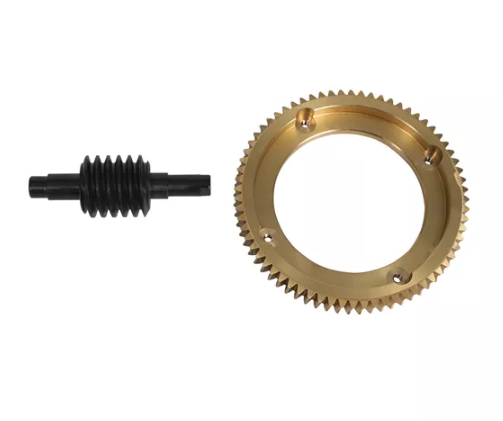
Backlash and backdrive play crucial roles during emergencies. For example, if power fails in a powered wheelchair, backdrive lets someone push it manually. The small clearance in backlash allows gears to slip slightly, enabling this movement. Without backdrive, the wheelchair would lock, making manual movement impossible and potentially dangerous.
Similarly, in elevators, limited backdrive allows manual door operation or cabin movement during power outages. This safety feature ensures people can exit safely. However, too much backdrive could let heavy loads slip unintentionally, causing accidents. Designers must carefully control backdrive to balance safety and security.
Mechanical systems must tolerate some backlash to avoid binding and excessive wear. Backlash provides room for thermal expansion, manufacturing variations, and lubrication effects. This tolerance improves reliability by reducing stress on gear teeth.
However, excessive backlash can cause noise, vibration, and loss of positional accuracy. It may also allow unintended movement, reducing control. Therefore, engineers balance backlash size to maintain smooth operation without compromising precision or safety.
Backlash acts like a mechanical cushion. When gears reverse direction, the clearance prevents teeth from jamming. This reduces shock loads and wear, improving gear life. It also smooths transitions during speed or direction changes.
In applications with frequent starts and stops, some backlash helps absorb impacts and vibrations. This makes operation quieter and more comfortable. However, the amount must be carefully chosen to avoid excessive play that harms performance.
Backdrive can enhance safety by allowing manual override or emergency movement. But it can also pose risks if loads move unexpectedly. Designers use brakes, clutches, or locking mechanisms to control backdrive.
For example, safety brakes in lifts prevent unwanted backdrive under heavy loads. In contrast, powered wheelchairs use backdrive-friendly reducers to allow manual pushing. The choice depends on the machine’s function and safety requirements.
Proper backdrive design ensures users can safely operate or move equipment during power loss or emergencies without risking uncontrolled motion.
Gear backlash and backdrive are essential for smooth, safe gear operation. Their effects depend on machine purpose and environment. A tailored design balances precision, safety, and durability for optimal performance. Evaluating backlash and backdrive based on specific needs ensures reliability and user safety. Collaborating with experts enhances gear system design and achieves the best results. Dongguan Yongfeng Gear Co., Ltd. offers advanced gear solutions that provide durability and precision, supporting diverse industrial applications with professional service and expertise.
A: Gear backlash is the small clearance or play between the teeth of two meshing gears, allowing slight free movement before teeth fully engage.
A: Gear backlash prevents gear teeth from binding due to manufacturing tolerances or thermal expansion, protecting gears from damage while balancing precision.
A: Backlash allows slight gear tooth play, enabling backdrive, where force on the output shaft can move the input shaft backward.
A: Yes, designers tailor backlash levels to balance precision, smoothness, and safety based on the machine’s purpose and environment.
A: Check for worn gears, improper assembly, or loose components and adjust or replace parts to reduce unwanted play.


