
Views: 0 Author: Site Editor Publish Time: 2026-02-05 Origin: Site


Gear systems power machines across manufacturing, automotive, robotics, and energy industries, but their reliability depends on precise geometric rules. At the core of every successful gear design lies Gear Module, a key parameter that defines tooth size, spacing, and meshing accuracy. When Gear Module is poorly understood or incorrectly selected, even advanced systems can suffer from noise, wear, or mismatch. In this article, you will gain a clear and practical understanding of what Gear Module is, how it governs gear geometry, and why it is essential for strength, compatibility, and long-term performance.
Gear Module is a standardized metric parameter that defines gear tooth size. It is calculated by dividing the pitch diameter by the number of teeth. Engineers use it as a universal reference when designing gears that must mesh correctly. Because Gear Module follows ISO and DIN standards, it creates a shared language across manufacturers and industries. When designers specify a Gear Module value, they communicate exact tooth proportions without ambiguity. This clarity supports global sourcing, predictable performance, and consistent manufacturing outcomes.
Gear Module directly represents the size of each gear tooth. A larger Gear Module means thicker, deeper teeth, while a smaller value produces finer teeth. Tooth spacing along the pitch circle also scales with Gear Module. This proportional relationship ensures that every tooth dimension grows or shrinks together. Designers rely on this behavior to control gear size without redefining geometry. Gear Module therefore simplifies scaling. Engineers adjust one value, and the entire tooth system follows predictable rules.
Proper gear engagement depends on matching tooth geometry. Gear Module ensures that mating gears share identical tooth spacing and size. When two gears have the same Gear Module, their teeth roll smoothly along the pitch circle. This prevents interference and ensures stable motion transfer. Other parameters matter, but none override Gear Module in meshing accuracy. For this reason, engineers treat it as the first check in gear pairing.
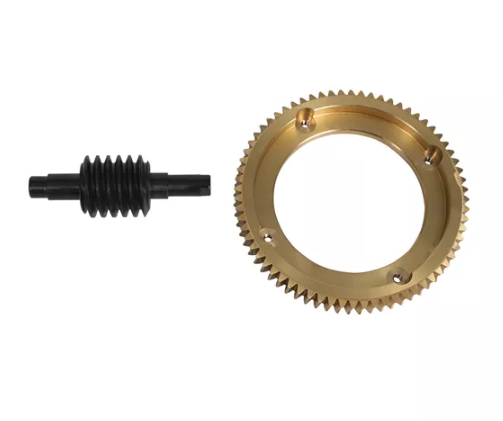
The Gear Module formula is simple but powerful. It equals pitch diameter divided by number of teeth. Pitch diameter represents the imaginary circle where gear teeth make contact. Tooth count defines how many teeth share that circle. By combining these two values, Gear Module captures average tooth size. This formula allows designers to calculate module from existing gears or design new gears from target dimensions.
Pitch diameter represents the effective working circle where gear teeth transmit motion and force. Although it has no physical boundary, it defines rolling velocity, contact position, and torque transfer between mating gears. Because Gear Module is calculated from pitch diameter, it links tooth size to real operating conditions. Designers use pitch diameter to calculate gear ratios, center distances, and tangential forces. This makes it a core reference for both kinematic analysis and structural load evaluation in gear systems.
The Gear Module formula provides a stable framework for scalable gear design. By fixing the module and adjusting tooth count, designers maintain identical tooth geometry across different gear sizes. This ensures consistent contact behavior and pressure angles throughout a gear set. Center distances and pitch diameters change in predictable steps, reducing layout errors. Such consistency simplifies design verification, supports standardized tooling, and enables efficient reuse of components across multiple mechanical assemblies.
Standard tooth proportions are directly derived from Gear Module, creating a uniform geometric system for involute gears. Tooth thickness at the pitch circle, working depth, and clearance are all defined as fixed ratios of the module. This proportional design ensures consistent pressure angles and stable contact conditions during meshing. Manufacturers depend on these relationships to standardize hobs, shapers, and inspection methods. For designers, using module-based proportions reduces analytical effort, minimizes geometric errors, and delivers tooth forms with proven fatigue life and predictable wear behavior.
In gear geometry, circular pitch is the most direct expression of how Gear Module translates into real tooth spacing. It links abstract module values to measurable arc distances on the pitch circle, influencing meshing smoothness, load sharing, manufacturability, and noise behavior. Understanding this relationship helps engineers select modules that fit both performance targets and production realities.
| Category | Technical Aspect | Definition / Relationship | Typical Values & Examples | Units | Engineering Applications | Design & Usage Notes |
|---|---|---|---|---|---|---|
| Fundamental definition | Circular pitch (p) | Arc distance between adjacent teeth on the pitch circle | m = 2 → p = π × 2 ≈ 6.283 | mm | All involute spur and helical gears | Must be identical for mating gears |
| Mathematical relation | Gear Module to p | p = π × m | m = 1 → p ≈ 3.142 m = 3 → p ≈ 9.425 | mm | Gear geometry calculation, CAD modeling | Use π ≥ 3.1416 for accuracy |
| Geometric scaling | Tooth spacing | Larger m → proportionally larger p | Doubling m doubles p | — | Light-duty vs heavy-duty gear sets | Excessive p may increase impact during meshing |
| Contact behavior | Meshing smoothness | Smaller p → more frequent tooth engagement | m ≤ 1.5 common in precision drives | — | Robotics, instrumentation, servo systems | Requires higher manufacturing accuracy |
| Strength relation | Contact area | Larger p → larger single-tooth contact area | m ≥ 4 typical in heavy machinery | mm² (derived) | Gearboxes, reducers, industrial drives | Verify bending and surface stresses together |
| Manufacturing aspect | Cutting tools | Hob pitch directly tied to m and p | Standard hobs match standard m series | mm | Mass production | Non-standard m increases tooling cost |
| Assembly impact | Center distance | a = m × (z₁ + z₂) / 2 | Indirectly linked to p | mm | Gearbox layout and alignment | Changing m affects housing and shafts |
| Standardization | ISO / DIN system | Standard m → standardized p | ISO 54, DIN 780 | — | Global sourcing and interchangeability | Prefer standard modules whenever possible |
Tip:When selecting a Gear Module, evaluate circular pitch together with load class, noise limits, and manufacturing capability. Using standard module values keeps circular pitch within proven ranges, reducing tooling cost while maintaining predictable meshing behavior and service life.
Gear Module establishes a fixed geometric framework for defining addendum, dedendum, and total tooth height in standard involute gears. Addendum is typically equal to one module, while dedendum is slightly larger to provide clearance at the tooth root. Total tooth height follows directly from these proportions. This standardized scaling ensures predictable load paths and consistent stress distribution along the tooth profile. By linking all vertical tooth dimensions to Gear Module, designers simplify calculations, ensure compatibility with standard cutting tools, and achieve repeatable manufacturing accuracy.
Gear Module has a direct mechanical relationship with tooth strength because it controls root thickness and contact width. Larger modules increase the section modulus at the tooth root, reducing bending stress under load. They also enlarge the contact area along the line of action, which lowers surface contact stress. These effects make higher Gear Module values suitable for sustained torque and shock loading. In contrast, smaller modules are chosen when load levels are moderate and precision or compactness is the primary requirement.
Selecting Gear Module requires balancing torque demand against operating speed. Higher torque applications benefit from larger modules, which provide stable engagement and lower stress per tooth. At high rotational speeds, smaller modules reduce mass and rotational inertia, improving dynamic response and efficiency. Designers often evaluate Gear Module alongside gear ratio and material strength to achieve acceptable safety factors. Early selection helps stabilize performance targets and prevents vibration or durability issues during operation.
Gear Module offers a practical way to manage power density in space-limited systems. Smaller modules allow more teeth within a given diameter, enabling compact layouts and smoother motion. Larger modules increase load capacity but expand gear size. Because all tooth proportions scale with Gear Module, designers can adjust power capability without redesigning tooth geometry. This makes Gear Module a primary lever for optimizing packaging efficiency while preserving structural reliability and transmission performance.
ISO and DIN standards define preferred Gear Module series to align design, manufacturing, and tooling practices. Fine modules such as 0.5–1.0 are commonly used in precision drives and instruments, while medium modules like 2–4 dominate general machinery. Coarse modules above 5 serve heavy-duty transmissions. These standardized series match commercially available hobs, cutters, and inspection gauges. By selecting modules from ISO and DIN tables, engineers ensure predictable gear geometry, stable supply chains, and consistent performance across global manufacturing networks.
Using standard Gear Module values streamlines production from tooling to final inspection. Standard modules allow manufacturers to reuse cutting tools, fixtures, and measuring equipment across multiple projects. Setup time decreases because operators recognize dimensions immediately. Quality control becomes faster since tolerances and gauges are predefined. Inventory management also improves because fewer unique components are required. Together, these factors shorten lead times, reduce production variability, and support scalable manufacturing in high-volume and custom gear production alike.
Gear Module standardization ensures that gears from different suppliers can mesh without modification. Matching module guarantees identical tooth pitch, profile, and engagement geometry. This compatibility is critical in complex gear trains where multiple gears interact. It enables straightforward replacement during maintenance and supports system upgrades without redesigning housings or shafts. In long-life equipment, standardized Gear Module values protect investments by allowing future sourcing flexibility while preserving mechanical performance and alignment accuracy.
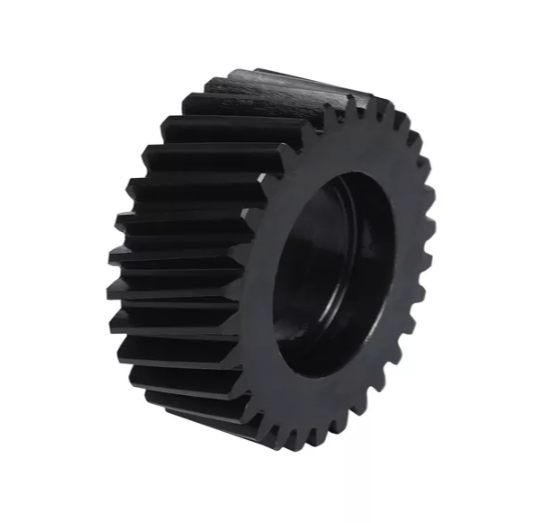
In gear engineering, Gear Module and Diametral Pitch describe the same tooth-density concept through different measurement systems. One follows metric logic, the other imperial practice. Understanding their conceptual and numerical differences helps engineers work accurately across regions, standards, and legacy designs.
| Category | Parameter | Gear Module (Metric System) | Diametral Pitch (Imperial System) | Units | Typical Applications | Design & Usage Notes |
|---|---|---|---|---|---|---|
| Core concept | Tooth density definition | Tooth size based on pitch diameter per tooth | Number of teeth per inch of pitch diameter | mm vs teeth/in | Global mechanical design | Both describe tooth density differently |
| Basic formula | Fundamental relationship | m = D / z | DP = z / D | mm, teeth/in | Gear sizing and calculation | D must use consistent units |
| Size interpretation | Effect of increasing value | Larger m → larger teeth | Larger DP → smaller teeth | — | Load vs precision design | Inverse relationship between m and DP |
| Geometric meaning | Tooth spacing | Directly linked to circular pitch (p = πm) | Inversely linked to circular pitch | mm, in | Tooth geometry control | Do not mix systems without conversion |
| Conversion | Metric–imperial link | m = 25.4 / DP | DP = 25.4 / m | mm, teeth/in | International projects | Exact conversion avoids meshing errors |
| Standard ranges | Common values | 0.5, 1, 2, 3, 4, 5, 6 | 8, 10, 12, 16, 20 | — | Manufacturing standards | Use standard series when possible |
| Manufacturing tools | Cutting method | Metric hobs and cutters | Imperial hobs and cutters | — | Gear production | Tooling must match system |
| Regional usage | Industry preference | Europe, Asia, global ISO markets | United States legacy systems | — | Global supply chains | Metric dominates modern designs |
| Documentation | Drawing notation | m = 2, m = 3 | DP = 12, DP = 16 | — | Technical drawings | Always state the system clearly |
Tip:When working across metric and imperial gear systems, always convert Gear Module and Diametral Pitch using the standard 25.4 factor and recheck center distance and tooling compatibility. Mixing values without full conversion is a common source of assembly and sourcing errors.
The conversion between Gear Module and diametral pitch is essential when metric and imperial systems intersect. The standard relationship is m = 25.4 / DP, where 25.4 represents millimeters per inch. Engineers use this formula when retrofitting imported machines, replacing gears in legacy equipment, or aligning metric designs with imperial drawings. Accurate conversion ensures correct tooth spacing, center distance, and meshing behavior. After conversion, designers should always verify related parameters such as pitch diameter and tooling compatibility to maintain mechanical integrity across mixed-standard environments.
Gear Module is preferred in metric-based engineering because it scales directly with millimeter dimensions used in manufacturing and inspection. A change in module produces predictable changes in tooth size, pitch, and gear diameter, simplifying design decisions. International standards such as ISO and DIN are built around Gear Module, supporting global interoperability. Modern CAD and CAM systems natively define gears by module, enabling faster modeling and fewer translation errors. For new designs, using Gear Module improves clarity, consistency, and long-term maintainability across international supply chains.
Gear Module is the foundation of metric gear design, defining tooth size, spacing, strength, and reliable meshing. By understanding its formulas, standards, and performance impact, engineers can design efficient, compatible, and scalable gear systems. Proper Gear Module selection improves load capacity, smooth operation, and long-term reliability. Dongguan Yongfeng Gear Co., Ltd. applies standardized modules, precision machining, and engineering support to deliver high-quality gears that integrate easily, perform consistently, and create real value across diverse industrial applications.
A: Gear Module defines tooth size and spacing, ensuring accurate meshing in metric gears.
A: Gear Module ensures matching tooth geometry, preventing interference and unstable engagement.
A: Gear Module equals pitch diameter divided by the number of teeth.
A: Gear Module uses millimeters, while diametral pitch uses teeth per inch.
A: Gear Module influences tooling choice, load capacity, and long-term reliability.


