
Views: 0 Author: Site Editor Publish Time: 2025-12-30 Origin: Site


Are you still believing myths about worm gears? Despite their high torque density and compact design, several misconceptions surround their performance. These myths can lead engineers to overlook their advantages, resulting in poor design choices.
In this article, we will clear up these common myths and highlight the true benefits of worm gears. You'll discover when and why they should be used in modern engineering to achieve optimal results.
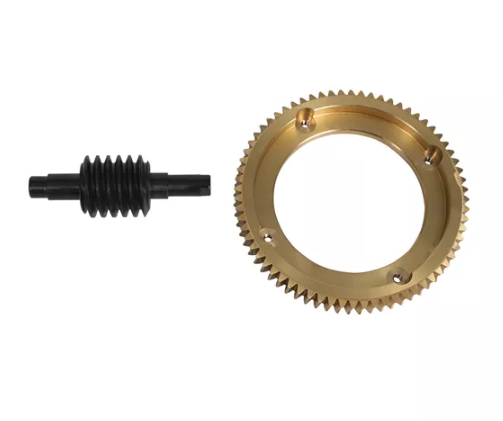
One of the most pervasive myths about worm gears is that they are always self-locking. In truth, self-locking occurs only under specific conditions. For a worm gear to be self-locking, the lead angle must be small enough to create a high level of friction that prevents the worm from turning the wheel in reverse. However, not all worm gears meet this criterion. In many cases, worm gears with higher lead angles can back-drive under load, causing unintended movement. This misconception can lead to dangerous design decisions, especially in applications where self-locking is crucial, such as in lifting devices or medical equipment where position hold is necessary for safety.
To determine if a worm gear is self-locking, you need to calculate the lead angle using the formula:
Lead Angle = arctan(Lead ÷ Pitch Diameter).
If the lead angle is less than 5°, the worm gear is likely self-locking. If it is greater than 7°, back-driving is highly probable. Material combinations also play a role, as some materials provide better friction for self-locking than others. In applications requiring strict safety measures, always ensure that the worm gear has the correct lead angle and material pairing to avoid risks associated with reverse motion.
Self-locking can be a critical feature in safety-sensitive applications, such as in lifts or medical equipment, where the system must maintain its position even when powered down. However, relying solely on the assumption that all worm gears are self-locking can lead to design failures. For applications where self-locking is essential, ensure the correct geometry and materials are used, and if necessary, incorporate additional safety mechanisms like brakes or locking features. When designing for safety, understanding the true capabilities of your chosen gear system is crucial.
Worm gears are often dismissed as inefficient compared to spur or helical gears. While it's true that worm gears have higher friction due to their sliding contact, this doesn't mean they are always inefficient. In fact, in certain applications, the efficiency loss is negligible compared to the benefits they provide, such as high reduction ratios and compact designs. In many industrial settings, where space is at a premium, the simplicity and compact nature of worm gears can offset their slight efficiency drawbacks. Therefore, evaluating the full context of the application is key to determining whether a worm gear is the best choice.
When choosing a gear system, the primary concern should be whether efficiency affects the performance of your application. For instance, in applications that don't run continuously or require minimal power usage, the slight efficiency trade-off of worm gears is often outweighed by their simplicity and the space-saving advantages they offer. For example, in systems like winches or lifts where the gear will not be running continuously, the minimal energy loss from the worm gear may not significantly impact the overall performance of the system.
In applications like conveyor systems or winches, where the goal is to achieve high torque with minimal space, worm gears are often the ideal solution. Their ability to reduce speed in a single stage makes them invaluable in compact designs, where traditional gear systems would require multiple stages, increasing complexity and cost. This is especially useful in applications that require a high reduction ratio, as worm gears can provide these reductions in a simple, reliable way.Evaluate whether the efficiency penalty of worm gears is significant enough to affect your system’s performance. In most real-world applications, their simplicity and compactness often provide more value than a slight efficiency loss, making them the preferred choice in certain contexts.
| Gear Type | Efficiency | Typical Applications | Advantages |
|---|---|---|---|
| Worm Gear | Lower (due to friction) | High torque, high reduction ratio, compact designs | Compact, simple, self-locking (under right conditions) |
| Spur Gear | Higher | General-purpose, high-speed applications | High efficiency, simple design |
| Helical Gear | Higher (but with more complexity) | Smooth motion, high speed, moderate torque | Less noise, high torque transfer |
Contrary to popular belief, worm gears do not require frequent maintenance if they are specified and installed correctly. In fact, worm gears are highly durable when used with the right materials and lubricants. For example, a bronze worm wheel paired with a steel worm shaft will provide excellent wear resistance and long service life, reducing the need for regular maintenance. By choosing the correct material pairings, you can extend the life of your worm gears and avoid the costly maintenance cycles often associated with other gear types.
Worm gears require less maintenance than commonly assumed, especially if proper lubrication is maintained. Most maintenance issues with worm gears arise from insufficient lubrication or improper material selection. Ensuring the gear is regularly lubricated with the right oil will extend its lifespan and reduce wear significantly. In fact, regular maintenance is typically limited to checking lubrication levels and ensuring that seals are intact, which is relatively simple compared to the frequent disassembly required for other gear types.
Many engineers overdesign maintenance access points based on the misconception that worm gears require frequent repairs. In reality, most issues can be avoided by choosing the right materials and ensuring proper lubrication. Overdesigning maintenance features not only adds unnecessary cost but can also lead to sealing problems and manufacturing complexities. By focusing on proper gear specifications and avoiding overengineering, you can save time and money during the design and maintenance phases.
| Gear Type | Maintenance Frequency | Common Maintenance Tasks | Typical Lifespan |
|---|---|---|---|
| Worm Gear | Low (with proper lubrication) | Check lubrication, replace seals occasionally | Long lifespan, 10-20 years or more depending on application |
| Spur Gear | Medium | Lubrication, periodic inspection, tooth wear checks | Moderate lifespan, 5-15 years |
| Helical Gear | Medium to High | Regular checks, lubrication, replacement of teeth | Moderate lifespan, 5-10 years |
A common myth about worm gears is that they are suitable only for low-speed applications. However, with the proper thermal management, worm gears can handle high-speed applications effectively. Modern synthetic lubricants and optimized housing designs allow worm gears to operate at speeds well beyond traditional limits. For instance, using advanced materials and lubrication systems, engineers can achieve high-speed operation with worm gears while keeping temperatures within safe limits.
Worm gears can operate reliably at speeds of up to 3000 RPM or more, provided that heat dissipation is managed properly. For example, in high-speed applications like positioning systems, engineers have successfully used worm gears to replace complex multi-stage gear systems, reducing space and cost while maintaining reliability. These high-speed applications often benefit from the worm gear's ability to provide a high reduction ratio in a single stage, which can reduce complexity and enhance overall performance.
As speed increases, so does heat generation, which can reduce the lifespan of any gear system. Worm gears are no exception. However, with careful thermal planning, such as incorporating heat sinks or cooling fins, the heat generated by worm gears can be efficiently dissipated, allowing them to function at higher speeds without risk of overheating. In fact, many high-speed worm gear systems incorporate active cooling solutions, such as fans or liquid cooling, to maintain optimal operating temperatures.
Another common misconception is that worm gears are weaker than other gear types. In reality, worm gears are highly capable of handling heavy loads due to their torque density. When designed with the appropriate safety margins, they can provide torque capacities comparable to planetary systems, often in a smaller and more compact package. This makes them an ideal choice for high-torque, space-constrained applications where traditional gears would take up too much room.
Proper sizing of worm gears is key to ensuring their strength. By sizing the gears conservatively and using materials with high wear resistance, you can ensure that worm gears handle the expected loads without failure. For continuous-duty applications, worm gears should be rated for 40-60% of their catalog rating to ensure long-term durability. This conservative approach provides a significant safety margin, ensuring that the gear performs reliably throughout its lifespan.
Worm gears perform well under shock loads and overload conditions due to their inherent design. Unlike precision gear trains, which require precise alignment, worm gears can handle higher shock loads without compromising performance. This makes them ideal for applications where unexpected or heavy loads are encountered, such as in heavy lifting or mining equipment.
Tip: Size your worm gears conservatively, especially for continuous-duty applications, to ensure reliability under load and avoid unnecessary wear. For shock load conditions, worm gears perform better than precision gear trains, providing added reliability in demanding environments.
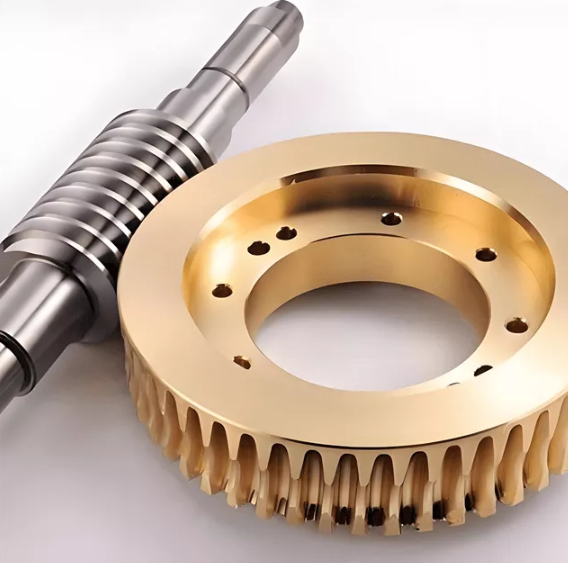
Many engineers assume that worm gears lack the precision necessary for accurate positioning. However, modern worm gears can achieve the required precision for most industrial applications when manufactured to tight tolerances. Their smooth operation and ability to handle high reduction ratios make them ideal for positioning systems. This makes worm gears a practical choice in applications requiring precise motion control, such as robotics and medical devices.
Backlash, or the slight movement that occurs when the direction of rotation is reversed, can be a concern in applications requiring high precision. However, for unidirectional applications, backlash is often negligible and does not affect the performance of the worm gear. In applications where precision is paramount, worm gears can be designed with minimal backlash by using high-quality materials and manufacturing processes that ensure tight tolerances.
To minimize backlash and ensure precision, engineers can design worm gears with dual-lead configurations or use precision-machined components. For high-precision applications, these design choices can significantly reduce backlash and improve positioning accuracy. Additionally, servo-driven systems with worm gears can achieve the necessary accuracy without the need for more complex and expensive gear systems.
Despite advances in gear technology, worm gears remain relevant in many modern engineering applications. Their compact design and ability to achieve high reduction ratios make them indispensable in certain applications, particularly where space is limited. In fact, worm gears are often the preferred choice when engineers need to reduce speed and increase torque in a confined space.
Worm gears excel in applications such as lifts, conveyors, and tuning pegs, where high torque and space efficiency are critical. Their ability to lock in place without the need for additional brakes or clutches makes them a reliable choice for such systems. Modern worm gear designs also incorporate improved materials and lubrication systems, further enhancing their performance and longevity.
Recent advances in materials and manufacturing techniques have improved the performance of worm gears, making them even more effective for modern applications. With the development of new synthetic lubricants and manufacturing technologies, worm gears can now operate at higher speeds and with greater efficiency than ever before. These innovations have made worm gears a viable option in industries like robotics, medical equipment, and automotive systems.
Worm gears are highly effective solutions for engineering challenges. They offer great advantages in terms of efficiency, strength, and low maintenance when used correctly. Whether you need a compact, high-ratio gear for precision systems or a durable solution for heavy-duty applications, worm gears provide optimal performance.
For those seeking reliable and high-quality gears, Dongguan Yongfeng Gear Co., Ltd. offers products that deliver exceptional value in both performance and longevity. Their products are engineered to meet the demands of diverse industrial applications, ensuring efficient, durable, and cost-effective solutions.
A: A worm gear is a type of gear mechanism consisting of a worm (a screw-like gear) and a worm wheel (a gear that meshes with the worm). It reduces speed and increases torque in compact applications. Worm gears are often self-locking, which makes them ideal for certain safety-sensitive applications.
A: Worm gears are less efficient than spur or helical gears due to friction in the sliding contact. However, they provide high reduction ratios in compact designs, making them suitable for applications where space and simplicity matter more than efficiency.
A: Worm gears are often assumed to require frequent maintenance, but with the right material selection and lubrication, they require less maintenance than many other gear types. Proper care ensures long-lasting durability with minimal upkeep.
A: Yes, with proper thermal management, Worm gears can handle high-speed applications. Advanced lubricants and optimized housing designs allow for smooth operation at higher speeds while preventing overheating.
A: Worm gears offer a high torque output and efficient space usage in custom gear systems. Their ability to reduce speed with minimal space makes them ideal for compact, high-torque systems, and their self-locking feature adds reliability in certain applications.


