Introduction
When gears run noisy, wear faster than expected, or fail early, the root cause often lies in Spur Gear Tooth design. Tooth geometry controls how load transfers, how smoothly motion flows, and how stress accumulates over time. Small design choices at the tooth level can dramatically change strength, efficiency, vibration, and service life. In this article, we break down ten specific ways Spur Gear Tooth design affects real performance, focusing on practical geometry decisions engineers can apply to build quieter, stronger, and more reliable gear systems.
Spur Gear Tooth Geometry as the Foundation of Performance
Involute Spur Gear Tooth Profile and Consistent Motion Transfer
The involute profile is the backbone of modern Spur Gear Tooth design because it preserves constant velocity during meshing. As teeth engage and disengage, the involute curve ensures the line of action remains stable even if center distance varies slightly. This stability prevents speed fluctuation, which directly reduces vibration and cyclic loading. In production environments, consistent motion transfer protects downstream components like bearings and shafts. Engineers rely on involute geometry because it delivers predictable torque transmission across a wide operating range, even when manufacturing tolerances or thermal expansion come into play.
Spur Gear Tooth Thickness and Its Role in Load-Carrying Stability
Spur Gear Tooth thickness determines how much bending stress the tooth can withstand before fatigue develops. Thicker teeth resist deflection, keeping the contact pattern centered during load spikes. When thickness drops too low, stress concentrates near the root and accelerates crack initiation. Designers often balance thickness against space constraints and gear ratio targets. In industrial drives, adequate tooth thickness improves load stability during startup and shock events. It also limits elastic deformation, which helps maintain proper backlash and reduces impact noise under fluctuating torque.
Spur Gear Tooth Root Shape and Stress Distribution Control
The tooth root is where most fatigue failures originate, making root shape a critical performance driver. A well-designed Spur Gear Tooth root spreads stress smoothly into the gear body instead of concentrating it at sharp corners. Larger fillet radii reduce peak stress and slow crack growth under repeated cycles. This design choice directly extends service life in high-duty applications. Root geometry also influences how heat flows away from the tooth under load. Engineers treat root shape as a durability multiplier rather than a cosmetic detail.
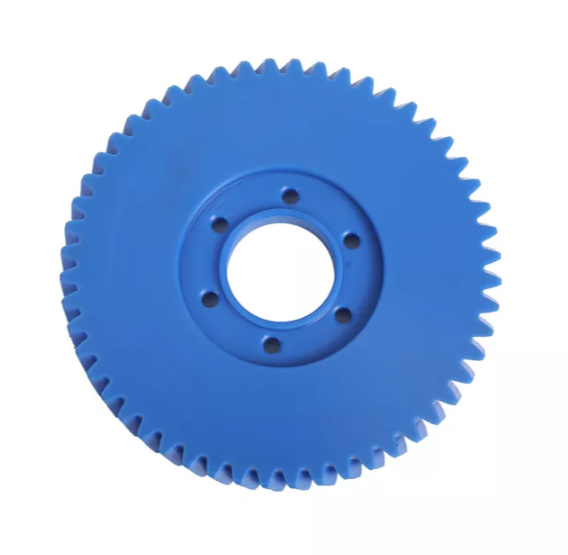
Pressure Angle Design: A Primary Lever in Spur Gear Tooth Performance
How Spur Gear Tooth Pressure Angle Influences Strength vs. Smoothness
Pressure angle controls how forces pass between mating Spur Gear Teeth. A higher angle thickens the tooth base, improving bending strength and load capacity. At the same time, it increases radial force, which raises bearing load and stiffness demands. Lower pressure angles promote smoother engagement and quieter running because sliding forces decrease. Designers select pressure angle by balancing durability against smooth operation. This choice shapes not only gear life but also how the entire drivetrain feels during acceleration and steady-state motion.
Pressure Angle Selection and Its Effect on Spur Gear Tooth Load Direction
Load direction changes with pressure angle, influencing how stress distributes across tooth surfaces. Higher angles push more force radially, which can stiffen the mesh but also increase housing deformation if not managed. Lower angles emphasize tangential force, reducing side loads on shafts. For Spur Gear Tooth systems operating at high speed, load direction affects vibration modes and acoustic behavior. Engineers must align pressure angle selection with bearing type, shaft stiffness, and housing rigidity to maintain balanced system performance.
Matching Spur Gear Tooth Pressure Angle to High-Load or Precision Applications
High-load machinery often benefits from higher pressure angles because tooth strength and resistance to bending fatigue improve. Precision equipment, such as positioning systems, often favors lower angles to achieve smooth motion and minimal transmission error. Spur Gear Tooth pressure angle selection should follow application priorities rather than habit. Matching angle to duty cycle ensures gears meet performance targets without overdesign. This alignment reduces unnecessary noise control measures and avoids oversized bearings or housings.
Module and Pitch Choices That Define Spur Gear Tooth Capacity
Spur Gear Tooth Size Scaling Through Module Selection
Module defines the overall size of a Spur Gear Tooth and directly scales load capacity. Larger modules produce thicker teeth capable of carrying higher torque. Smaller modules support compact designs and higher rotational speeds. Module choice affects everything from stress levels to lubrication film stability. In heavy-duty drives, increasing module often delivers immediate gains in reliability. In precision assemblies, smaller modules allow smoother motion by increasing tooth count and overlap.
Fine vs. Coarse Spur Gear Tooth Pitch and Operational Noise Behavior
In real operating conditions, Spur Gear Tooth pitch selection influences not only size compatibility but also meshing frequency, force transfer characteristics, and acoustic behavior. Comparing fine and coarse pitch designs from physical, acoustic, and application perspectives helps engineers align pitch choice with speed, torque, and noise expectations.
| Dimension | Fine Pitch Spur Gear Tooth | Coarse Pitch Spur Gear Tooth |
| Pitch definition | Smaller module or higher tooth count, shorter tooth spacing | Larger module or lower tooth count, longer tooth spacing |
| Typical module range (example) | m ≈ 0.5–2.0 mm (verification required) | m ≈ 3.0–8.0 mm (verification required) |
| Meshing events per revolution | High, many engagements per shaft rotation | Low, fewer engagements per shaft rotation |
| Load per engagement | Lower load per tooth pair, distributed over more cycles | Higher load per tooth pair, concentrated force transfer |
| Contact force variation | Gradual force rise and decay | Steeper force peaks during engagement |
| Dominant noise characteristics | Higher-frequency, lower-amplitude meshing noise | Lower-frequency, higher-amplitude impact noise |
| Typical sound perception | Sharper tone, generally lower overall sound pressure level | Deeper tone, more noticeable structure-borne noise |
| Primary vibration excitation | High meshing frequency, may couple with high-frequency modes | Low meshing frequency, more likely to excite structural resonance |
| Sensitivity to surface roughness | High sensitivity to flank finish quality | Moderate sensitivity to flank finish quality |
| Common surface roughness targets | Ra ≤ 0.8 μm (verification required) | Ra ≤ 1.6 μm (verification required) |
| Typical application examples | Precision drives, office equipment, instrumentation | Industrial reducers, conveyors, heavy machinery |
| Preferred operating speed range | Medium to high rotational speeds | Low to medium rotational speeds |
| Noise control strategy | Relies on pitch selection and precision finishing | Often requires structural stiffening or isolation |
| Key design considerations | Tight control of manufacturing accuracy and alignment | Focus on tooth strength and impact fatigue resistance |
Tip:For noise-sensitive systems, reducing single-tooth impact through fine pitch Spur Gear Tooth design, combined with high profile accuracy and controlled surface finish, is often more effective and economical than adding damping or acoustic treatments at the system level.
Balancing Spur Gear Tooth Strength and Compact System Design
Compact systems push designers toward smaller modules and finer pitch, but strength must remain adequate. Spur Gear Tooth capacity scales nonlinearly with size, meaning small changes can significantly affect fatigue life. Designers often compensate with optimized face width or improved materials. Balancing strength and space requires system-level thinking, where gear geometry, lubrication, and duty cycle interact. The best designs achieve required torque without unnecessary mass or volume.
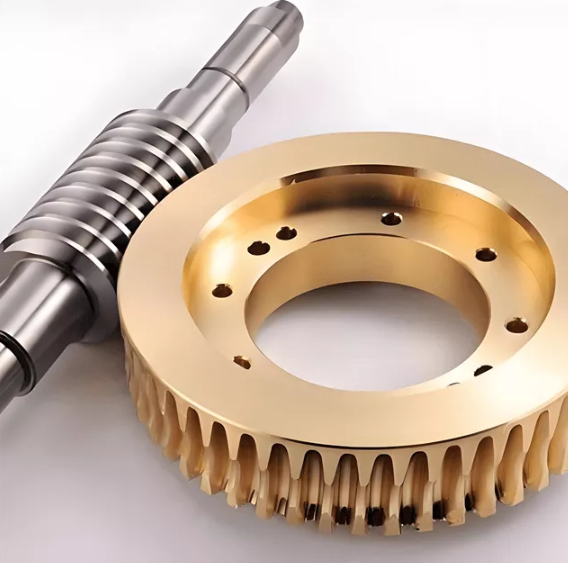
Face Width Optimization and Spur Gear Tooth Load Sharing
How Face Width Expands Effective Spur Gear Tooth Contact Area
Face width directly influences how load is distributed along the Spur Gear Tooth flank during meshing. Increasing face width enlarges the Hertzian contact area, which lowers contact pressure for a given transmitted torque. Reduced pressure delays surface fatigue mechanisms such as pitting and micropitting under repeated cycles. From a lubrication standpoint, wider faces provide more stable oil reservoirs and support thicker elastohydrodynamic films. When face width is matched to shaft stiffness and housing rigidity, it becomes an efficient way to raise load capacity without increasing gear diameter.
Spur Gear Tooth Load Distribution Across the Face Under Working Torque
During operation, shafts and bearings deflect under torque, causing slight misalignment across the gear face. Spur Gear Tooth designs that incorporate appropriate crowning or lead modifications maintain a centered contact pattern despite this deflection. Even load distribution prevents edge loading, which otherwise creates localized stress peaks and accelerates flank wear. Engineers adjust face width in combination with lead geometry to manage these real-world effects, achieving smoother torque transfer, reduced vibration, and more consistent acoustic behavior across varying load conditions.
Face Width Proportions That Improve Spur Gear Tooth Thermal Stability
Thermal behavior in spur gears is governed by how efficiently heat generated at the tooth contact is dissipated. Wider Spur Gear Tooth faces increase surface area for heat transfer to lubricant and surrounding structures, lowering steady-state operating temperature. Controlled temperatures help maintain lubricant viscosity and film strength, which directly reduces wear rates. Face width proportions must account for pitch line velocity and lubrication method to avoid excessive churning losses. Properly balanced designs sustain thermal stability during long, continuous-duty operation.
Addendum and Dedendum Proportions Shaping Spur Gear Tooth Engagement
Spur Gear Tooth Height Ratios and Smooth Mesh Entry
Spur Gear Tooth height ratios control the kinematics of how teeth first make contact and how load builds during engagement. When addendum and dedendum are proportioned correctly, contact begins near the base circle and progresses smoothly along the involute, avoiding sudden load spikes. This gradual load ramp reduces dynamic impact forces that excite vibration and noise. From a system perspective, smooth mesh entry stabilizes torque transfer at both low and high speeds, improving driveline responsiveness and reducing cumulative wear over repeated engagement cycles.
Addendum/Dedendum Balance for Spur Gear Tooth Clearance and Lubrication
Proper addendum and dedendum balance establishes the working clearance needed for reliable lubrication. Adequate clearance prevents tooth tip interference during elastic deflection while allowing lubricant to replenish the contact zone continuously. From a tribological standpoint, this geometry supports hydrodynamic or elastohydrodynamic film formation, reducing metal-to-metal contact. Balanced proportions also limit heat buildup by maintaining oil flow paths at the root and flank, which helps preserve lubricant viscosity and slows surface degradation under sustained load.
Spur Gear Tooth Height Design and Its Influence on Contact Ratio
Tooth height is a key geometric driver of Spur Gear Tooth contact ratio and therefore load sharing. Increasing effective tooth height extends the length of the line of action, allowing multiple tooth pairs to remain engaged simultaneously. This overlap lowers peak bending and contact stress, improving fatigue resistance. However, height must be coordinated with pressure angle and root strength to avoid weakening the tooth base. When properly integrated, optimized tooth height delivers smoother motion, lower noise, and long-term durability without compromising structural integrity.
Contact Ratio as a Performance Multiplier in Spur Gear Tooth Design
How Multiple Spur Gear Tooth Contacts Reduce Peak Stress
In spur gear systems, contact ratio determines how many Spur Gear Teeth share the transmitted load at any instant. Increasing this ratio changes stress distribution, fatigue behavior, and dynamic response. Viewing contact ratio through design, calculation, and application lenses helps engineers quantify its real impact on reliability.
| Aspect | Lower Contact Ratio (≈1.2–1.4) | Higher Contact Ratio (≈1.6–2.0) |
| Definition | One tooth pair carries most of the load for a larger portion of the mesh cycle | Two or more tooth pairs share load for most of the mesh cycle |
| Typical contact ratio range | 1.2–1.4 (common in compact, low-overlap designs) | 1.6–2.0 (common in optimized or modified designs) |
| Load sharing behavior | Load concentrated on a single Spur Gear Tooth for longer duration | Load distributed across multiple Spur Gear Teeth simultaneously |
| Peak bending stress at tooth root | Higher peak stress at root fillet | Peak stress reduced proportionally to load sharing |
| Stress reduction effect | Baseline reference | ~15–30% reduction in peak tooth stress (application dependent, needs verification) |
| Fatigue crack initiation | Earlier initiation due to higher cyclic stress amplitude | Delayed initiation due to lower stress amplitude |
| Fatigue life trend | Shorter fatigue life under identical load cycles | Longer fatigue life under identical load cycles |
| Torque transmission stability | Higher torque ripple during mesh transition | Smoother torque transfer with reduced ripple |
| Dynamic load factor | Higher dynamic factor under speed variation | Lower dynamic factor due to overlapping contact |
| Noise and vibration response | More pronounced vibration during single-tooth engagement | Reduced vibration due to smoother load transition |
| Typical design levers | Standard tooth height, limited overlap | Increased addendum, profile shift, optimized geometry |
| Manufacturing sensitivity | Less sensitive to small profile errors | More sensitive, requires tighter profile accuracy |
| Common application examples | Simple reducers, low-speed machinery | Precision drives, high-duty industrial gearboxes |
| Design trade considerations | Simpler geometry, easier manufacturing | Requires careful balance with tooth strength and clearance |
Tip:When durability and smooth torque delivery are priorities, increasing contact ratio is often more effective than enlarging module alone. However, higher contact ratios demand tighter control of tooth profile accuracy to fully realize stress reduction benefits.
Spur Gear Tooth Contact Ratio and Noise Reduction Benefits
In spur gear operation, noise is closely linked to how abruptly load transfers from one tooth pair to the next. A higher Spur Gear Tooth contact ratio increases overlap, meaning load transitions occur gradually rather than as discrete events. This reduces excitation forces at the meshing frequency and lowers vibration amplitude transmitted to the housing. From a dynamic perspective, higher contact ratios decrease transmission error sensitivity, which is a dominant source of tonal noise. In practice, this allows designers to meet acoustic targets through geometry optimization instead of relying on secondary noise-control measures.
Designing Spur Gear Tooth Geometry for Stable Continuous Engagement
Stable continuous engagement depends on coordinating pitch, tooth height, and pressure angle so that at least one tooth pair remains in contact throughout the mesh cycle. Spur Gear Tooth geometry that achieves this minimizes momentary unloading, which otherwise creates shock loads and dynamic stress spikes. Continuous contact stabilizes torque flow, reduces bearing reaction fluctuations, and improves overall drivetrain efficiency. From a design standpoint, this stability is best achieved early by tuning geometry parameters together, rather than correcting engagement issues later through damping, lubrication changes, or structural stiffening.
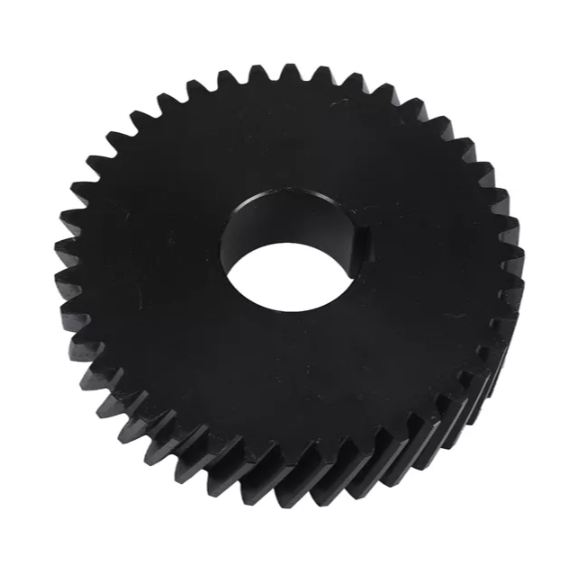
Precision, Surface Refinement, and Spur Gear Tooth Durability
Spur Gear Tooth Profile Accuracy and Consistent Power Transmission
Spur Gear Tooth profile accuracy directly governs how closely real motion follows ideal kinematic behavior. When the involute profile is manufactured within tight tolerances, angular velocity remains nearly constant throughout meshing, which minimizes transmission error under load. Reduced transmission error lowers dynamic excitation, limiting vibration growth at operating speed. Accurate profiles also decrease unintended sliding at the tooth flanks, improving lubrication film stability and reducing frictional heat. Over long service periods, this precision preserves efficiency, protects bearings from fluctuating loads, and ensures predictable performance even in high-torque industrial applications.
Root Fillet Radius Design for Enhanced Spur Gear Tooth Fatigue Life
The root fillet radius is a primary control point for bending stress in a Spur Gear Tooth. From a mechanics standpoint, increasing fillet radius smooths the stress flow from tooth to gear body, reducing local stress concentration factors. Lower peak stress slows crack initiation and significantly extends fatigue life under cyclic loading. A well-optimized fillet also improves load tolerance during transient events such as start-up or shock loading. By addressing root geometry early in design, engineers can achieve durability targets without resorting to heavier gears or more aggressive heat treatments.
Spur Gear Tooth Surface Modifications for Wear Reduction and Quiet Operation
Surface modifications translate theoretical tooth geometry into stable real-world performance. Tip relief reduces edge contact when teeth deflect under load, while crowning distributes contact more evenly across face width. These adjustments limit localized pressure peaks that drive wear, noise, and scuffing. From a tribological perspective, smoother contact progression improves oil film continuity and lowers friction-induced vibration. When properly applied, Spur Gear Tooth surface modifications reduce acoustic emission, stabilize load sharing, and allow gears to operate quietly and reliably across a wider range of speeds and loads.
Conclusion
Spur Gear Tooth design directly determines strength, noise, efficiency, and lifespan in real gear systems. Geometry, pressure angle, pitch, contact ratio, and surface refinement work together to control load sharing, vibration, and wear. Small, well-planned tooth adjustments often create large performance gains without added complexity. By applying these proven design principles, Dongguan Yongfeng Gear Co., Ltd. delivers precision spur gears that offer stable transmission, low noise operation, and dependable durability, helping customers achieve reliable performance across demanding industrial and mechanical applications.
FAQ
Q: What is Spur Gear Tooth design?
A: Spur Gear Tooth design defines tooth shape, size, and geometry that control load transfer, noise, efficiency, and gear life.
Q: Why does Spur Gear Tooth geometry affect noise?
A: Spur Gear Tooth geometry influences contact ratio and load smoothness, reducing vibration and tonal noise during meshing.
Q: How does Spur Gear Tooth design improve durability?
A: Spur Gear Tooth design spreads stress evenly, lowers peak loads, and delays fatigue crack initiation.
Q: Does Spur Gear Tooth design affect cost?
A: Spur Gear Tooth optimization can reduce failures and maintenance, lowering total system cost.
Q: How to troubleshoot wear using Spur Gear Tooth analysis?
A: Spur Gear Tooth wear often indicates poor contact ratio, misalignment, or inadequate surface refinement.


