
Views: 0 Author: Site Editor Publish Time: 2026-06-16 Origin: Site


Have you ever wondered how machines move so precisely? Gears are the silent heroes behind smooth motion and power transfer. They have evolved over centuries, shaping modern mechanics.
Gears are essential components that transmit power and control motion in countless devices. Understanding their types and uses is key for engineers and enthusiasts alike.
In this post, you’ll learn about the main types of gears and their applications across industries. We’ll explore how gears work and why they matter.
Table of Contents
Gears are made of several important parts that work together to transmit power smoothly. The teeth are the most visible part—they mesh with another gear's teeth to transfer motion. The pitch circle is an imaginary circle where the teeth of two gears effectively meet. It helps define how gears fit and rotate together.
The addendum is the part of a tooth that extends beyond the pitch circle, while the dedendum is the part below the pitch circle, reaching down to the root. These dimensions ensure proper engagement and clearance between gears. Other terms include the root circle (bottom of teeth spaces), face width (axial length of teeth), and pressure angle (angle at which teeth interact), all crucial for gear function.
The shape of gear teeth affects how smoothly gears mesh and how much force they can transmit. The most common profile is the involute curve. It allows gears to maintain a constant speed ratio even if the center distance changes slightly. This profile provides smooth rolling contact and reduces wear.
Cycloidal profiles appear mainly in clocks and instruments, offering smooth motion but less common in heavy machinery. Trochoidal profiles are used in pumps and high-precision devices. Each profile suits different applications based on load, speed, and precision needs.
Gear ratio is the relationship between the number of teeth on two meshing gears. It determines how speed and torque change from the input to the output gear. A larger gear driving a smaller gear increases speed but reduces torque. Conversely, a smaller gear driving a larger gear increases torque but lowers speed.
For example, a gear with 20 teeth driving one with 40 teeth has a 1:2 ratio, doubling torque and halving speed. Understanding gear ratios is essential for designing systems that require specific speed or force outputs.
Gears transfer torque by the force applied at the teeth interface. When one gear turns, its teeth push against the teeth of the mating gear, causing it to rotate. The size and number of teeth determine how much speed and torque change.
This transfer follows the lever principle, where the radius of the gear acts as the lever arm. Larger gears provide more torque but rotate slower, while smaller gears rotate faster but with less torque. Gears also change rotation direction depending on their arrangement.
Gears connect shafts in different orientations:
Parallel axes: Shafts run side by side, common in spur and helical gears. They transfer motion efficiently with shafts aligned.
Intersecting axes: Shafts cross at an angle, usually 90°, seen in bevel gears. This changes the rotation direction.
Non-parallel, non-intersecting axes: Shafts neither parallel nor intersecting, used in worm gears and hypoid gears. These allow power transfer in compact spaces with complex motion paths.
Each configuration suits specific mechanical needs, affecting gear choice and design.

Spur gears are the simplest and most common type. They have straight teeth cut parallel to the gear’s axis. Because of this, they mesh easily and transmit power between parallel shafts. Their design is straightforward, making them easy and cost-effective to manufacture.
Advantages include high efficiency and the ability to handle moderate speeds and loads. However, they generate more noise at high speeds due to the sudden engagement of teeth. They are widely used in clocks, washing machines, conveyor systems, and gearboxes.

Helical gears have teeth cut at an angle to the axis, creating a helix shape. This angled tooth design allows gradual engagement between gears, which reduces noise and vibration compared to spur gears. They also distribute load over several teeth, increasing strength and load capacity.
Helical gears can transmit motion between parallel or non-parallel shafts. However, they produce axial thrust forces, requiring bearings to handle these loads. They are common in automotive transmissions, industrial machinery, and robotics.

Bevel gears are conical and used to transmit motion between intersecting shafts, usually at 90°.
Straight bevel gears have straight teeth and are simple to manufacture but can be noisy at high speeds.
Spiral bevel gears have curved teeth, allowing smoother and quieter operation with higher load capacity.
Miter gears are a special type with a 1:1 ratio, used to change direction without altering speed.
Zerol bevel gears combine characteristics of straight and spiral gears, with curved teeth but no spiral angle, offering quieter operation without axial thrust.
Bevel gears are common in automotive differentials, marine drives, and industrial mixers.

Worm gears consist of a worm (a screw-like gear) meshing with a worm wheel. They transmit motion between non-parallel, non-intersecting shafts, typically at right angles. Worm gears provide high gear reduction in a compact space.
A key feature is their self-locking ability: the worm can turn the wheel, but the wheel cannot turn the worm. This is useful in lifting devices and conveyors for safety. Worm gears operate quietly but have lower efficiency due to sliding friction and require good lubrication.
Rack and pinion gears convert rotary motion into linear motion or vice versa. The pinion is a circular gear that meshes with a flat, toothed rack.
This system is simple, easy to manufacture, and widely used in steering systems of cars, machine tools, and linear actuators. The pinion’s design (spur or helical) affects smoothness and noise.
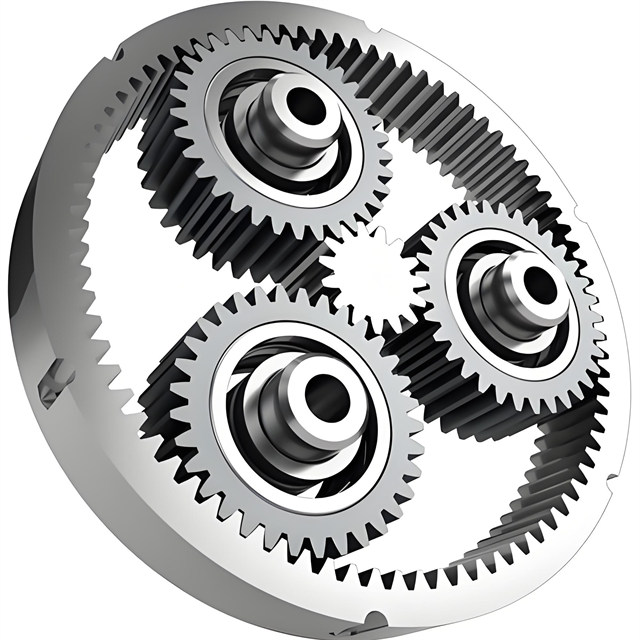
Internal gears have teeth cut on the inside surface of a cylinder or ring. They mesh with external gears, allowing compact designs and same-direction rotation.
Planetary gear systems combine a central sun gear, planet gears, and an internal ring gear. This arrangement distributes load evenly, offers high torque density, and allows multiple gear ratios in a compact space. Planetary gears are critical in automatic transmissions, robotics, and aerospace.
Hypoid gears are similar to bevel gears but with offset axes, allowing larger pinion diameter and higher torque transmission. Common in automotive rear axles.
Herringbone gears feature two mirrored helical gears joined together, canceling axial thrust and providing smooth, quiet operation. Used in heavy machinery.
Double helical gears are like herringbone but with a groove between the two helices, simplifying manufacturing.
Differential gears allow wheels to rotate at different speeds, essential for vehicle cornering. They combine bevel gears in a unique assembly.
Choosing the right material for gears is crucial. It affects strength, durability, noise, weight, and cost. Different applications require different materials to meet performance and environmental needs.
Alloy Steel: Widely used for gears due to strength and toughness. It can be heat-treated for wear resistance. Ideal for heavy-duty gears in automotive and industrial machines.
Carbon Steel: Popular for moderate loads. It’s affordable and easy to machine. Heat treatment improves hardness and lifespan.
Tool Steel: Known for excellent wear resistance and hardness. Used in high-stress environments like cutting or impact gears.
Stainless Steel: Offers corrosion resistance. Perfect for food processing, marine, and medical applications. It’s tougher to machine and more expensive but lasts longer in harsh conditions.
Brass and Bronze: These copper alloys reduce noise and resist corrosion. Bronze is often used in worm gears due to good sliding properties. They work well in low-speed, low-load applications.
Aluminum Alloys: Light and corrosion-resistant. Used where weight matters, like aerospace or robotics. Not suitable for heavy loads but good for moderate-speed gears.
Plastics like nylon and polyacetal are popular for quiet, lightweight gears. They resist corrosion and need no lubrication. Ideal for electronics, appliances, and toys. However, they have lower load capacity and can deform under heat or heavy stress.
Choosing gear material depends on:
Load and torque requirements
Speed and operating temperature
Environmental exposure (moisture, chemicals)
Noise and vibration limits
Cost and manufacturability
For example, steel suits high-load, high-speed gears, while plastics fit light-duty, quiet applications.
Materials often undergo treatments to enhance performance:
Case Hardening: Hardens surface while keeping core tough.
Carburizing: Adds carbon to surface for wear resistance.
Nitriding: Introduces nitrogen for hardness and fatigue resistance.
Grinding and Polishing: Improves tooth finish for smooth operation.
These processes extend gear life and reduce maintenance.
Gears are everywhere in our daily lives and in many industries. They play a crucial role in transmitting power, controlling speed, and changing motion direction. Let’s explore some key applications of gears across different sectors.
In cars and trucks, gears are essential for smooth operation. Transmissions use various gears, like spur, helical, and planetary, to adjust speed and torque from the engine to the wheels. Differentials rely on bevel and hypoid gears to allow wheels to rotate at different speeds during turns, improving safety and handling. Steering systems often use rack and pinion gears to convert the steering wheel’s rotary motion into linear motion, directing the wheels precisely.
Factories and plants use gears in machines like conveyors and mixers. Spur and helical gears transfer power efficiently in these machines, ensuring smooth and continuous operation. Pumps use gears, including internal and worm gears, to move fluids under pressure. Heavy equipment, such as cranes and excavators, depend on robust gears to handle high torque and heavy loads, often using specialized gears like herringbone and double helical for strength and quiet operation.
Aircraft and spacecraft demand gears that offer precision, reliability, and lightweight design. Helical and bevel gears are common in engines and control systems, enabling accurate motion control and power transmission. Planetary gears provide compact, high-torque solutions for landing gear and rotor drives. Materials and manufacturing processes focus on durability and weight reduction to meet strict aerospace standards.
Ships and offshore platforms use gears to transfer engine power to propellers. Bevel, hypoid, and worm gears are typical in marine propulsion systems, chosen for their ability to handle large loads and harsh environments. Wind turbines and other energy equipment use gears to convert slow rotor speeds into higher speeds for electrical generators, often employing planetary and helical gears for efficiency and durability.
Small gears made from metal or plastic are found in everyday items. Clocks use precise spur and cycloidal gears to keep accurate time. Household appliances like washing machines and mixers rely on gears to transfer motion quietly and efficiently. Toys often use plastic gears for lightweight, safe, and cost-effective motion. Electronics use miniature gears in devices such as printers and cameras for precise movement.
When designing gears, several critical parameters dictate performance and durability. First, the gear shape must suit the application—common shapes include spur, helical, bevel, and worm gears. Each shape fits specific shaft configurations and load requirements.
Tooth design impacts how smoothly gears mesh and how much load they can bear. Tooth profiles typically follow the involute curve for consistent contact and minimal wear. The number of teeth, tooth thickness, and helix angle (for helical gears) must be carefully calculated to avoid interference and ensure efficient power transmission.
The module, a unit representing tooth size, is essential for matching gears. It is the ratio of pitch diameter to the number of teeth. Gears must share the same module to mesh properly. Pressure angle, usually 20°, defines the angle at which teeth engage. It affects load distribution and strength. Common pressure angles are 14.5°, 20°, and 25°, with 20° being standard for most applications.
Designing gears involves trade-offs. Higher load capacity often means larger, stronger teeth, but this can increase noise and reduce efficiency. Helical and double helical gears reduce noise by gradual tooth engagement but produce axial thrust requiring special bearings.
Efficiency depends on minimizing friction and backlash. Proper tooth profile and surface finish help achieve this. Service life improves with correct material choice, heat treatment, and lubrication. Designers must consider operational speed, load cycles, and environmental factors to optimize gear life.
Gears are manufactured using various methods depending on material and precision needs:
Cutting: Techniques like hobbing, shaping, and broaching cut teeth into metal blanks. Hobbing is common for spur and helical gears, offering high accuracy.
Molding: Plastic gears often use injection molding, enabling complex shapes and cost-effective mass production.
Assembly: Some gears have replaceable teeth or are part of planetary systems requiring precise assembly to maintain alignment and function.
Post-processing such as grinding and polishing enhances tooth surface quality, reducing noise and wear.
Costs depend on material choice, manufacturing complexity, and volume. Metal gears require machining and heat treatment, which are labor and energy-intensive. Plastic gears lower production costs but have limited load capacity.
Custom gears with tight tolerances or special materials increase expenses. Designers should balance performance needs against budget, considering lifecycle costs like maintenance and replacement.
Adhering to standards ensures compatibility and reliability. Organizations like AGMA and ISO provide guidelines on gear geometry, tolerances, and testing.
Quality control includes dimensional inspections, hardness testing, and noise/vibration analysis. Consistent manufacturing reduces failures and extends gear life.
Proper maintenance keeps gears running smoothly and extends their life. Regular checks help spot issues early, avoiding costly repairs or downtime.
Inspect gears often for signs of wear or damage. Look for chipped, cracked, or worn teeth. Check for unusual noise or vibration during operation. Measure backlash—the clearance between meshing teeth—to ensure it’s within limits. Excessive backlash can cause impact loads and premature wear.
Use tools like borescopes or vibration analyzers to detect hidden problems. Keep records of inspections to track wear trends over time.
Lubrication reduces friction and wear between gear teeth. Use the right lubricant type—oil or grease—based on gear speed, load, and environment. Synthetic oils often provide better thermal stability and longer life.
Apply lubricant consistently and in proper amounts. Over-lubrication can cause churning, while under-lubrication leads to metal-to-metal contact. Use automatic lubricators or oil baths for continuous supply in heavy-duty systems.
Regularly check lubricant condition for contamination or breakdown. Replace or filter lubricant as needed to maintain effectiveness.
Tooth wear: Caused by poor lubrication, misalignment, or overload.
Pitting: Small surface cracks due to repeated stress and inadequate lubrication.
Scoring: Severe surface damage from metal contact, often from lubricant failure.
Bending fatigue: Cracks near tooth root from repeated bending loads.
Corrosion: Chemical or moisture damage weakening gear material.
Identifying failure types helps determine corrective actions.
Minor tooth damage can sometimes be repaired by welding or grinding. However, extensive wear or cracks usually require gear replacement.
When replacing, match the original gear’s material, tooth profile, and hardness. Improper replacements cause poor meshing and faster wear.
For critical systems, keep spare gears on hand to reduce downtime.
Avoid sudden load changes or shock loads.
Ensure proper alignment during installation.
Maintain recommended operating speeds and loads.
Use quality lubricants and follow lubrication schedules.
Train operators on correct gear handling and monitoring.
Following these practices preserves gear integrity and reduces maintenance costs.
Choosing the right gears depends on understanding their types and applications. Spur, helical, bevel, worm, and planetary gears each serve unique functions. Material and design choices impact gear durability and performance. Future trends focus on advanced materials and precision manufacturing. Proper selection and maintenance ensure long gear life and efficiency. Dongguan Yongfeng Gear Co., Ltd. provides high-quality gears tailored to diverse needs, offering reliable products that enhance machinery performance and longevity. Their expertise supports optimal gear solutions for various industries.
A: The main types of gears include spur, helical, bevel, worm, rack and pinion, internal, and planetary gears. Each type suits specific applications like automotive transmissions, industrial machinery, aerospace, and consumer products, based on shaft orientation, load, and speed requirements.
A: Gears transfer torque through meshing teeth, where gear size and tooth count determine speed and torque changes. Larger gears increase torque but reduce speed, while smaller gears do the opposite.
A: Gear materials affect strength, durability, noise, and cost. Metals like alloy steel suit high loads, while plastics offer quiet, lightweight options for low-load uses.
A: Proper lubrication, regular inspection, correct alignment, and using suitable materials help prevent wear, pitting, and fatigue in gears.
A: Costs depend on material, manufacturing method, precision, and volume. Metal gears are costlier due to machining and heat treatment, while plastic gears are cheaper but less durable.


