


Spur gears are a vital part of many mechanical systems, known for their simple design and efficiency. Choosing the right gear type can impact the cost, speed, and overall performance of a system. In this article, we’ll discuss when spur gears are the best choice and explore the key factors to consider for optimal use.
Spur gears are widely known for their simplicity and efficiency. They are a great option when cost, speed, space, and ease of use are essential factors in mechanical systems. Below, we will explore key scenarios where spur gears are the best fit, from cost-effective solutions to systems with space constraints.
Spur gears are famous for their simple straight-tooth design, making them affordable compared to other gear types. Their uncomplicated design means they don’t require specialized machining, resulting in lower manufacturing costs. This is particularly beneficial for projects with tight budgets, such as small appliances and prototype equipment.
When compared to helical gears, which feature complex inclined teeth and require precision tools for manufacturing, spur gears are far more economical to produce. For projects where the cost is a primary concern, spur gears are often the go-to option due to their cost-effectiveness and efficient design.
Gear Type | Manufacturing Complexity | Cost Effectiveness | Speed Range | Common Applications |
Spur Gears | Low | High | Low to Moderate | Small appliances, prototypes, conveyor systems |
Helical Gears | High | Moderate | High | Industrial machinery, high-speed equipment |
Spur gears are ideal for low-to-moderate speed applications, typically under 3,000 RPM. In these situations, spur gears offer efficient and reliable power transmission without significant noise or vibration. Their teeth mesh instantly, making them perfect for systems where high-speed operation is not required.
For example, clocks, hand tools, and light-load conveyors often use spur gears. These devices work best within this speed range and benefit from spur gears' simple and effective design. However, at speeds higher than 6,000 RPM, spur gears tend to produce more noise and vibrations, which makes them less effective. In such cases, helical gears are usually a better choice, as their gradual tooth engagement allows for smoother operation at higher speeds.
Spur gears have a slim axial profile, which makes them perfect for applications where space is limited. This compact design allows them to fit into small gearboxes, handheld power tools, and consumer electronics without taking up too much space.
In parallel shaft systems, spur gears are particularly beneficial because they don’t require additional components like spacers or adapters. Their straightforward alignment ensures they can be easily integrated into tight assemblies, making them a space-efficient solution for compact machinery.
When it comes to transmitting power between parallel shafts, spur gears are highly efficient. Their direct tooth engagement minimizes energy loss, making them an excellent choice for industrial fans, pumps, and basic transmission systems. Spur gears are designed to operate at high efficiencies, often exceeding 95% when well-maintained.
Compared to helical gears, spur gears are simpler and don’t produce axial thrust, meaning they don’t require additional bearings or complex adjustments. This makes spur gears a more cost-effective and low-maintenance option for parallel shaft systems.
The simple design of spur gears makes them easy to inspect, maintain, and replace, which is vital for industries where minimizing downtime is crucial. In settings like assembly lines or agricultural machinery, quick repairs and replacements are essential to keep operations running smoothly.
Spur gears also require fewer parts and have fewer failure points compared to more complex gear types. This makes them easier to troubleshoot and repair. They’re ideal for equipment operated by users with basic technical knowledge, as they don’t require specialized tools for maintenance, making repairs quicker and simpler.
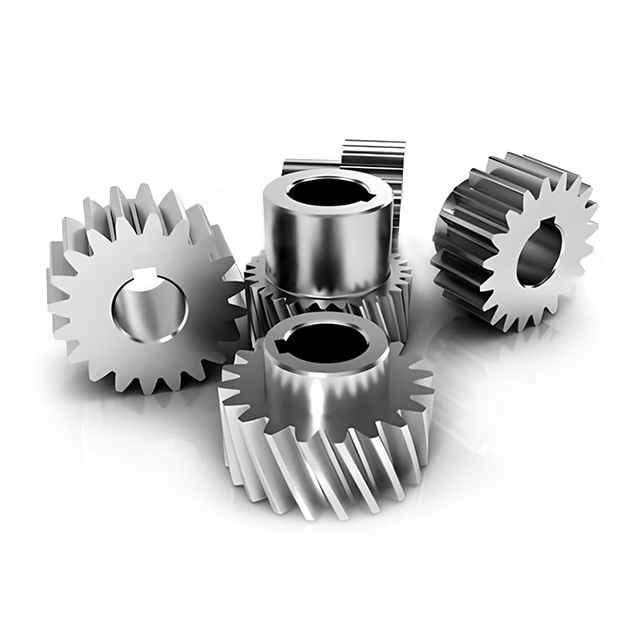
When choosing the right gear for a system, it's essential to compare spur gears with other types, like helical gears. Each gear type has its unique strengths, making them suitable for different applications. Let’s take a closer look at how spur gears measure up in terms of manufacturing cost, speed, noise, space efficiency, and maintenance.
Spur gears are typically more affordable to produce than helical gears. This is because spur gears have a straightforward design with straight teeth, which can be easily manufactured without requiring complex processes. Their simplicity reduces production costs, making them a great choice for budget-sensitive applications.
In contrast, helical gears have angled teeth, which require more precise machining and special tools. The complexity of their design increases the manufacturing cost, making them a better fit for applications where the higher price is justified by performance needs, such as high-speed machinery.
Spur gears excel in low-to-moderate speed applications, typically under 3,000 RPM. Their straightforward design provides efficient power transmission at these speeds, making them ideal for systems that don’t require high RPMs. They are commonly used in clocks, hand tools, and light-load conveyors.
However, as the speed increases, spur gears start to lose efficiency. Above 6,000 RPM, the instant engagement of their teeth leads to increased noise and vibration. Helical gears, on the other hand, perform better at higher speeds because their teeth gradually mesh, resulting in smoother operation.
One major difference between spur gears and helical gears is the level of noise and vibration they produce. Spur gears tend to generate more noise at higher speeds due to their instantaneous tooth engagement. This can be a problem in applications where noise reduction is essential.
On the other hand, helical gears are quieter because their teeth mesh gradually, creating less vibration. This makes them a better choice for systems where smooth, quiet operation is required, such as in precision machinery or high-speed applications.
Spur gears have a compact design, making them a great choice for systems with space limitations. Their straight teeth and slim profile allow them to be easily installed in tight spaces, such as small gearboxes, handheld power tools, and consumer electronics.
Helical gears, in contrast, are bulkier due to their angled teeth and require more space for installation. They also may need additional components, such as thrust bearings, to manage axial thrust. This makes helical gears less space-efficient
Spur gears are easier to maintain and repair because of their simple design. Fewer parts and no complex tooth engagement mean that spur gears are less likely to fail and easier to inspect. This makes them a practical choice for industrial applications where minimal downtime is crucial.
Helical gears, however, require more maintenance. Their complex design and axial thrust make them harder to inspect and repair. They are also more prone to wear and tear due to the additional forces placed on their teeth. Consequently, maintenance can be more time-consuming and expensive.
Spur gears are widely used in various applications where simplicity, cost-effectiveness, and efficiency are crucial. From small consumer products to large industrial machinery, spur gears play a vital role in ensuring smooth and reliable power transmission. Let’s look at some of the key areas where spur gears are ideally applied.
Spur gears are commonly found in everyday appliances and consumer products. Their straightforward design and low cost make them perfect for use in products where price is a significant factor. Devices like clocks, coffee grinders, and small kitchen gadgets rely on spur gears to transmit power efficiently without increasing production costs.
In consumer electronics, such as printers or toys, spur gears help drive mechanisms with precision and consistency. Because they are compact, cost-effective, and easy to maintain, spur gears are the ideal choice for such applications where simple mechanical movement is needed.
Product Type | Application of Spur Gears | Key Benefits |
Clocks | Drive the hour and minute hands | Affordable, precise |
Small Kitchen Appliances | Power tools like grinders | Low cost, reliable |
Toys & Electronics | Drive mechanisms in motorized toys | Simple, durable design |
In larger industrial systems, spur gears provide reliable and efficient power transmission. These gears are used in various machinery, such as conveyor systems, industrial fans, and pumps, where simplicity and high efficiency are key.
Spur gears excel in systems that need to transfer power over parallel shafts. Their minimal axial thrust makes them well-suited for high-efficiency operations without the added complexity of other gear types like helical gears. Because they are easy to maintain and cost-effective, spur gears are often the go-to choice for industrial applications that need constant reliability with minimal downtime.
Industrial System | Spur Gear Application | Advantages |
Conveyor Systems | Power transmission between shafts | Simple, reliable |
Pumps & Fans | Efficient power transfer | High efficiency, low cost |
Manufacturing Machines | Basic gear drives | Cost-effective, durable |
In automotive and aerospace industries, space and cost constraints are often critical factors. Spur gears are frequently used in these high-performance applications because they offer a compact design and efficient power transmission without adding unnecessary bulk or complexity.
In automotive systems, such as gearboxes and differential gears, spur gears help transmit power efficiently between parallel shafts. In aerospace, where lightweight and compact designs are vital, spur gears are used in various mechanisms, including actuators and control systems. These gears provide a simple yet effective solution, ensuring reliability even under demanding conditions.
Industry | Spur Gear Application | Benefits |
Automotive | Gearboxes, differential systems | Compact, cost-efficient |
Aerospace | Actuators, control systems | Lightweight, reliable |
Engines | Power transmission in small engines | High efficiency, low weight |
Tip: Spur gears are indispensable across many industries and consumer products. Whether it's powering small appliances, driving industrial machinery, or supporting high-performance systems in automotive and aerospace applications, spur gears offer a reliable, cost-effective solution for a variety of needs.
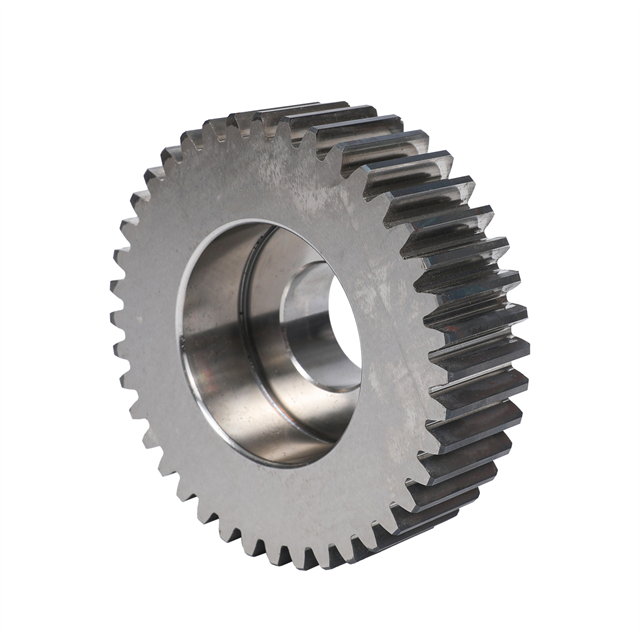
While spur gears are widely used in many mechanical systems due to their simplicity and cost-effectiveness, they do come with some limitations. It's important to understand these drawbacks, especially when considering spur gears for high-speed applications or systems requiring minimal noise and smooth operation.
Spur gears are not ideal for very high-speed applications. While they perform well in low-to-moderate speed settings (up to around 3,000 RPM), they struggle as speed increases. As the gears rotate faster, the instantaneous engagement of the teeth can lead to excessive wear and increased friction. This can cause significant energy loss and reduce efficiency.
At speeds above 6,000 RPM, spur gears become less effective. The faster the gears turn, the more noise and vibration they produce. This makes them unsuitable for high-speed machinery, where smooth operation is essential. In such cases, helical gears or other gear types are often used, as they provide smoother performance at higher speeds.
One major limitation of spur gears is their tendency to produce noise and vibrations, especially at higher speeds. Since spur gears engage their teeth instantly, the impact can cause a lot of noise. This may not be a problem for systems where noise is less critical, such as heavy-duty machinery or simple appliances.
However, in systems where noise and smoothness are crucial, such as in automotive or aerospace applications, spur gears may not be the best choice. The sharp engagement of the teeth can lead to vibrations, which can affect the overall performance and reliability of the system. In such cases, helical gears are preferred, as their gradual tooth meshing reduces noise and vibration significantly.
Spur gears also struggle with handling axial thrust, which refers to the force exerted along the axis of the shaft. This is because spur gears have straight teeth that align directly with the shaft. While they transmit power effectively, they don’t manage the forces that act on the gear's axis as efficiently as other gears, such as helical gears.
Helical gears, on the other hand, have angled teeth that allow them to handle axial thrust more effectively. This makes helical gears a better choice for systems where axial forces are present, such as in some types of industrial machinery or high-load applications. Spur gears, due to their design, are better suited for situations where axial thrust is minimal.
Although spur gears are a great choice for many applications, their limitations in high-speed performance, noise reduction, and axial thrust handling must be considered. In these areas, other gears, such as helical gears, may offer significant advantages.
Spur gears are ideal for cost-sensitive projects, low-to-moderate speed applications, and systems where space is limited. Their simplicity, cost-effectiveness, and ease of maintenance make them a great choice for small appliances, industrial machinery, and automotive systems. Before choosing spur gears, consider the specific needs of your application, such as cost, speed, and space. Spur gears provide great value in applications prioritizing reliability and low maintenance, making them a strong solution for various mechanical systems. For high-performance solutions, consider exploring products from Yongfeng, where advanced engineering ensures top-tier quality and efficiency.
A: Spur gears are gears with straight teeth that mesh directly. They are ideal for low-to-moderate speed applications, cost-sensitive projects, and systems with limited space.
A: Spur gears are affordable due to their simple design and manufacturing process, making them a great option for budget-conscious applications like small appliances and prototypes.
A: Spur gears are not ideal for high-speed applications. They become less efficient at speeds above 6,000 RPM, where helical gears are a better choice.
A: Spur gears are compact and efficient, making them perfect for small machinery, handheld tools, and consumer electronics where space and cost are critical factors.
A: Spur gears are simpler and more affordable than helical gears but generate more noise and vibration, making them less suitable for high-speed, smooth-operation applications.


