
Views: 0 Author: Site Editor Publish Time: 2026-02-09 Origin: Site


Can one Gear Size choice decide speed or strength in a machine? In Spur Gear systems, Gear Size quietly controls torque and rotation. Small changes shift performance from fast motion to powerful output. In this article, you will learn how Spur Gear Size shapes torque, speed, and practical design decisions.
Spur Gear diameter directly influences torque because it changes leverage at the pitch circle. A larger driven Spur Gear places the load farther from the center, which increases turning force at the output shaft. This effect mirrors using a longer wrench on a bolt. The motor applies the same input force, but the larger gear radius amplifies torque. Smaller Spur Gears shorten that lever arm, reducing torque output. In practical systems, this diameter choice determines whether a machine feels strong and steady or light and fast under load.
Spur Gear size also defines output speed because circumference determines how far teeth travel per rotation. A larger Spur Gear covers more distance per turn, so it completes fewer rotations for the same input motion. This results in lower output speed. Smaller gears rotate faster because each revolution covers less distance. The relationship stays predictable across systems, which makes Spur Gear sizing reliable for speed control. Designers often adjust size instead of motors to fine-tune rotational speed efficiently.
Torque and speed are inversely linked in Spur Gears because mechanical power is transferred through rigid tooth contact with minimal loss. In a rotating system, power equals torque multiplied by angular speed, so increasing one requires a proportional decrease in the other. Spur Gear geometry fixes this relationship by maintaining a constant velocity ratio between meshing teeth. When a larger driven gear slows rotation, the same input power is redistributed as higher torque at the output shaft. This predictable exchange allows engineers to size gears analytically, matching motor output to load demand without trial-and-error prototyping.
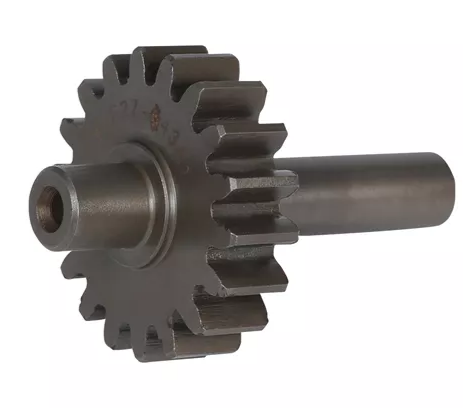
In Spur Gear systems, tooth count determines the exact transmission ratio because each meshing tooth enforces a fixed angular relationship. The ratio equals the driven gear teeth divided by the driver gear teeth, independent of material or load. This makes tooth count the most reliable design variable for controlling motion. Increasing driven teeth raises mechanical advantage and torque capacity, while reducing output speed. Engineers favor tooth-based ratios because they remain stable under load, allowing precise synchronization between motor speed and driven components in automated and industrial systems.
Torque scaling through Spur Gears follows energy conservation principles. When a gear ratio increases, angular velocity decreases, and torque rises proportionally. This allows designers to calculate output torque directly from motor specifications without experimental testing. Spur Gears maintain high efficiency due to rolling tooth contact, so theoretical torque multiplication closely matches real performance. Accurate torque calculation helps ensure shafts, bearings, and couplings are sized correctly, preventing excessive stress while fully utilizing motor capability.
Speed prediction in Spur Gear trains is deterministic because the gear ratio fixes rotational relationships. Once motor speed is known, output speed can be calculated exactly by dividing by the ratio. This precision allows engineers to meet process timing requirements early in design. By adjusting tooth count rather than motor selection, designers can fine-tune cycle time, surface speed, or feed rate while keeping the drive system simple and mechanically efficient.
When Spur Gear diameter increases, the effective force arm at the pitch circle grows, directly boosting mechanical advantage. This geometric effect explains why larger gears enable higher output torque without increasing motor power, making them a practical solution for controlled, high-load transmission.
| Design Factor | Larger Spur Gear Parameter Range | Mechanical Advantage Effect | Typical Applications | Technical Indicators (Examples) | Design Notes |
|---|---|---|---|---|---|
| Pitch Radius | 50–150 mm (driven gear) | Longer force arm increases output torque proportionally | Lifting platforms, conveyors, presses | Torque ∝ pitch radius (T = F × r) | Verify shaft and bearing load capacity |
| Gear Ratio | 3:1 – 6:1 (driver to driven) | Higher ratio multiplies torque and reduces speed | Reduction gearboxes, hoists | 2 kW motor at 1500 rpm → ~500–250 rpm output | Excessive reduction may limit throughput |
| Tooth Contact Radius | Increases with diameter | Lowers contact stress per tooth | Heavy-duty industrial drives | Contact stress reduction ~20–40% (requires verification) | Requires proper heat treatment and lubrication |
| Required Motor Torque | Reduced by 30–60% at same load | Smaller motors can move heavier loads | Compact drive systems | Load torque divided by gear ratio | Motor must still handle startup torque |
| Pitch Line Velocity | Typically 3–10 m/s | Lower velocity improves stability under load | Low- to mid-speed machinery | v = π·d·n / 60 | Maintain within lubrication limits |
| System Efficiency | 95–98% for Spur Gears | High efficiency preserves mechanical advantage | Continuous-duty drives | ISO spur gear efficiency ranges | Misalignment can reduce efficiency |
| Load Smoothness | Improved with larger diameter | Reduced torque ripple and vibration | Precision material handling | Lower speed fluctuation amplitude | Increased inertia affects acceleration |
Tip:When using larger Spur Gears to gain mechanical advantage, confirm bearing loads and startup torque margins early. Mechanical advantage reduces motor effort during steady motion, but transient conditions still define system reliability and component sizing.
Torque multiplication defines why Spur Gears appear in heavy equipment. Larger gears convert motor effort into usable force at the output shaft. This allows controlled starts, steady motion, and predictable response under load. Unlike friction-based systems, Spur Gears deliver repeatable mechanical advantage because teeth maintain positive engagement. That reliability explains their widespread use in industrial Gear trains.
Mechanical advantage always slows output speed. That slowdown improves control and stability, especially when inertia or load variation exists. Spur Gear size therefore influences not only maximum speed but also speed consistency. Systems using larger gears often feel smoother because reduced speed dampens fluctuations. Designers use this behavior to improve motion quality without adding electronic controls.
Tooth size, expressed by module, directly defines the load-bearing capacity of a Spur Gear tooth. A larger module increases tooth thickness and root strength, allowing higher tangential force before bending or surface stress becomes critical. This makes module selection a primary step in torque-driven designs such as industrial Gear trains. Smaller modules improve meshing precision and allow higher rotational speed, but they limit allowable torque. Engineers therefore choose module based on calculated tooth bending stress and contact stress, ensuring torque is transmitted safely throughout the duty cycle.
Face width determines how torque is distributed along the tooth face during engagement. Increasing face width spreads the load across a larger area, reducing contact pressure and improving resistance to uneven loading or slight misalignment. This enhances stability in systems running at low to moderate speed with sustained torque demand. Narrower face widths reduce mass and friction, which benefits high-speed applications. Engineers typically size face width relative to module to balance load capacity, shaft stiffness, and bearing life for consistent Spur Gear performance.
Spur Gear mass influences rotational inertia, which governs how the system responds to speed changes. Larger gears store more kinetic energy, resisting rapid acceleration or deceleration. This inertia smooths torque fluctuations and reduces vibration under variable load conditions, improving motion quality in steady-running machinery. Although higher inertia requires more startup torque, it helps maintain constant speed once operating. Designers intentionally use heavier Spur Gears in applications where speed stability and torque continuity are more important than fast dynamic response.
Large Spur Gears are selected when systems must transmit high torque with controlled motion. Their increased pitch diameter and tooth engagement area allow higher force transfer at lower rotational speeds. This makes them suitable for conveyors, hoists, and industrial drives where load inertia is significant. Lower speed reduces dynamic shock and improves positional control, while the torque multiplication enables smaller motors to move heavy loads efficiently. Engineers often use larger gears to stabilize output speed under fluctuating loads without adding complex control systems.
Small Spur Gears are optimized for applications where rapid rotation and compact design matter more than force. Reduced diameter lowers rotational inertia, allowing quick acceleration and deceleration. This behavior benefits fans, timing mechanisms, and precision automation where responsiveness is critical. Lower torque demand keeps tooth loads within safe limits, supporting smooth operation at higher speeds. By selecting smaller gears, designers achieve accurate motion control while maintaining efficiency and minimizing overall system mass.
Effective Spur Gear selection begins with clear functional priorities. When torque and load stability dominate, larger gears provide mechanical leverage and smoother output. When speed and responsiveness are critical, smaller gears deliver faster rotation with minimal inertia. Spur Gear size becomes a practical tuning tool, allowing engineers to adapt performance without redesigning the motor or drivetrain. This approach simplifies system architecture while ensuring reliable operation across defined duty conditions.
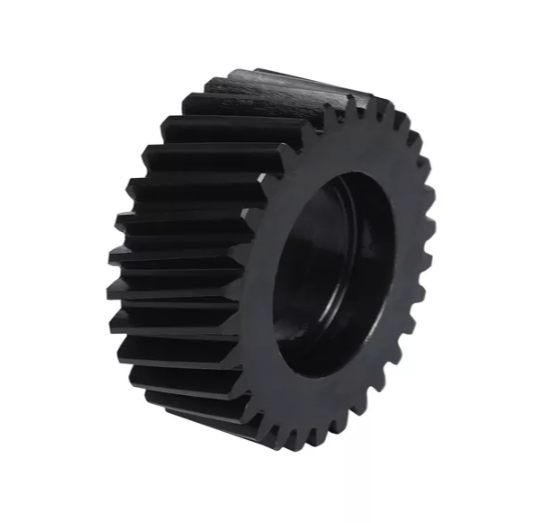
Electric motors deliver peak efficiency within defined speed and torque bands. Spur Gear size must shift motor output into that optimal zone by adjusting speed and torque through geometry, not electrical control. Proper gear sizing prevents motors from operating at low speed with high current draw or excessive speed with low load. When Spur Gear ratios and diameters are matched to motor curves, thermal stress decreases and usable torque increases. This alignment allows motors to run closer to rated conditions, improving service life and reducing energy losses during continuous operation.
Long-term efficiency in Spur Gear systems depends on stable tooth engagement and uniform load distribution. Correct gear size keeps contact stress within design limits, reducing friction variation during operation. Larger, properly sized gears also dampen load fluctuations, which helps maintain consistent efficiency over time. Instead of relying on higher-power motors, designers can improve system efficiency by selecting Spur Gear sizes that balance torque demand and rotational speed, ensuring smooth power transfer across duty cycles.
In real engineering work, balancing torque capability and usable speed is a structured design task rather than a vague goal. By breaking Spur Gear sizing into clear parameters, applications, and technical indicators, engineers can achieve stable and predictable performance across varying loads and operating conditions.
| Design Dimension | Spur Gear Size Range | Impact on Torque and Speed | Typical Applications | Key Technical Indicators (Examples) | Design Considerations |
|---|---|---|---|---|---|
| Gear Ratio (Tooth Ratio) | 2:1 – 6:1 (common industrial range) | Higher ratio increases output torque and reduces speed | Conveyors, lifting systems, reduction drives | Input 1500 rpm → Output 250–750 rpm; torque multiplied 2–6× | Excessive ratio may reduce output speed below process needs |
| Pitch Diameter | 50–300 mm (small to mid-size equipment) | Larger diameter increases lever arm and torque capacity | Packaging machines, automation stations | For same torque, contact stress reduced by ~20–40% (to be verified) | Must confirm center distance and installation space |
| Module (Tooth Size) | m = 1–6 mm (ISO standard series) | Larger module increases tooth thickness and load capacity | Heavy-duty drives, continuous operation systems | Load capacity roughly proportional to module size | Must match exactly with mating Gear module |
| Face Width | 8–12 × module (engineering practice) | Wider face improves load distribution and torque stability | Long-duty-cycle industrial Gear systems | Contact area increased by ~30–60% | Excessive width raises bearing and shaft loads |
| Rotational Inertia | Depends on mass and diameter squared | Higher inertia slows acceleration but stabilizes speed | Constant-speed conveyors, steady-motion drives | Inertia J ∝ m·r² | Not ideal for frequent start–stop conditions |
| Motor Torque Matching | 60–85% of motor rated torque | Improves efficiency and thermal stability | Energy-efficient industrial drives | Motors often peak efficiency in this range | Avoid continuous operation near stall torque |
| Pitch Line Velocity | 3–15 m/s (typical for Spur Gear drives) | Affects noise level and dynamic stability | Medium- and low-speed transmissions | v = π·d·n / 60 | Must be evaluated together with lubrication method |
Tip:For balanced Spur Gear performance, first adjust gear ratio and module to meet torque and speed targets, then refine diameter and face width for stability. This approach often delivers efficiency and durability gains without changing the motor or overall system layout.
Spur Gear size defines how torque and speed interact through diameter, tooth count, and width, shaping real system performance. Correct Gear sizing helps engineers balance force, speed, and efficiency with confidence. Dongguan Yongfeng Gear Co., Ltd. provides precision Spur Gear products and engineering support that enable stable torque delivery, optimized speed control, and long-term value in demanding industrial applications.
A: A larger Spur Gear increases leverage, allowing the Gear system to deliver higher torque.
A: A larger Spur Gear lowers output speed by increasing the driven Gear circumference.
A: A Spur Gear conserves power, so higher torque always means lower rotational speed.
A: Spur Gear tooth count defines Gear ratio, directly setting torque multiplication and speed reduction.
A: No, Gear size must match load and speed targets for balanced system efficiency.
A: Larger Spur Gear sizes use more material and machining, increasing Gear cost slightly.


