
Views: 0 Author: Site Editor Publish Time: 2025-11-11 Origin: Site


Helical gears are essential in many mechanical systems, but knowing when to use them can be tricky. These gears offer advantages like smoother operation and higher load capacity compared to straight-tooth gears.
In this post, we’ll guide you through key scenarios where helical gears excel. You'll learn about their benefits and when they’re the best choice for your application.
Helical gears are specifically designed to reduce noise. Their angled teeth mesh gradually, minimizing the sharp impact found in straight-tooth gears. This design cuts noise by 10-15 dB, making them a perfect choice for quieter operations. The smooth tooth engagement means less vibration, leading to a much quieter performance, especially in high-speed or heavy-load systems.
Helical gears are commonly used in:
● Consumer-facing equipment: High-end appliances, such as washing machines and refrigerators, as well as medical devices, benefit from quieter operations. Noise reduction improves user experience and reliability.
● Industrial settings: In environments where workers are close to machinery, reducing noise helps enhance safety and productivity. Applications in robotics or precision systems also need quieter operations to avoid interference with sensitive measurements.
Straight-tooth gears are less effective in noise-sensitive environments. When these gears mesh, the teeth engage abruptly, creating a noticeable impact noise. This type of noise is especially disruptive in areas where quiet operation is non-negotiable, such as in hospitals or high-end consumer devices. The lack of gradual meshing in straight-tooth gears results in higher vibrations, which can be problematic in many modern industrial and consumer applications.
Aspect | Helical Gears | Straight-Tooth Gears |
Noise Level | Quiet (10-15 dB reduction) | Noisy (sharp impact during meshing) |
Noise Reduction Benefit | Smooth operation, ideal for quiet environments | Not suitable for noise-sensitive applications |
Common Uses | Medical devices, high-end appliances | Simple machinery, less critical environments |
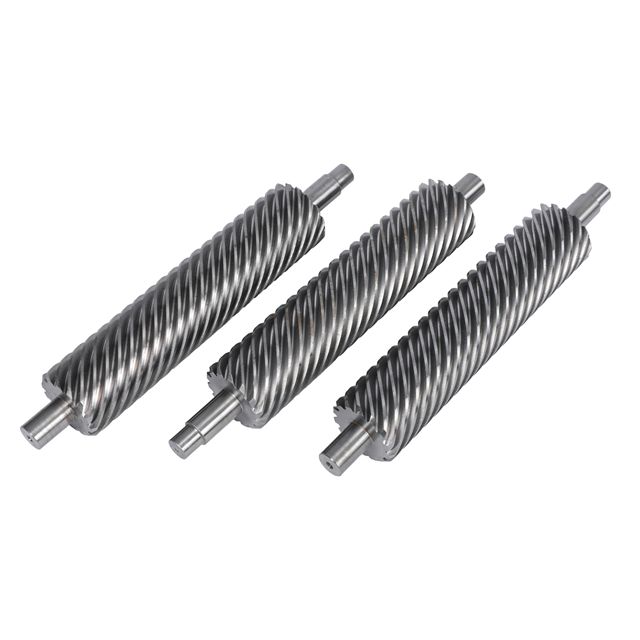
Helical gears shine when it comes to high-speed operations. They perform better than straight-tooth gears by reducing wear and impact loading. The key advantage lies in their ability to engage multiple teeth at once, spreading the load more evenly. This results in a smoother operation, less wear, and a lower risk of failure, even at speeds above 300 RPM.
Unlike straight-tooth gears, which experience high stress on single teeth during meshing, helical gears distribute the force over a larger surface. This reduces the impact and ensures the system remains stable and reliable at higher speeds.
Helical gears are ideal for various high-speed applications, such as:
● Automotive transmissions: Ensuring smooth gear shifts and stable performance at high engine speeds.
● Industrial pumps: Keeping systems running efficiently, even under continuous high-speed operation.
● Power transmission gearboxes: Providing consistent performance across a range of mechanical systems that require high-speed, reliable power transfer.
Helical gears maintain high efficiency in high-speed systems. Their gradual tooth engagement reduces friction and minimizes heat generation. This helps prevent energy loss, making the system more efficient, even during sustained high-speed operations. In comparison, straight-tooth gears often create more friction, leading to higher heat levels and lower efficiency.
Feature | Helical Gears | Straight-Tooth Gears |
Wear at High RPM | Reduced wear, multiple teeth engaged | High wear, single tooth engaged |
Heat Generation | Low heat, efficient at high speeds | Higher heat, less efficient |
Applications | Automotive, pumps, gearboxes | Simple machines, low-speed systems |
Helical gears excel when space is limited but heavy loads still need to be transmitted. Their angled teeth provide more contact surface than straight-tooth gears, which allows them to carry heavier loads in smaller diameters. This is especially important in compact machinery where every inch counts, and the load capacity cannot be compromised. The design of helical gears expands the effective contact area, making them ideal for high-load, small-space applications.
Helical gears are commonly used in:
● Robotics: Compact robots often require gears that can handle heavy loads in small spaces. Helical gears provide the necessary strength while keeping the design slim.
● Aerospace Components: Aircraft parts, such as actuators and flight control systems, often face tight space requirements and high load demands. Helical gears meet both needs efficiently.
● Small Gearboxes: In systems like power tools or medical devices, where gearboxes must be compact, helical gears ensure performance without taking up too much room.
Helical gears provide the same load capacity as larger straight-tooth gears but in a smaller form. Due to their multiple teeth engaging at once, helical gears distribute the load more evenly, reducing the need for larger gear sizes. In contrast, straight-tooth gears require larger diameters to achieve similar load capacities. This makes helical gears a better choice for space-limited designs.
Feature | Helical Gears | Straight-Tooth Gears |
Load Capacity per Size | Higher (multiple teeth in contact) | Lower (single-tooth contact) |
Size Efficiency | Small size, high load capacity | Larger size needed for same load |
Applications | Robotics, aerospace, small gearboxes | Larger machinery, less space-constrained environments |
Helical gears are known for their efficiency, particularly in systems that require sustained performance. The gradual meshing of their angled teeth reduces energy loss caused by impact and friction. Unlike straight-tooth gears, where teeth abruptly engage, helical gears ensure smooth engagement, minimizing wear and energy waste. This makes them ideal for systems where power transmission needs to be both effective and energy-efficient, even under heavy loads or high speeds.
Helical gears are perfect for applications where maintaining high efficiency is crucial:
● Electric Vehicle Drivetrains: In EVs, where energy conservation is a priority, helical gears ensure smooth and efficient power transmission, optimizing battery life and overall performance.
● Industrial Conveyors: These systems require gears that can handle continuous operation without excessive energy loss, making helical gears a key component in long-lasting, high-efficiency conveyors.
● Renewable Energy Equipment: Wind turbines and solar tracking systems rely on highly efficient gears to convert energy, and helical gears are well-suited for minimizing energy loss in these applications.
When compared to other gear types, helical gears strike a good balance between efficiency and reliability. While specialized gears, such as planetary gears, may offer higher efficiency in very specific applications, helical gears provide a broader solution with better overall versatility. They are more efficient than straight-tooth gears and handle a wider range of applications without needing custom designs or additional components.
Feature | Helical Gears | Straight-Tooth Gears | Specialized Gears (e.g., Planetary) |
Efficiency | High, due to smooth tooth engagement | Lower, more energy lost to friction | Very high, but often complex and custom |
Versatility | Broad, suitable for many systems | Limited, best for low-speed systems | Niche, specialized use only |
Energy Loss | Reduced, smooth engagement | Higher, abrupt tooth engagement | Minimal, but at a higher cost |
Helical gears are incredibly versatile when it comes to transmitting power between non-parallel shafts. Unlike straight-tooth gears, which are limited to parallel shafts, helical gears can easily handle configurations where shafts are offset or skewed. Their angled teeth allow them to mesh smoothly even in these complex layouts, ensuring efficient power transfer across different angles. This flexibility makes them an ideal solution in systems where space or design constraints require non-parallel shaft configurations.
Helical gears are widely used in applications that involve complex machinery layouts or torque transfer between non-parallel shafts, such as:
● Industrial machinery: Complex systems like conveyors, robotic arms, or packaging machines often require non-parallel shaft configurations.
● Automotive: In systems like steering mechanisms or differential drives, where shafts are not always aligned.
● Aerospace: For components that require power transmission between misaligned shafts in confined spaces, such as actuators or gearboxes in aircraft.
When compared to straight-tooth gears, helical gears offer distinct advantages for non-parallel shaft configurations. Straight-tooth gears are rigid and only suitable for parallel shaft setups, which limits their application in more complex designs. Helical gears, on the other hand, can accommodate various shaft angles, making them more versatile and reliable in these settings. Their ability to reduce wear and provide smoother power transfer also improves system efficiency and longevity.
Feature | Helical Gears | Straight-Tooth Gears |
Shaft Compatibility | Can transmit power between non-parallel shafts | Limited to parallel shaft setups |
Power Transfer | Smooth, efficient power transfer | Can cause uneven power transfer |
Applications | Industrial, automotive, aerospace | Simple machinery with parallel shafts only |
Tip: When designing systems with limited space or complex shaft configurations, consider using helical gears for their ability to handle non-parallel shafts efficiently.
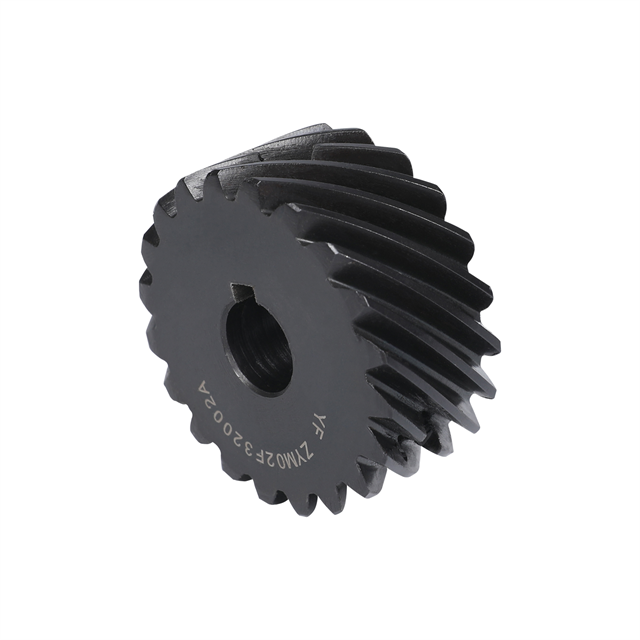
Helical gears are quieter than many other gear types. Their angled teeth mesh gradually, reducing the impact noise typically produced by straight-tooth gears. This smoother engagement cuts noise levels by 10–15 dB, making helical gears ideal for noise-sensitive applications like medical devices or consumer electronics. In contrast, straight-tooth gears produce more noise due to their abrupt tooth engagement, making them less suitable for environments where quiet operation is crucial.
At high speeds, helical gears outperform straight-tooth gears and some other types. Their design allows multiple teeth to engage simultaneously, reducing wear and impact loading. This is particularly beneficial at speeds over 300 RPM, where straight-tooth gears struggle due to increased wear and energy loss. Helical gears remain efficient even at high speeds, making them suitable for automotive transmissions, industrial pumps, and high-speed machinery.
Helical gears are known for their superior load capacity, especially in compact systems. The angled teeth provide a larger contact area, allowing them to bear heavier loads without increasing their size. Compared to straight-tooth gears, which have less surface contact and require larger diameters to handle the same load, helical gears are more efficient. This makes them ideal for applications requiring high load-bearing capacity in tight spaces, such as robotics and aerospace components.
The manufacturing process for helical gears is more complex and expensive than that of straight-tooth gears. Helical gears require specialized machinery to cut the angled teeth, making their production cost higher. Straight-tooth gears, on the other hand, are simpler to produce due to their straightforward design. While helical gears offer superior performance in many areas, the higher manufacturing costs must be considered, particularly for applications where cost-efficiency is a priority.
Helical gears generate axial thrust due to their angled teeth, which can create additional design challenges. Thrust bearings are required to manage this force and ensure smooth operation. This adds complexity to the system design, as opposed to straight-tooth gears, which do not produce axial thrust. The need for thrust bearings in helical gears can increase both the design and maintenance costs, but the benefits in performance and efficiency often outweigh this consideration in high-demand applications.
Feature | Helical Gears | Straight-Tooth Gears | Other Gear Types |
Noise Level | Low (gradual engagement, quiet) | High (abrupt meshing, noisy) | Varies, but generally higher than helical |
Speed Suitability | Excellent at >300 RPM | Limited (best for low-to-moderate speeds) | Varies, with specialized gears excelling in certain speeds |
Load Capacity | High (multiple teeth engaged) | Lower (single-tooth contact) | Depends on design, but typically lower than helical |
Manufacturing Complexity | High (specialized equipment needed) | Low (simple design, cost-effective) | Varies, but generally higher for specialized gears |
Axial Thrust | Generates thrust (needs bearings) | No axial thrust (simpler assembly) | Depends on gear type; some also generate thrust |
Helical gears are essential for applications requiring quiet operation, high-speed performance, and high load capacity. They outperform straight-tooth gears in noise reduction, efficiency at high RPMs, and compact systems with tight space. Helical gears are versatile, handling both parallel and non-parallel shafts effectively. For reliable and efficient power transmission, especially in demanding environments, helical gears offer superior performance. Yongfeng provides innovative solutions, ensuring that their products, such as electric forklifts, deliver unmatched performance, durability, and value to meet diverse operational needs.
A: Helical gears are gears with angled teeth designed to mesh smoothly. They should be used in applications requiring quiet operation, high-speed performance, and high load capacity.
A: Helical gears excel at high speeds due to their ability to engage multiple teeth at once, reducing wear and ensuring smoother operation compared to other gear types.
A: Helical gears reduce noise, handle higher loads, and are versatile for both parallel and non-parallel shafts, making them ideal for more demanding systems.
A: Yes, helical gears are more expensive to manufacture due to the complexity of cutting their angled teeth, but they provide superior performance and longevity.


