loading


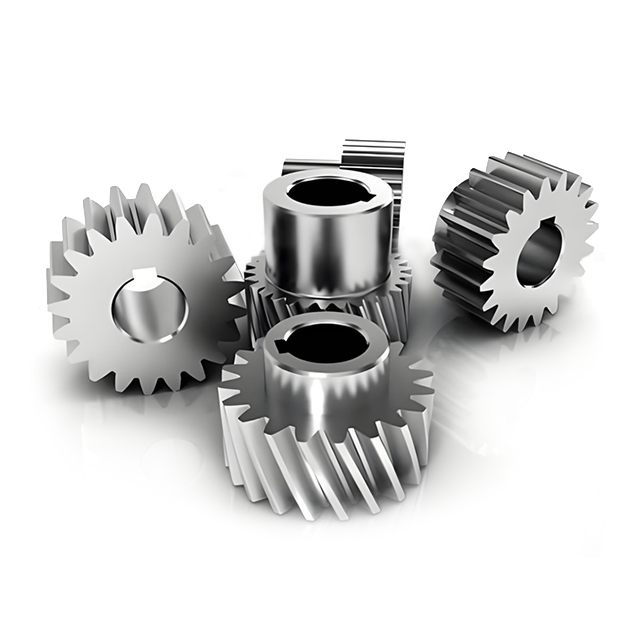
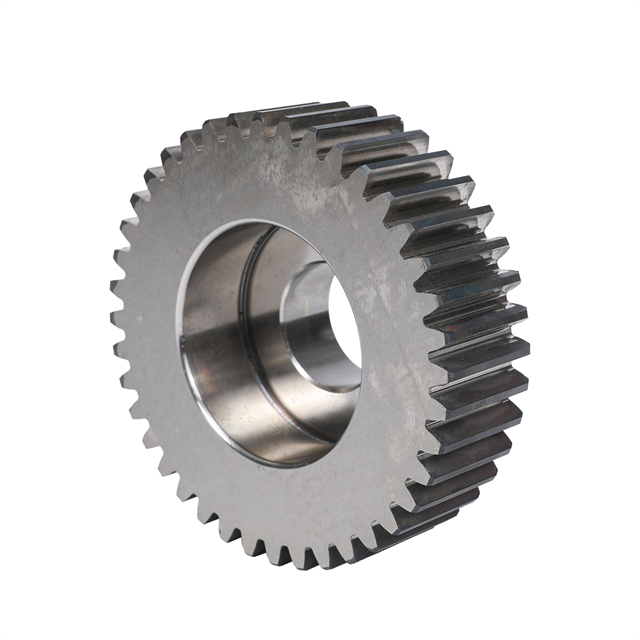
Large diameter spur gears designed for industrial power transmission and heavy machinery. YF Gear provides drawing-based manufacturing with customized gear dimensions, materials, tooth profiles, and mounting configurations.
Key Features & Benefits
Large-Size Manufacturing: Custom gear diameters and tooth dimensions for industrial assemblies.
Heavy-Duty Construction: Steel material options for demanding transmission requirements.
Custom Gear Geometry: Module, tooth count, face width, and bore dimensions based on drawings.
Heat Treatment Options: Material-dependent treatments for improved surface hardness and wear resistance.
OEM Manufacturing: Custom production for machinery manufacturers and industrial equipment suppliers.
| Availability: | |
|---|---|
| Quantity: | |
YF Gear manufactures custom large diameter spur gears for industrial machinery, speed reducers, and mechanical power transmission systems. These gears are designed for applications where large pitch diameters, specified torque requirements, and reliable tooth engagement are essential.
Our drawing-based manufacturing service allows industrial buyers to specify gear dimensions, materials, tooth geometry, and mounting features according to their equipment requirements.
Parameter | Manufacturing Specification |
|---|---|
Gear Type | Large Diameter External Spur Gear |
Tooth Direction | Straight Teeth |
Maximum Outer Diameter | Up to 800 mm |
Module Range | 0.3–12 M |
Face Width | Up to 300 mm |
Materials | Carbon Steel, Alloy Steel and Other Approved Materials |
Tooth Profile | Involute / Drawing-Specified |
Pressure Angle | According to Gear Design |
Bore Configuration | Plain Bore, Keyway, Flanged or Custom |
Accuracy | Drawing-Specified ISO / DIN / AGMA Requirements |
Surface Treatment | According to Material and Application |
Manufacturing Service | OEM / Custom Gear Manufacturing |
The published dimensions above refer to YF Gear's general spur gear manufacturing capabilities. Feasibility for a particular large-diameter gear depends on the combined diameter, module, face width, material, and required accuracy.
Large diameter spur gears are commonly selected for mechanical drive systems where shaft spacing, gear reduction, and transmitted torque require a larger gear geometry.
Compared with smaller spur gears, large gears introduce additional challenges related to component weight, workpiece rigidity, tooth alignment, machining accuracy, and assembly requirements.
The following design considerations are particularly important.
Gear module, tooth count, pressure angle, and face width directly affect tooth strength and meshing characteristics.
A properly designed large spur gear must account for:
Operating torque and rotational speed
Tooth bending and contact stress
Load distribution across the tooth face
Backlash and alignment requirements
Expected operating cycles and service conditions
Tooth geometry should be selected according to the mating gear and the operating conditions of the complete transmission system.
Large gears can be manufactured with different body structures depending on their size, weight, and installation requirements.
Possible configurations include solid-web designs, lightweight web structures, hub-mounted gears, and custom flange arrangements.
The selected design must provide adequate support and maintain alignment under the intended operating loads.
Material properties are important for industrial gears operating under repeated loading.
Steel grades and heat treatment requirements should be selected based on the transmitted torque, expected wear conditions, operating environment, and required service life.
Large diameter spur gears may require different combinations of strength, surface hardness, and machinability.
YF Gear can review material requirements according to customer drawings and application specifications.
Material / Treatment | Main Consideration | Suitable Application |
|---|---|---|
Carbon Steel | General strength and machinability | Standard industrial drive assemblies |
Alloy Steel | Strength and hardenability | Higher-load transmission systems |
Quenching and Tempering | Balance of strength and toughness | Components requiring improved mechanical properties |
Induction Hardening | Localized surface hardness | Gear teeth requiring improved wear resistance |
Carburizing and Hardening | Hardened case with a tougher core | Appropriate case-hardening steel gear designs |
The availability and suitability of individual grades and treatments must be verified for the actual gear dimensions and production requirements.
For industrial equipment manufacturers, material selection should not be based on hardness alone.
The design should also consider:
Peak torque and shock loads
Tooth root fatigue resistance
Lubrication conditions
Environmental exposure
Heat treatment distortion
Machining and inspection requirements
Our team can review customer-specified materials and discuss suitable manufacturing options before quotation.
Large spur gears serve as important components in a variety of industrial power transmission systems.
Their actual suitability depends on the gearbox design, loading conditions, shaft arrangement, and operating speed.
Large spur gears can be used as driven gears in industrial reduction mechanisms.
When combined with a suitable smaller pinion, they help achieve the required speed reduction and torque transmission between parallel shafts.
Typical requirements include stable tooth engagement, correct center distance, and appropriate lubrication.
Large gears may be incorporated into heavy machinery where mechanical power must be transmitted through substantial gear assemblies.
The gear design must account for operating torque, structural support, and the possibility of intermittent or fluctuating loads.
Large spur gears can be used in printing machinery to coordinate rotational movement between mechanically linked components.
For these applications, tooth accuracy, rotational consistency, and backlash control may be important to equipment performance.
Machinery manufacturers may require non-standard large spur gears for specialized transmission systems.
Custom gear dimensions, tooth counts, bore profiles, and mounting features allow the component to match the intended equipment design.
Manufacturing a large diameter gear requires attention to workpiece setup, tooth machining, dimensional stability, and inspection.
YF Gear supports custom gear manufacturing based on supplied engineering specifications.
01 — Technical Drawing Review
Review the gear diameter, module, tooth count, face width, bore structure, material, and accuracy requirements.
02 — Material and Gear Blank Preparation
Select the specified material and prepare the workpiece for the required machining operations.
03 — Gear Body Machining
Machine critical surfaces, including the outer geometry, bore, hub, and mounting features.
04 — Gear Tooth Cutting
Produce the straight gear teeth using a suitable cutting process based on the workpiece geometry and production requirements.
05 — Heat Treatment and Finishing
Apply specified material treatments and any necessary finishing operations compatible with the drawing requirements.
06 — Dimensional Inspection
Inspect critical features and tooth characteristics against the approved engineering specifications.</escape>
The exact production sequence may vary depending on the gear size, material, accuracy grade, and heat treatment requirements.
Larger gear dimensions can make dimensional consistency and alignment especially important.
Our manufacturing review focuses on the characteristics that affect gear assembly and transmission performance.
Inspection Item | Why It Matters |
|---|---|
Outer and Pitch Diameter | Helps establish the required gear geometry |
Tooth Profile | Influences meshing performance |
Tooth Pitch Accuracy | Affects rotational transmission consistency |
Radial Runout | Helps identify eccentricity relative to the mounting axis |
Bore and Mounting Dimensions | Ensures compatibility with the shaft or supporting structure |
Face Width | Supports the specified contact and load distribution |
Surface Hardness | Verifies specified heat treatment characteristics where applicable |
Inspection scope and acceptance criteria should be defined by the applicable drawings and purchase specifications.
Every industrial gear project has different dimensional and performance requirements.
YF Gear provides drawing-based manufacturing support for machinery producers, equipment integrators, and industrial parts purchasers.
We can review requirements involving:
Non-standard gear diameters and tooth counts
Specific materials and heat treatments
Large bore diameters and keyway configurations
Custom hubs, flanges, and mounting holes
Gear replacement projects with available drawings or samples
Production quantities based on project demand
To help us review your large diameter spur gear requirements, please provide the following information whenever available.
Required Information | Example / Description |
|---|---|
Engineering Drawing | 2D drawing or 3D CAD model |
Outer Diameter | Required gear outer diameter in mm |
Module / DP | Tooth size specification |
Number of Teeth | Required tooth count |
Face Width | Gear tooth face width |
Material | Required steel grade or approved alternative |
Accuracy Grade | Applicable ISO, DIN, or AGMA requirement |
Heat Treatment | Required process and hardness |
Order Quantity | Prototype or batch quantity |
Application | Gearbox, industrial machinery, or other equipment |
Providing details about the mating gear, operating speed, and expected torque can also support the manufacturing review.
There is no universal diameter threshold defining a large spur gear. The term generally refers to gears that are relatively large for their particular application or manufacturing process. Diameter requirements should be evaluated alongside module, face width, material, and machining capacity.
Yes. Custom manufacturing allows gear dimensions, tooth geometry, mounting features, and material requirements to be specified through engineering drawings.
Carbon steel and alloy steel are common options. The appropriate grade depends on loading conditions, heat treatment requirements, operating environment, and gear geometry.
Gear accuracy is evaluated using specified parameters such as tooth profile deviation, pitch deviation, and runout. The applicable inspection requirements depend on the drawing and selected gear accuracy standard.
Replacement gear manufacturing may be possible when sufficient technical information is available. Existing drawings, samples, gear dimensions, material specifications, and mating gear details help determine feasibility.
Need a custom large diameter spur gear for your machinery or industrial transmission project?
YF Gear provides manufacturing support for drawing-based large spur gear components, with attention to geometry, material selection, mounting compatibility, and dimensional requirements.
Send us your gear drawings, technical specifications, and required quantity to discuss your project.
CTA: Request a Quotation