
Views: 0 Author: Site Editor Publish Time: 2026-02-09 Origin: Site


Custom Gears play a decisive role in modern power transmission systems. They control speed, torque, and motion accuracy in equipment designed for specific loads and environments. Standard gears may fit basic dimensions, but they often fall short under real operating stress. Custom Gears address this gap through a disciplined manufacturing process. In this article, you will learn how twelve essential manufacturing steps work together to transform design intent into reliable, repeatable performance that supports long service life and stable operation.
Design is the foundation of every Custom Gear. Engineers begin by translating torque, speed, load cycles, and installation constraints into defined gear parameters. These include tooth geometry, module or pitch, pressure angle, and backlash targets. CAD modeling allows teams to study contact patterns and stress distribution before material is processed. Early tolerance allocation controls noise behavior and strength margins. When design intent is clear and complete, downstream manufacturing becomes predictable and stable.
Material selection determines how a Gear responds to stress, wear, and environment. Engineers match mechanical properties to application demands. Carbon steels support general transmission needs, while alloy steels handle higher torque and repeated loading. Specialty materials address corrosion, temperature, or weight requirements. Material choice also affects heat treatment response and finishing behavior. When selection aligns with process planning, Custom Gears achieve consistent hardness, stable geometry, and predictable wear patterns.
The gear blank provides the structural base for all later operations. Forging improves grain flow and fatigue resistance. Casting enables complex shapes. Cut-from-solid machining offers flexibility for small batches. Once formed, datum surfaces are machined to establish concentricity and alignment. These references guide tooth cutting, heat treatment, and finishing. Proper stock allowance ensures later corrections remain controlled. A stable blank allows the Gear to maintain accuracy throughout its lifecycle.
Tooth generation defines how a Gear transmits motion. Hobbing suits external gears with uniform profiles. Shaping supports internal teeth and constrained geometries. Broaching delivers repeatability for specific internal forms. Each method balances accuracy, tooling life, and volume. During cutting, synchronized motion protects involute geometry and pitch consistency. When machines and tools remain stable, Custom Gears achieve uniform contact behavior and smooth meshing.
Heat treatment gives Custom Gears their working strength. Carburizing creates a hard surface with a tough core. Induction hardening targets specific zones. Nitriding improves wear resistance while limiting distortion. Each method aims for controlled case depth and surface hardness. Engineers plan geometry changes in advance and leave finishing allowance accordingly. When heat treatment aligns with design intent, the Gear resists fatigue and surface damage under continuous load.
Finishing transforms hardened gears into precision components. Grinding corrects profile, lead, and pitch deviations. Honing improves surface texture and reduces noise. Lapping refines contact patterns between mating gears. These operations remove minimal material but deliver significant performance gains. Proper finishing supports lubrication stability and smooth engagement. In high-speed systems, finishing quality directly affects reliability and acoustic behavior.
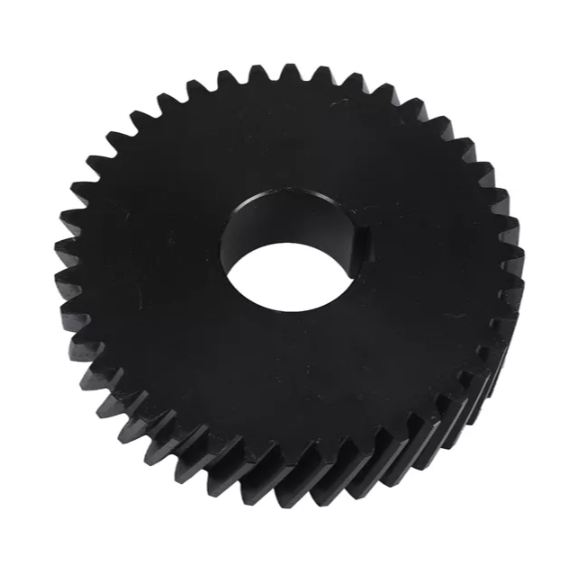
Heat treatment strengthens Custom Gears, but it also introduces predictable geometric change. Experienced manufacturers plan for this early. By combining allowance control, fixturing strategy, and process sequencing, distortion is guided rather than corrected later, keeping accuracy stable and production efficient.
| Control Aspect | Typical Methods Used | Practical Application in Custom Gears | Reference Values / Technical Indicators |
|---|---|---|---|
| Dimensional Change Source | Carburizing, induction hardening, nitriding | Identifies where size growth or shrinkage occurs on teeth, bores, and faces | Linear growth after carburizing: ~0.05–0.15% of case depth |
| Stock Allowance Planning | Pre-heat machining allowance | Ensures enough material remains for post-hardening grinding | Tooth flank allowance: 0.15–0.30 mm per side (depends on module) |
| Fixturing Strategy | Rigid vs compliant fixtures | Controls warping during heating and quenching | Flatness deviation reduction: up to 40% with symmetric fixturing |
| Case Depth Control | Carbon potential, time, temperature | Limits uneven expansion across tooth profile | Typical effective case depth: 0.6–1.2 mm at 550–650 HV |
| Core Hardness Target | Controlled cooling and tempering | Maintains gear toughness while limiting distortion | Core hardness range: 30–40 HRC for alloy steels |
| Quench Method | Oil, polymer, gas quench | Balances hardness with geometric stability | Oil quench distortion > gas quench by ~20–30% |
| Post-Heat Grinding Scope | Profile, lead, bore grinding | Restores final geometry after predictable distortion | Grinding stock removal: 0.05–0.20 mm |
| Inspection Timing | Pre- and post-heat measurement | Verifies distortion matches expected model | Runout change typically ≤ 0.03 mm after correction |
Tip:Heat-treatment distortion should be modeled, not reacted to. When allowance, fixturing, and grinding capability are planned together, Custom Gears reach final tolerance with fewer corrective cycles and more stable batch results.
In B2B manufacturing, repeatability defines real quality. Consistent Custom Gears require controlled tool wear, stable machine geometry, and disciplined setup procedures. Tool life is tracked through cutting force trends and surface finish data. Setup repeatability relies on fixed datums and standardized clamping. Statistical process control monitors key parameters such as pitch variation, profile deviation, and runout. When variation stays within defined control limits, batches assemble smoothly, field performance remains predictable, and long-term maintenance planning becomes more reliable.
Dimensional inspection translates design intent into measurable evidence. Modern Custom Gears are evaluated using gear measuring centers and CMM systems that capture involute profile deviation, helix or lead error, pitch variation, and total runout. These parameters directly influence load sharing and transmission stability. Inspection data is compared against defined tolerance grades to confirm functional compliance. By verifying geometry before assembly, manufacturers reduce fit-up issues, prevent uneven tooth contact, and ensure the Gear performs as intended under real operating loads.
Functional testing validates how Custom Gears behave in motion, not just on paper. Loaded roll testing checks contact patterns across the tooth flank to confirm even load distribution. Vibration analysis identifies dynamic behavior linked to micro-geometry deviations. Noise evaluation captures frequency and amplitude data during rotation, revealing issues that static inspection may miss. Together, these tests ensure smooth meshing, controlled excitation, and stable transmission behavior, which are essential for applications where efficiency, comfort, or precision are critical.
Documentation connects every Custom Gear to its manufacturing history. Material certificates, heat treatment records, and inspection reports form a traceable chain from raw stock to finished component. This structure supports repeat production, root-cause analysis, and lifecycle service planning. In regulated or safety-critical industries, traceability also demonstrates compliance and accountability. Clear, consistent records give customers confidence that each Gear was produced under controlled conditions and meets the same standards as previous deliveries.
Surface treatments are selected to match operating stress, environment, and expected service life. Processes such as carburizing, nitriding, or PVD coatings increase surface hardness while preserving core toughness. These treatments reduce adhesive wear, micropitting, and corrosion risk without changing critical geometry. Controlled surface roughness also supports stable lubrication films, which lowers friction during operation. When surface treatment is aligned with material and load conditions, Custom Gears maintain consistent performance from storage through long-term service.
Final cleaning is a functional step, not cosmetic. Residual oils, abrasive particles, or heat-treatment scale can interfere with assembly and lubrication. Controlled cleaning methods remove contaminants while protecting tooth flanks and datum surfaces. Handling procedures use dedicated fixtures and protective covers to prevent impact or edge damage. When Custom Gears are cleaned and handled correctly, they enter assembly lines in a stable, ready-to-install state, reducing rework and minimizing early-life wear.
Packaging protects the accuracy achieved during manufacturing. Moisture barriers, corrosion inhibitors, and shock-resistant materials shield Custom Gears from environmental exposure. Spacers and separators prevent tooth-to-tooth contact that can cause micro-damage during transport. Orientation and labeling support correct handling at the destination. Effective packaging preserves dimensional integrity and surface condition, ensuring each Gear arrives inspection-ready and performs exactly as released from production.
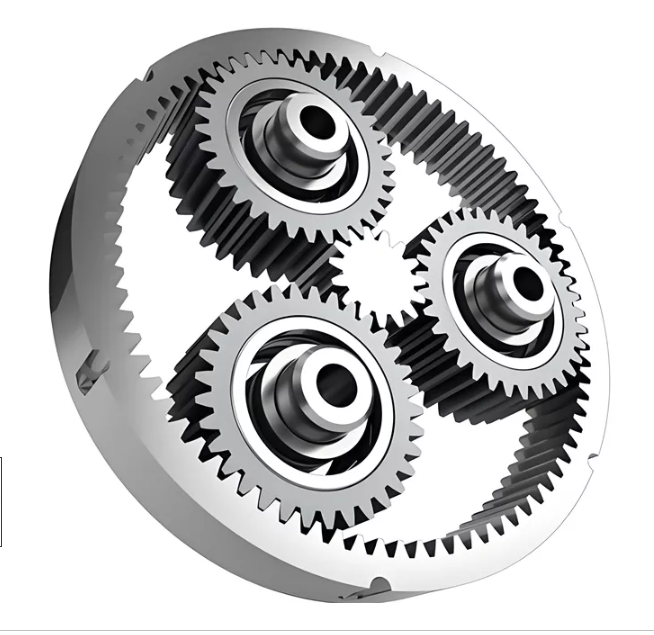
Stable load transmission depends on precise tooth geometry, controlled surface texture, and correct alignment during assembly. When profile and lead deviations remain within tight limits, multiple teeth share load simultaneously, reducing peak stress. A smooth surface finish supports consistent lubrication films, lowering friction and vibration. This balance minimizes dynamic excitation across operating speeds. As a result, the Gear maintains predictable torque transfer, reduced noise, and stable behavior even under fluctuating load conditions.
Service life is determined by how well design intent aligns with manufacturing execution. Material selection defines fatigue resistance, heat treatment establishes surface durability, and finishing controls stress concentration. When these elements work together, wear progresses slowly and uniformly. Controlled processes prevent localized damage and premature failure. This alignment extends maintenance intervals, improves reliability, and supports long-term system uptime in demanding industrial applications.
Custom Gears can be engineered to prioritize noise control, transmission efficiency, or load capacity based on how and where they operate. A structured manufacturing process ensures these priorities are translated into measurable design features and stable production outcomes, enabling consistent results across different projects and operating environments.
| Optimization Focus | Design & Process Adjustments | Resulting Performance Benefit |
|---|---|---|
| Low Noise Operation | Optimized tooth geometry, controlled finishing, honing or lapping | Reduced vibration and quieter gear meshing |
| High Efficiency | Precision profile control, smooth surface texture, stable lubrication film | Lower energy loss and improved power transfer |
| High Load Capacity | Material selection, deeper case hardening, robust blank formation | Increased torque handling and longer service life |
Tip:Define the primary performance priority early so design, heat treatment, and finishing stay aligned throughout production.
Custom Gears achieve reliable performance through disciplined manufacturing and aligned process control. Design, materials, heat treatment, finishing, and inspection work as one system to ensure accuracy, durability, and repeatability. Dongguan Yongfeng Gear Co., Ltd. delivers Custom Gears using this structured approach, providing precise fit, stable load transmission, and long service life, helping customers reduce downtime and maintain dependable mechanical systems.
A: Custom Gears are application-specific Gear components made through controlled steps to match load, speed, and accuracy needs.
A: Custom Gears rely on aligned design, material, and finishing steps so each Gear delivers stable load transmission and long service life.
A: Custom Gears use tailored geometry and process control, while standard Gear options follow fixed dimensions with limited optimization.
A: Custom Gears may cost more initially, but each Gear reduces downtime and maintenance through higher reliability and consistency.


