
Views: 0 Author: Site Editor Publish Time: 2026-02-09 Origin: Site


When engineers or sourcing managers compare sheet metal fabrication and CNC Machining, they are not simply choosing a production method. They are deciding how a product will be built, how it will perform in real conditions, and how well it can scale over time. Each process carries different implications for geometry, precision, materials, and cost structure. In this article, we break down the real decision logic behind Sheet Metal Fabrication Vs. CNC Machining, helping teams align manufacturing choices with functional requirements and long-term business goals.
Sheet metal fabrication works by shaping flat metal sheets into three-dimensional forms through cutting, bending, and joining. The logic is structural efficiency. Material thickness stays consistent, which helps designers create lightweight yet strong parts. Enclosures, brackets, and panels benefit most from this approach because geometry relies on folds and angles rather than mass. Engineers often choose it when the design emphasizes coverage, airflow, or modular assembly. The process supports fast iteration once tooling and bend rules are defined, making it reliable for repeatable production.
CNC Machining removes material from a solid block to create a finished part. This subtractive logic enables complex shapes, internal pockets, and tight dimensional control. Designers can define features freely without relying on bend lines or flat patterns. Because the part starts solid, strength and rigidity remain high even in compact geometries. CNC Machining is widely trusted in applications where accuracy and repeatability directly affect performance. Digital toolpaths also allow fast design updates without retooling, which supports iterative engineering workflows.
In real engineering practice, formative and subtractive workflows do far more than define how a part is made. They directly influence mechanical behavior, assembly accuracy, and long-term stability. Looking at these workflows through a performance lens helps engineers choose a process that supports real operating conditions rather than surface-level design preferences.
| Dimension | Formative Workflow (Sheet Metal Fabrication) | Subtractive Workflow (CNC Machining) |
|---|---|---|
| Manufacturing principle | Shaping flat sheet by cutting, bending, and forming at constant thickness | Removing material from a solid billet or block |
| Typical wall thickness / section | Commonly 0.8–3.0 mm (aluminum, stainless steel) | Solid or variable walls, local features <1 mm or >20 mm |
| Structural reinforcement method | Strength gained through bends, flanges, and ribs | Strength gained through material mass and cross-section |
| Bending stiffness behavior* | Effective moment of inertia can increase 2–5× after forming | Stiffness governed directly by material modulus and section |
| Vibration response | Thin-wall structures, lower natural frequency, tunable via ribs | Higher natural frequency, lower amplitude under dynamic loads |
| Dimensional stability | Springback requires compensation and process control | High repeatability with CNC positioning |
| Typical dimensional capability | Formed feature tolerance often ±0.2–0.5 mm | Common machining tolerance ±0.01 mm (machine dependent) |
| Assembly accuracy | Relies on slots, clearance holes, and fastener adjustment | Allows integrated datums and precision alignment |
| Long-term performance | Stable under moderate loads and static conditions | Superior under high load, thermal cycling, and precision duty |
| Typical applications | Enclosures, frames, brackets, panels | Mounting bases, motion parts, precision interfaces |
| Cost–performance strategy | Uses geometry efficiency to reduce weight and cost | Uses precision and solidity to guarantee performance |
| Engineering considerations | Minimum bend radius, hole-to-edge distance, springback | Material removal rate, fixturing, tool access |
| Key material properties | Yield strength and formability dominate design | Elastic modulus and hardness dominate design |
Tip:For systems that need both structural coverage and precision alignment, a hybrid approach works well—sheet metal for the main structure and CNC machining for critical mounting or datum features.
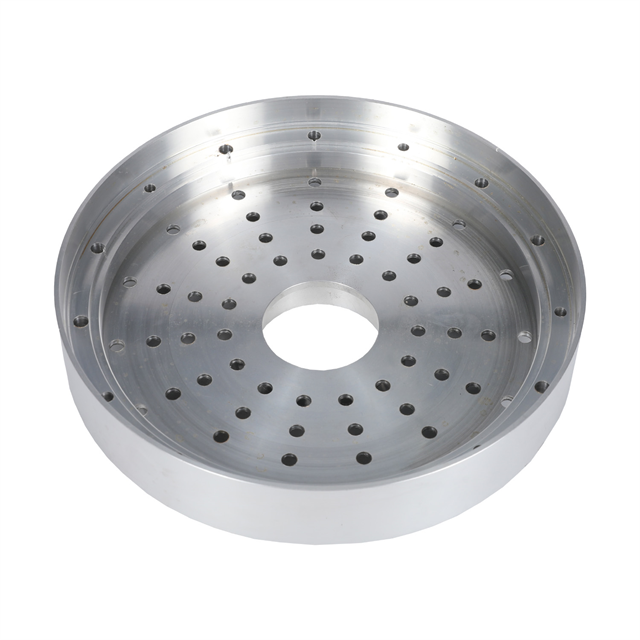
Sheet metal fabrication supports geometries that rely on planar surfaces and consistent thickness. Box-like forms, frames, and housings align naturally with this method. Designers can integrate flanges, vents, and mounting tabs directly into the layout. Because bends replace material removal, designs remain efficient and predictable. This geometry model works well for products that must enclose components or guide airflow. It also simplifies downstream assembly, since flat patterns convert cleanly into finished structures.
CNC Machining enables geometry that sheet-based methods cannot achieve. Deep cavities, contoured surfaces, and multi-axis features become accessible without design compromises. Engineers can integrate threads, channels, and precision bores into a single solid part. This freedom reduces assembly steps and improves alignment accuracy. CNC Machining also supports asymmetric designs that serve functional rather than structural needs. When performance depends on internal geometry, this process gives designers full control over every dimension.
Geometry complexity should always align with process efficiency. Simple folded shapes gain no advantage from solid machining. Likewise, intricate internal features lose clarity when forced into sheet metal rules. Smart teams evaluate geometry early and assign it to the process that produces it most directly. This alignment reduces lead time and improves predictability. In practice, the most efficient manufacturing plans begin with geometry classification rather than cost comparison alone.
Sheet metal fabrication delivers reliable dimensional consistency for formed parts. Bends, cut edges, and hole locations follow established tolerances that meet most structural and enclosure needs. Because material flexes during forming, tolerance planning focuses on functional fit rather than absolute precision. This approach works well for assemblies where parts align through fasteners or slots. With proper design rules, sheet metal fabrication maintains stable quality across large production volumes.
CNC Machining enables dimensional accuracy through closed-loop control, rigid machine structures, and calibrated tool paths. Multi-axis systems maintain consistent positioning across complex geometries, which is critical for components involving motion transfer, fluid sealing, or heat dissipation. Fine surface finishes achieved through controlled cutting speeds reduce friction and improve contact behavior between mating parts. From an engineering perspective, this precision minimizes cumulative error across assemblies and improves functional repeatability, especially in systems where micron-level deviations can affect efficiency, wear rate, or thermal stability.
Tolerance requirements define how tightly parts must fit, align, or interact during operation. When assemblies allow adjustment through slots, fasteners, or flexible interfaces, sheet metal fabrication provides sufficient accuracy with structural efficiency. However, fixed-reference designs, such as bearing seats or datum-controlled interfaces, demand CNC Machining to ensure consistent alignment and load distribution. Treating tolerance as a functional parameter rather than a drawing constraint helps engineers select processes that support reliability, reduce corrective assembly work, and maintain performance consistency over the product lifecycle.
Sheet metal fabrication typically uses aluminum alloys, carbon steel, and stainless steel because they combine good ductility with reliable strength. Aluminum sheets are often selected for weight-sensitive products, while steel offers higher stiffness at lower cost. Typical thickness ranges from 0.8 mm to 3.0 mm, which balances bendability and structural rigidity. From a mechanical standpoint, thinner gauges favor formability and faster processing, while thicker gauges increase load capacity and vibration damping. Consistent thickness also simplifies structural analysis and repeatable forming behavior.
CNC Machining accommodates a broad spectrum of materials beyond standard sheet metals. High-strength aluminum alloys, tool steels, titanium, and engineering plastics can all be machined with controlled precision. This flexibility allows engineers to match material properties to operating conditions such as temperature, wear, or chemical exposure. Machining also preserves material integrity by maintaining continuous grain structure in critical load paths. As a result, designers can optimize stiffness, fatigue resistance, and surface interaction in ways that sheet-based processes cannot support.
Effective material selection begins with understanding how a part will carry load, transfer heat, or resist environmental stress. Sheet metal fabrication aligns well with functions that depend on surface area, airflow, or enclosure rather than mass. CNC Machining aligns with parts where concentrated stress, tight alignment, or thermal conduction control performance. By linking modulus, yield strength, and thermal behavior to the chosen process, engineers create designs that are mechanically efficient, easier to inspect, and more consistent across production runs.
Sheet metal fabrication scales efficiently once designs stabilize. Flat patterns nest efficiently, and forming operations repeat quickly. As volume increases, per-unit cost drops predictably. This makes the process attractive for products with steady demand. Production planning becomes simpler, and lead times remain consistent. For repeatable structures, sheet metal fabrication delivers strong operational efficiency.
CNC Machining performs well when volumes are low or designs evolve. Programming changes replace physical tooling changes, which shortens iteration cycles. This flexibility supports prototyping and early production. CNC Machining also maintains consistent quality across small batches. For teams validating designs or launching new products, this adaptability adds strategic value.
In B2B manufacturing decisions, upfront process pricing rarely reflects the true economic outcome. Per-part value emerges from how a process affects assembly time, quality stability, and lifecycle efficiency. Comparing sheet metal fabrication and CNC Machining through this lens reveals cost drivers that only appear after production begins.
| Value Dimension | Sheet Metal Fabrication | CNC Machining |
|---|---|---|
| Cost structure driver | Tooling amortization + high throughput | Programming + machine time per part |
| Typical economic volume range | Most efficient above ~50–100 units | Highly efficient from 1–50 units |
| Unit cost behavior vs. volume | Steep decline as volume increases | Gradual decline; relatively stable |
| Setup cost characteristics | Die, tooling, or brake setup (hundreds–thousands USD, project dependent) | CAM programming and fixturing (often hours, no hard tooling) |
| Assembly labor impact | Often requires secondary fasteners or joining | Can integrate features into one part |
| Typical assembly time per part | 5–20 min (fasteners, alignment) | 1–5 min (direct fit, fewer components) |
| Rework and adjustment rate | Higher if bend tolerance stacks | Lower due to tight dimensional control |
| Typical dimensional repeatability | ±0.2–0.5 mm formed features | ±0.01 mm machined features |
| Quality inspection effort | Sampling-based dimensional checks | Direct measurement against datums |
| Scrap cost behavior | Low per part; sheet nesting optimized | Higher per part; material removal loss |
| Material utilization efficiency | Often >80% sheet utilization | Can drop below 50% for complex parts |
| Design change cost | Moderate once tooling is finalized | Low; digital update only |
| Total cost per delivered part | Lower at scale when tolerances allow | Lower when precision reduces assembly steps |
| Best-fit value scenario | High-volume structural components | Low-to-mid volume precision components |
| Business risk profile | Predictable once stabilized | Flexible and responsive to change |
Tip:When comparing quotes, add assembly labor, inspection time, and expected rework into the per-part cost model. CNC Machining often offsets higher unit pricing by eliminating downstream labor that sheet metal assemblies still require.
Sheet metal fabrication is especially effective for products that require large surface areas, consistent wall thickness, and efficient enclosure of components. Enclosures, electrical cabinets, racks, and machine frames benefit from its high strength-to-weight ratio and predictable structural behavior. In HVAC systems, folded sheet metal supports airflow control while keeping weight low. Electronics housings rely on it for EMI shielding and thermal management through vents and perforations. From an engineering standpoint, standardized bend rules and modular panels allow customization without redesigning the entire structure, which improves scalability and reduces redesign risk across product families.
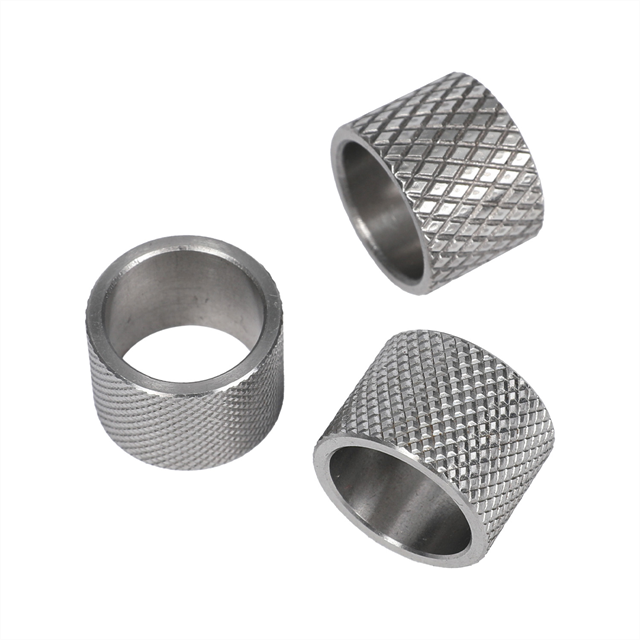
CNC Machining is fundamental in industries where precision directly affects safety, reliability, or regulatory compliance. Aerospace components demand tight tolerances to ensure alignment under vibration and thermal loads. Medical devices rely on machined parts for exact fits, smooth surfaces, and repeatable sterilization performance. In industrial automation, CNC Machining produces motion components and mounting bases that maintain accuracy over millions of cycles. Scientifically, the process offers controlled material removal and stable dimensional outcomes, which supports predictable mechanical behavior and long service life in performance-critical environments.
Many advanced systems intentionally combine sheet metal fabrication and CNC Machining to balance structural efficiency with precision. Sheet metal provides lightweight frames, covers, and load distribution, while machined parts define critical interfaces, alignment features, and bearing seats. This approach follows a systems-engineering principle: use precision only where function requires it. By separating structural and precision roles, designers reduce machining time, control cost, and simplify assembly. Hybrid designs are common in industrial equipment, robotics, and electronics, where performance, serviceability, and manufacturability must all be optimized together.
Sheet Metal Fabrication Vs. CNC Machining is not about choosing a better method, but about choosing the right one. Geometry, tolerance, material behavior, and production volume shape the decision. Sheet metal fabrication delivers lightweight, efficient structures, while CNC Machining ensures precision and functional reliability. Dongguan Yongfeng Gear Co., Ltd. provides high-quality manufacturing solutions that combine accuracy, consistency, and scalability, helping customers turn design intent into reliable products while controlling cost, quality, and long-term performance.
A: Sheet metal forms thin sheets, while CNC Machining cuts solid material for precision parts.
A: Choose CNC Machining for tight tolerances, complex geometry, and precision-critical components.
A: CNC Machining costs more per part, but reduces assembly and rework expenses.
A: CNC Machining uses digital tool control to maintain consistent dimensions.
A: Yes, hybrid designs use sheet metal structures with CNC Machining interfaces.
A: Aerospace, medical, and automation depend on CNC Machining for reliability.


