
Views: 0 Author: Site Editor Publish Time: 2026-02-09 Origin: Site


CNC Machining vs. 3D Printing is no longer a theoretical debate. Engineers, buyers, and manufacturers face this choice on real projects with real deadlines. CNC Machining remains essential for precision, strength, and repeatable production, while 3D Printing accelerates early design and iteration. The true decision depends on how parts are used, scaled, and verified in practice. This article explains CNC Machining and 3D Printing from a production-focused perspective, helping teams select the right process based on performance, cost efficiency, and long-term manufacturing reliability.
To clearly understand how CNC Machining and 3D Printing differ at a technical and practical level, it helps to compare them across process logic, engineering outcomes, and real production considerations. The comparison below focuses on measurable parameters, application impact, and decision-critical details engineers and buyers care about.
| Dimension | CNC Machining (Subtractive Manufacturing) | 3D Printing (Additive Manufacturing) |
|---|---|---|
| Manufacturing principle | Material is removed from a solid billet using cutting tools (milling, turning, drilling). | Material is deposited or fused layer by layer based on sliced digital data. |
| Starting material form | Solid bar, plate, or billet (metal or plastic). | Filament, resin, or metal powder depending on process. |
| Material density | ~99.9–100% of base material density (isotropic). | Typically 90–99% depending on process (often anisotropic). |
| Mechanical behavior | Uniform strength in X, Y, Z directions. | Strength varies by build direction; Z-axis often weaker. |
| Typical dimensional tolerance | ±0.01–0.05 mm (can reach ±0.005 mm with precision setups). | ±0.1–0.3 mm for most industrial systems. |
| Surface roughness (Ra) | Ra 0.8–3.2 μm as-machined; finer with finishing. | Ra 6–25 μm depending on layer height and process. |
| Minimum feature size | Limited by tool diameter, typically ≥0.5–1.0 mm. | Limited by nozzle or laser spot, typically ≥0.4–1.0 mm. |
| Internal geometry capability | Restricted by tool access and fixturing. | Internal channels, lattices, and cavities easily produced. |
| Production speed per part | Fast cutting once setup is complete; seconds to minutes per feature. | Build time scales with part height; hours common even for small parts. |
| Setup and preparation | CAM programming, fixturing, tool selection required. | Minimal setup; slicing and orientation done in software. |
| Material utilization | Higher waste due to chip removal (recyclable for metals). | Low waste; material used closely matches part volume. |
| Repeatability across batches | Very high; ideal for serial production. | Moderate; variation between builds possible. |
| Best-fit applications | End-use parts, tight-tolerance components, load-bearing structures. | Prototypes, design validation, complex geometries. |
| Typical industries | Aerospace, automotive, industrial equipment, medical devices. | R&D, consumer product design, tooling, custom fixtures. |
| Key engineering consideration | Tool access, fixturing strategy, machining time. | Build orientation, layer bonding, support strategy. |
Tip:When early designs rely on complex internal features, additive methods accelerate validation. Once geometry stabilizes and performance requirements dominate, transitioning to CNC Machining improves precision, strength consistency, and production readiness.
CNC Machining delivers structural integrity because the cutting process does not alter the internal grain structure of the raw material. Machined parts retain isotropic mechanical properties, meaning strength and stiffness remain consistent along all axes. This is especially important for components exposed to cyclic loads, vibration, or thermal variation. Tight process control over spindle speed, feed rate, and tool path also minimizes residual stress, helping parts maintain dimensional accuracy throughout their service life and across temperature changes.
3D Printing enables design exploration by removing many geometric constraints found in subtractive processes. Engineers can quickly evaluate internal flow paths, weight-reduction features, and ergonomic forms that would require complex tooling in CNC Machining. This capability accelerates concept testing and design iteration during early development stages. Physical models produced through 3D Printing allow teams to assess assembly fit, user interaction, and spatial constraints before finalizing designs for production methods.
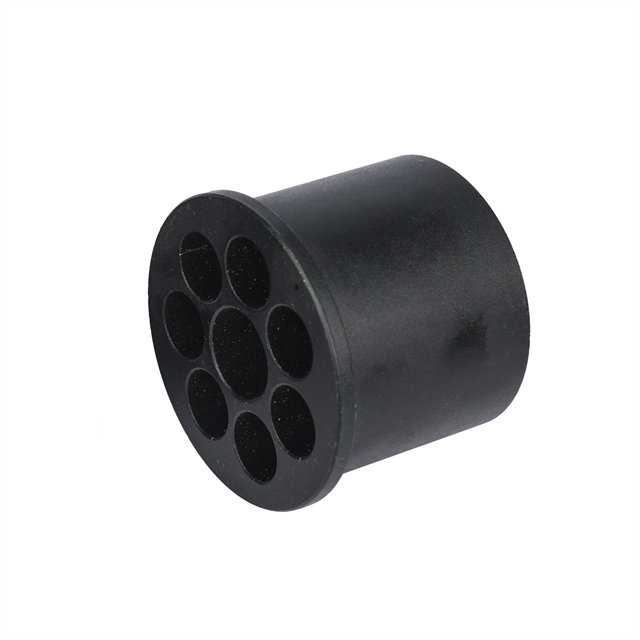
CNC Machining achieves tight tolerances through precise control of machine motion, tool geometry, and cutting parameters. Modern CNC systems use closed-loop feedback to maintain positional accuracy along all axes. Tool wear is monitored and compensated, which helps preserve dimensional consistency across long production runs. This repeatability supports interchangeable parts and reduces assembly adjustments. As a result, CNC Machining is widely used for components that must meet strict dimensional and geometric requirements.
Surface finish in 3D Printing is influenced by layer thickness, material flow, and build orientation. Thinner layers improve surface appearance but increase build time. Curved and angled surfaces often show stepping effects due to the layered process. While post-processing can improve finish quality, the initial surface condition varies more than machined surfaces. This makes printed parts suitable for visual evaluation and fit checks rather than precision contact surfaces.
Defining precision requirements early helps determine the most suitable manufacturing process. CNC Machining supports tight tolerances, consistent hole geometry, and smooth interfaces needed for mechanical assemblies. 3D Printing allows faster iteration when dimensional accuracy is less critical. Many development workflows begin with printed prototypes, then transition to CNC Machining for final dimensional control and production readiness.
CNC Machining maintains native material properties because the process removes material without altering the internal grain structure. Metals retain isotropic strength, consistent hardness, and predictable thermal expansion. This allows engineers to rely on standardized material data when performing stress analysis or thermal calculations. Machined parts also respond well to secondary processes such as heat treatment and surface finishing. These factors make CNC Machining suitable for applications requiring verified mechanical performance and long-term reliability.
Material behavior in 3D Printing is closely tied to the deposition and bonding process. Polymer parts often show direction-dependent strength due to layered construction. Metal printing involves localized melting and solidification, which can introduce microstructural variation. Engineers must consider build orientation, cooling rate, and post-processing when evaluating printed components. These variables influence stiffness, fatigue resistance, and dimensional stability under load or temperature change.
Load-bearing parts require consistent mechanical performance under repeated stress. CNC Machining produces components with uniform density and stable microstructure, which improves fatigue life and load distribution. Machined parts also maintain accurate geometry over time, supporting precise alignment and secure fastening. For structural elements exposed to vibration, heat, or mechanical shock, CNC Machining provides predictable behavior and dependable long-term performance.
CNC Machining becomes more cost-efficient as production volume increases. Initial setup and programming costs are spread across more units, reducing per-part expense. Programs and fixtures can be reused, improving efficiency over time. For medium to large production runs, CNC Machining often delivers lower unit costs and higher throughput.
3D Printing offers economic advantages for low-volume and fast-turn projects. Minimal setup time and low labor requirements allow teams to produce parts quickly without major upfront investment. This makes 3D Printing attractive for prototypes, custom fixtures, and short production runs where speed matters more than unit cost.
When comparing CNC Machining and 3D Printing from a cost perspective, unit price alone rarely tells the full story. Setup effort, production speed, labor involvement, and scalability all influence the real manufacturing cost over a product’s lifecycle, especially as volumes increase.
| Cost & Scale Factor | CNC Machining | 3D Printing |
|---|---|---|
| Typical setup time | 1–4 hours for CAM programming, tool setup, and fixturing | 10–30 minutes for file slicing and machine preparation |
| Setup cost impact | High initial setup cost, amortized over volume | Low initial setup cost, minimal amortization |
| Cycle time per part | 1–15 minutes depending on geometry and material | 1–6 hours depending on part height and layer thickness |
| Labor involvement | Skilled operator for setup; limited supervision during run | Minimal supervision once print starts |
| Cost scaling behavior | Unit cost decreases sharply as volume increases | Unit cost remains relatively constant with volume |
| Typical cost-effective volume range | ~50 to 10,000+ units | ~1 to 20 units |
| Material utilization rate | 60–90% (chips recyclable for metals) | 90–98% material usage |
| Machine hourly rate (industrial) | USD 60–120/hour (3-axis CNC) | USD 15–50/hour (industrial polymer printing) |
| Lead time per batch | Short once setup is complete; batch production efficient | Linear increase with part count |
| Design change cost | Requires reprogramming and potential re-fixturing | Very low; file update only |
| Best-fit applications | Production parts, functional components, repeat orders | Prototypes, custom parts, rapid iteration |
| Planning consideration | Volume forecasting critical for cost optimization | Ideal when demand uncertainty is high |
Tip:If production volume is expected to grow beyond early pilot runs, CNC Machining often delivers a lower total cost over time. For uncertain demand or frequent design changes, 3D Printing helps control upfront cost and timeline before committing to scalable production.
CNC Machining is widely used for functional testing because it produces parts that closely match final production conditions. Machined components reflect true material behavior, surface finish, and dimensional accuracy. This allows engineers to conduct meaningful load testing, fatigue evaluation, and thermal assessment. Results obtained from CNC-machined parts translate directly to production performance, reducing uncertainty before market release. For safety-critical or load-bearing applications, this testing approach provides confidence that designs will perform as intended in real operating environments.
3D Printing accelerates early development by enabling frequent design updates without manufacturing delays. Engineers can test multiple design variants within short timeframes, improving decision speed. Physical models support checks for assembly fit, human interaction, and spatial clearance. This iterative approach helps teams identify design issues early, when changes are less costly. As a result, product concepts mature faster before transitioning to production-focused processes.
Hybrid manufacturing strategies combine the strengths of both technologies. 3D Printing supports rapid exploration of complex geometry, while CNC Machining refines critical surfaces and interfaces. This approach enables faster development without sacrificing performance requirements. By printing near-net shapes and machining precision features, manufacturers optimize cost, shorten timelines, and maintain production-grade quality. Such workflows are increasingly common in industries that value both innovation speed and reliable end-use performance.
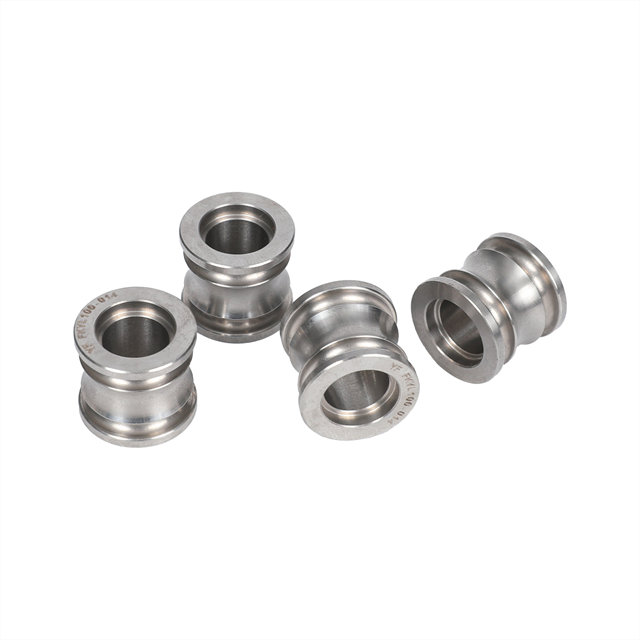
CNC Machining integrates smoothly into established quality control systems used across manufacturing industries. Machined parts are easy to inspect using standard tools such as CMMs, gauges, and optical measurement systems. Dimensions remain consistent, which simplifies first-article inspection and ongoing batch verification. Because CNC Machining follows well-documented processes, quality records are easier to maintain and audit. This compatibility supports internal quality teams and external partners who rely on clear, repeatable inspection data.
Certification plays a key role in regulated industries. CNC Machining aligns well with ISO, AS, and industry-specific standards because materials, processes, and tolerances are clearly defined. Documentation for material traceability and process control is straightforward. In contrast, additive workflows often require additional validation steps. As a result, CNC Machining is frequently selected for parts that must meet strict compliance, safety, or contractual requirements in aerospace, automotive, and industrial sectors.
CNC Machining benefits from a mature global supply chain. Qualified machine shops exist worldwide, offering consistent capabilities and familiar workflows. This availability reduces sourcing risk and supports multi-supplier strategies. Lead times remain predictable even when volumes increase. 3D Printing capacity, while growing, is less standardized across regions. For long-term production planning and supplier diversification, CNC Machining offers stronger scalability and supply chain resilience.
CNC Machining vs. 3D Printing is a strategic manufacturing decision, not a simple comparison. CNC Machining delivers proven advantages in precision, material strength, and scalable production, making it essential for end-use and load-bearing parts. 3D Printing adds value through rapid iteration and early design validation. By understanding how both processes fit into real production workflows, manufacturers can reduce risk and cost. Dongguan Yongfeng Gear Co., Ltd. supports this approach by providing high-quality CNC machined components and reliable manufacturing services that help customers achieve consistent performance and long-term value.
A: CNC Machining removes material from solid stock, while 3D Printing builds parts layer by layer.
A: CNC Machining provides tight tolerances, stable materials, and reliable performance in production.
A: CNC Machining scales well for volume, while 3D Printing suits low-quantity, fast iterations.
A: CNC Machining is ideal once designs require precision, strength, and repeatable manufacturing.


