
Views: 0 Author: Site Editor Publish Time: 2026-06-16 Origin: Site


Have you ever wondered how gears transfer power so smoothly? The secret lies in the gear tooth profiles. These profiles shape how gears mesh and perform.
Gear tooth profiles are crucial in mechanical engineering. They affect efficiency, noise, and durability in machines.
In this post, you’ll learn about involute and cycloidal gear tooth profiles. We’ll explore their design, advantages, and where each is used.
Table of Contents
A gear tooth has several key parts that define its shape and function. The depth refers to how tall the tooth is, from the base to the tip. The pitch is the distance between corresponding points on adjacent teeth, usually measured along the pitch circle. The angle relates to the shape and orientation of the tooth, especially the pressure angle, which affects how the teeth mesh and transfer force. These components work together to ensure smooth power transmission.
The Law of Gearing states that the angular velocity ratio between two gears must remain constant during operation. To achieve this, the gear teeth must be shaped so their contact points roll smoothly without slipping. Teeth designed this way are called conjugate teeth because their profiles complement each other perfectly to maintain a constant velocity ratio. This concept is fundamental in gear design to avoid jerky motion and wear.
Gears come in different types, each with distinct tooth profiles:
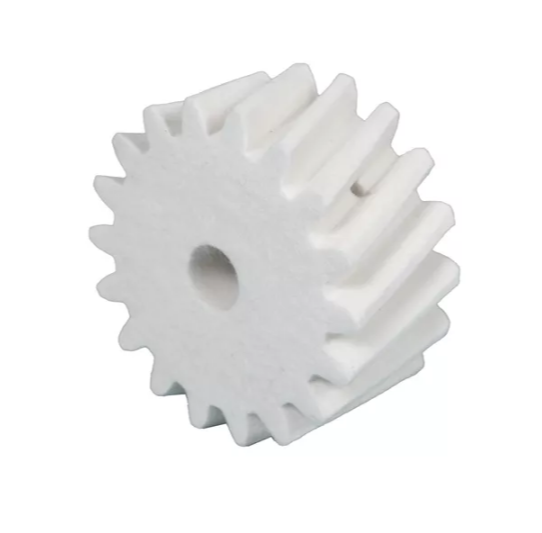
Spur gears have straight teeth parallel to the gear axis. They are the simplest and most common type.
Helical gears have teeth cut at an angle, creating a helix shape. This design allows smoother and quieter operation.
Bevel gears have conical shapes and are used to transmit motion between intersecting shafts.
Other types include worm gears, rack and pinion, and hypoid gears, each suited for specific applications.
Each gear type uses different tooth profiles to meet performance needs.
Spur gears are often used to explain gear tooth profiles because their teeth are straight and simple to analyze. Their geometry makes it easier to understand fundamental concepts like pitch, pressure angle, and the law of gearing. Once you grasp spur gear profiles, the principles can be extended to more complex gears such as helical or bevel gears. This approach helps learners build a solid foundation in gear design.
An involute curve is a special shape generated by unwinding a taut string from a circle's circumference without slipping. Imagine holding a string wrapped around a circle and pulling it straight as you walk around the circle's edge. The path traced by the string's free end is the involute curve.
In gear design, this base circle serves as the foundation for the involute tooth profile. The involute curve ensures smooth and consistent contact between gear teeth during rotation, maintaining a constant velocity ratio.
To construct an involute tooth profile, start by dividing the base circle into equal segments. From each division point, draw tangents. Then, measure arcs along the base circle and project corresponding lengths along these tangents. Connecting these points forms the involute curve.
This curve shapes the face and flank of the gear tooth, providing the precise contour needed for proper meshing. The involute profile is symmetrical on both sides of the tooth, ensuring balanced force transmission.
The base circle is critical in involute gears because the involute curve is generated from it. Two mating gears have their own base circles. The point where their involute teeth make contact is called the pitch point.
At this pitch point, the common normal to the tooth surfaces is tangent to both base circles. This condition guarantees the gears follow the law of gearing, maintaining a constant speed ratio during rotation.
The pressure angle is the angle between the common normal at the pitch point and the tangent to the pitch circle. It plays a vital role in gear performance.
A constant pressure angle throughout tooth engagement ensures smooth transmission of force. It reduces friction and wear, leading to longer gear life. Standard pressure angles like 20° or 25° are commonly used in involute gears.
The pressure angle also affects the strength and size of the gear teeth. A larger pressure angle typically yields stronger teeth but may increase noise and stress.
One of the biggest advantages of involute gear profiles is their ability to tolerate small changes in centre distance without affecting the velocity ratio. This means the gears can move slightly closer or farther apart, yet still maintain a constant speed ratio. This flexibility is crucial in real-world applications where perfect alignment is difficult to achieve due to manufacturing tolerances or assembly errors. The involute shape ensures that the gears still mesh smoothly, keeping the system efficient and reliable.
Involute gears maintain a constant pressure angle throughout the engagement of the teeth. The pressure angle is the angle at which the force is transmitted between the teeth. Keeping it constant helps in smooth power transmission and reduces friction. This smooth running means less noise, less vibration, and less wear on the gear teeth. As a result, involute gears tend to last longer and require less maintenance, making them ideal for many mechanical systems.
The involute tooth profile is generated by a single curve, which simplifies manufacturing. The shape can be produced using standard cutting tools and processes, often with straight-sided cutters. This simplicity reduces production time and cost. Manufacturers can easily produce gears in large quantities without sacrificing quality. This ease of production is a key reason why involute gears dominate the gear industry.
Interference happens when the tip of one gear tooth collides with the root of the mating tooth, causing damage or poor meshing. Involute gears can experience interference, especially when the pinion has too few teeth or when the centre distance is too small. However, engineers can avoid interference through several methods:
Reducing tooth height: Shortening the teeth prevents overlap.
Under-cutting the pinion: Removing material near the tooth base to clear interference.
Increasing centre distance: Slightly moving gears apart changes the pressure angle, avoiding collisions.
Tooth profile modification: Adjusting tooth thickness or pressure angle to improve meshing.
By applying these techniques, interference can be minimized or eliminated, ensuring smooth operation.

A cycloid is a curve traced by a point on the edge of a circle rolling without slipping on a straight line. Imagine a small wheel rolling along the ground; a point on its rim draws a cycloid path.
For gears, two related curves matter:
Epicycloid: traced by a point on a circle rolling on the outside of a fixed circle.
Hypocycloid: traced by a point on a circle rolling on the inside of a fixed circle.
These curves form the basis of cycloidal gear tooth profiles. The epicycloid shapes the face (outer part) of the tooth, while the hypocycloid shapes the flank (inner part). Together, they create a smooth, double-curved tooth profile.
To build a cycloidal tooth profile:
Start with the pitch circle, which is the reference circle for gear size.
Roll a smaller circle on the outside of the pitch circle. A point on this smaller circle traces the epicycloid curve, forming the tooth face.
Roll another smaller circle on the inside of the pitch circle. A point on this circle traces the hypocycloid curve, forming the tooth flank.
Join these two curves smoothly to complete one side of the tooth.
Repeat the process on the opposite side using similar rolling circles but in the opposite direction.
The result is a tooth shaped by two curves, unlike the single involute curve.
The rolling circles are crucial in defining the shape of the cycloidal tooth. Their size and position relative to the pitch circle control the curvature of the tooth face and flank.
The rolling circle outside the pitch circle generates the epicycloid (tooth face).
The rolling circle inside the pitch circle generates the hypocycloid (tooth flank).
The pitch circle acts as the base for these rolling motions, ensuring the teeth mesh properly. Matching the diameters of rolling circles for mating gears helps maintain smooth engagement.
Cycloidal gears have a rich history in precision devices like clocks and watches. Their design offers:
Low friction: The convex-concave contact reduces sliding friction.
Wide tooth flanks: Provide strength and durability.
Smooth engagement: Ideal for delicate, precise movements.
These qualities made cycloidal profiles popular in horology, where accuracy and longevity are vital. However, their sensitivity to exact center distances limits their use in larger, variable-load machinery.
Cycloidal gear teeth have wider flanks compared to involute teeth. This wider contact area means they can handle more load and are stronger for the same pitch size. Because of this strength, cycloidal teeth are often preferred for gears made from cast materials, which are common in some heavy-duty or traditional applications. The broader tooth base distributes stress better, reducing the risk of tooth breakage.
The shape of cycloidal teeth involves a convex surface on one tooth meshing against a concave surface on the mating tooth. This convex-to-concave contact reduces sliding friction during gear operation. Less sliding friction means the teeth wear down more slowly, extending the gear's life. This feature made cycloidal gears popular in precision instruments like clocks and watches, where smooth, low-friction motion is crucial.
A key drawback of cycloidal gears is their sensitivity to centre distance changes. The exact spacing between the gear shafts must be maintained precisely. Even small deviations can cause the velocity ratio to vary, leading to uneven motion or increased wear. This sensitivity makes cycloidal gears less suitable for applications where vibrations or misalignments are common. In contrast, involute gears tolerate small centre distance changes without performance loss.
Cycloidal gear teeth are shaped by two curves—the epicycloid and hypocycloid—making their profiles more complex than the single involute curve. This complexity increases manufacturing difficulty and cost. Specialized tools and precise control are needed to cut the curved tooth flanks accurately. As a result, producing cycloidal gears is more time-consuming and expensive, especially in large quantities. This factor contributes to the widespread preference for involute gears in industry.
Involute and cycloidal gear teeth are shaped by very different curves. The involute profile is formed by unwinding a taut string from a base circle, creating a single smooth curve. This curve ensures the contact between teeth happens along a straight line normal to the base circle, maintaining a constant pressure angle.
Cycloidal profiles, however, use two curves: the epicycloid for the tooth face and the hypocycloid for the tooth flank. These curves come from rolling circles on the outside and inside of the pitch circle, respectively. The double-curve shape leads to a more complex tooth geometry.
Involute gears are easier and cheaper to manufacture because their teeth come from a single curve. Standard cutting tools can produce the straight-sided involute teeth efficiently, making mass production straightforward.
Cycloidal gears require cutting tools that can handle the two different curves on each tooth. This complexity raises manufacturing time and cost. Precision is also critical for cycloidal gears, increasing production challenges.
The pressure angle in involute gears remains constant during tooth engagement. This constant angle allows smooth force transfer, reduces vibration, and minimizes wear. It also lets involute gears tolerate small changes in center distance without performance loss.
Cycloidal gears experience a varying pressure angle, which rises and falls during engagement. This variation can cause less smooth running and more noise. Additionally, cycloidal gears are very sensitive to changes in center distance, which can affect speed ratio and cause uneven motion.
Interference occurs when gear teeth collide improperly during meshing. Involute gears can experience interference if the pinion has too few teeth or if the center distance is too small. However, interference can be avoided by adjusting tooth height, undercutting, or increasing center distance.
Cycloidal gears do not suffer from interference due to their tooth shape. But they require an exact center distance for proper operation. Even slight deviations can cause transmission errors and increased wear.
Involute gears dominate modern mechanical systems due to their flexibility, ease of manufacturing, and tolerance to misalignment. They are found in automotive transmissions, industrial machinery, robotics, and many other applications.
Cycloidal gears, while strong and low-friction, are mostly limited to precision instruments like clocks and watches, where exact center distances can be maintained. Their manufacturing complexity and sensitivity make them less practical for general use.
Involute and cycloidal gear tooth profiles differ in shape, manufacturing, and performance. Involute gears offer constant pressure angles and tolerate center distance variations, making them ideal for most mechanical uses. Cycloidal gears provide strong, low-friction contact but need precise alignment and complex manufacturing. Engineers typically choose involute profiles for their reliability and ease of production. For advanced gear solutions, Dongguan Yongfeng Gear Co., Ltd. delivers high-quality gears that combine durability and precision, supporting diverse industrial needs.
A: A gear tooth profile defines the shape of each gear tooth, crucial for smooth meshing and power transmission between gears.
A: The gear tooth profile influences force transmission, wear, noise, and tolerance to center distance variations, impacting overall gear efficiency.
A: Involute gear teeth maintain a constant pressure angle and tolerate small center distance changes, ensuring smooth operation and easier manufacturing.
A: Cycloidal teeth use two curves for shape, offering wider flanks and reduced wear but are sensitive to center distance and harder to manufacture.
A: Interference occurs when gear tooth tips collide improperly, often due to small pinion teeth count or incorrect center distance, mainly in involute gears.
A: Yes, cycloidal gear teeth require complex cutting of two curves, increasing manufacturing difficulty and cost compared to involute profiles.
A: Cycloidal profiles are favored in precision instruments like clocks and watches due to low friction and strength but less common in heavy machinery.


