
Views: 0 Author: Site Editor Publish Time: 2026-03-31 Origin: Site


Have you ever wondered why some gear designs get rejected? It's a frustrating reality for many designers. In this article, we’ll explore the reasons behind supplier rejections of manufacturable gear designs. You’ll learn about common pitfalls, their impact on manufacturing, and how to improve your designs for success.
Gear design failures often begin long before production starts. In many cases, suppliers reject a gear design not because the part is impossible to make, but because it is too difficult, too risky, or too expensive to manufacture consistently.
Some of the most common reasons include:
Poor manufacturability consideration
A design may include overly complex geometry, deep undercuts, or special features that require uncommon tooling or extra machining steps. This increases production difficulty and cost.
Tolerance requirements that exceed process capability
If the specified tolerances are tighter than what the chosen manufacturing method can reliably achieve, suppliers may reject the design or recommend revisions.
Mismatch between design intent and manufacturing capability
Designers may create a gear based on theoretical performance goals without fully understanding the limitations of available equipment, tooling, or inspection methods.
Unsuitable material selection
A material may look acceptable on paper but fail to meet actual working requirements such as load capacity, wear resistance, heat resistance, or corrosion resistance.
Insufficient communication between engineering and production teams
When design engineers and manufacturers do not align early, critical production issues may only appear after the design is released.
When a gear design is rejected or fails during production, the consequences affect more than just one component. The entire manufacturing workflow can be disrupted.
Key impacts include:
Production delays
Redesign, revalidation, and supplier re-evaluation can slow down project schedules.
Higher manufacturing costs
Failed designs often lead to repeated prototyping, tooling adjustments, scrap, and additional engineering hours.
Material and resource waste
Incorrect designs can consume raw materials, machine time, and labor without generating usable parts.
Reduced customer satisfaction
Missed delivery dates and inconsistent product quality can harm supplier relationships and customer trust.
Increased safety risks
If a poorly designed gear enters service and fails under load, it may damage equipment or create hazards for operators.
A well-designed gear should therefore support not only functional performance, but also stable and repeatable manufacturing.
Real-world examples show how gear design problems can create serious technical and commercial consequences.
A major automotive manufacturer experienced repeated failures in its transmission system. After investigation, engineers found that the gear design did not fully account for the high torque loads generated during real operating conditions.
As a result:
Gear teeth failed prematurely
Vehicle reliability was affected
Product recalls increased costs
Brand reputation suffered
This case shows that gear strength calculations must reflect real service loads, not just ideal test conditions.
In another case, a supplier rejected a gear design for a medical device because the part geometry was too intricate for stable mass production. Although the design met performance goals, it required manufacturing features that were difficult to control consistently.
The result was:
Delayed product launch
Extra redesign work
Increased development cost
Lost market opportunity
This example highlights a key lesson: a gear design must be both functional and manufacturable.
To reduce rejection risk and improve production success, gear designers should focus on the following:
Design with manufacturing capability in mind from the beginning
Match tolerance requirements to realistic process limits
Select materials based on actual operating conditions
Involve suppliers early in the design review process
Validate load assumptions through real application analysis
By learning from common gear design failures, companies can improve manufacturability, reduce delays, and build more reliable transmission systems.
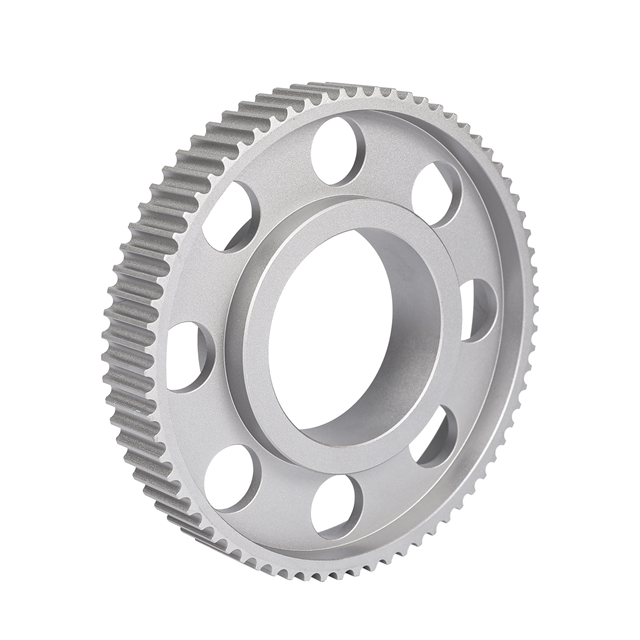
Selecting the right material for gear designs is crucial. The choice impacts performance, durability, and manufacturability. Different applications demand different materials. For instance, carbon steel is often used for its strength, while plastic materials might be preferred for lightweight applications.
When selecting materials, consider factors like strength, wear resistance, and environmental conditions. For example, gears in corrosive environments may require stainless steel or specialized coatings. Additionally, the material's ability to withstand temperature fluctuations is vital. Gears in high-temperature applications must be made of materials that can maintain their properties without deforming or failing.
The surface properties of the material also play a significant role. A gear's surface hardness affects its wear characteristics. In many cases, surface treatments like carburizing or nitriding are applied to enhance hardness and resistance to wear. These treatments can significantly extend the lifespan of gears.
Operating conditions are another critical factor influencing gear design. Factors such as speed, load, and environmental conditions directly affect gear performance and longevity. High-speed applications require tighter tolerances and smoother tooth surfaces. If the gear operates at lower speeds, rougher finishes might be acceptable.
Moreover, the load conditions must be carefully analyzed. Gears must be designed to handle both peak and continuous loads. Understanding the duty cycle helps in selecting appropriate tooth designs and material specifications. For instance, gears that experience high torque must be robust enough to avoid premature failure.
Environmental conditions also matter. Gears exposed to moisture or chemicals may need specialized materials or coatings to prevent corrosion. Understanding these factors ensures that the gear design aligns with real-world application requirements.
Load and stress factors are fundamental to gear design. Gears must transmit torque efficiently while minimizing stress concentrations. Designers should ask critical questions: How much torque will the gear transmit? What are the peak versus continuous loads?
Load capacity and fatigue resistance are vital. Gears must withstand millions of stress cycles without cracking. Proper tooth geometry is essential for distributing loads evenly, reducing the risk of failure.
Another consideration is the impact of misalignment. Misalignment can lead to increased wear and failure. Therefore, precise manufacturing and assembly are crucial to ensure that gears mesh correctly and operate smoothly.
Design for Manufacturability (DFM) is crucial in gear design. It ensures that gear designs are not only optimal in performance but also feasible for production. A well-considered DFM approach reduces production costs, minimizes waste, and enhances product quality. When designers focus on manufacturability from the start, they can create gears that align closely with manufacturing capabilities, leading to smoother production processes.
Incorporating DFM principles allows designers to choose materials and processes that are readily available and cost-effective. For example, if a designer specifies a complex geometry that requires specialized tooling, it may not be feasible for the manufacturer. This disconnect can lead to rejections, delays, and increased costs. Therefore, involving manufacturing teams early in the design process helps bridge the gap between design intent and manufacturing reality.
Manufacturing gears comes with its set of challenges. One significant challenge is achieving tight tolerances. Gears must mesh perfectly to transmit power efficiently. If the design specifies tolerances that are too tight for the chosen manufacturing method, it can lead to production difficulties. For instance, if a gear is designed with very fine teeth, but the machining process cannot achieve those specifications, the result may be a rejected part.
Another challenge is the variability in manufacturing processes. Different methods, such as hobbing or milling, can produce slight variations in gear geometry. These variations can affect performance, leading to issues like noise, vibration, or premature wear. Understanding these manufacturing processes and their limitations is vital for designers to avoid pitfalls.
Additionally, the selection of materials can pose challenges. Some materials may be difficult to machine or may not hold up under specific operating conditions. For example, while certain metals offer excellent strength, they may be challenging to work with during machining, leading to increased production times and costs.
To enhance manufacturability, designers can adopt several best practices:
Simplify Designs: Aim for simplicity in gear geometry. Complex shapes can increase production costs and lead to higher rejection rates.
Collaborate Early: Engage manufacturing engineers during the design phase. Their insights can help identify potential manufacturability issues before they arise.
Choose Common Materials: Opt for materials that are readily available and easy to work with. This reduces lead times and costs.
Specify Tolerances Wisely: Use the loosest tolerances that still meet functional requirements. Tighter tolerances can significantly increase manufacturing costs.
Prototype and Test: Create prototypes to test designs before full-scale production. This helps identify any issues early and allows for adjustments.
Utilize Simulation Tools: Leverage CAD and simulation tools to visualize how designs will perform in manufacturing. This can help identify potential issues before they become costly problems.
By implementing these best practices, designers can create gears that are not only efficient in performance but also practical for manufacturing. This alignment between design and manufacturing is essential for successful gear production and can lead to better overall results in the manufacturing process.
Quality assurance in gear design is paramount to ensure that gears perform reliably and meet the rigorous demands of various applications. The American Gear Manufacturers Association (AGMA) has established quality standards that serve as benchmarks for gear manufacturers. These standards cover numerous aspects, including tooth geometry, material properties, and allowable tolerances. Adhering to AGMA standards helps manufacturers produce gears that not only function correctly but also exhibit durability and efficiency over time.
Quality standards provide a framework for evaluating gear performance. They include specifications for surface finish, hardness, and load capacity. For instance, AGMA quality numbers indicate the precision of gears; higher numbers correlate with tighter tolerances and superior performance. By understanding and implementing these standards, designers can ensure that their gear designs are manufacturable and meet customer expectations.
Inspection techniques are critical in the quality assurance process. They help verify that gears meet design specifications before they are deployed in the field. Common methods include visual inspections, dimensional checks, and advanced techniques like gear tooth inspection. For example, using coordinate measuring machines (CMM) allows for precise measurements of gear dimensions, ensuring they conform to the required specifications.
Another effective method is dual flank composite inspection, which evaluates the interaction between two gears during operation. This technique assesses how well gears mesh and can reveal potential issues like misalignment or excessive wear. Regular inspections not only help catch defects early but also contribute to continuous improvement in gear manufacturing processes.
The American Gear Manufacturers Association (AGMA) plays a vital role in promoting quality in gear design and manufacturing. It provides resources, guidelines, and training for manufacturers, helping them adopt best practices in gear production. AGMA's influence extends beyond standards; it fosters collaboration among industry stakeholders to address common challenges and drive innovation.
By participating in AGMA initiatives, manufacturers can stay updated on the latest advancements in gear technology and quality assurance practices. This knowledge enables them to refine their processes, reduce rejections, and improve overall product quality. Engaging with AGMA also enhances credibility with customers, as adherence to recognized standards is often a key consideration in supplier selection.
The landscape of gear manufacturing is evolving rapidly, driven by advancements in technology. Modern manufacturers are adopting innovative methods that enhance efficiency, precision, and adaptability in gear design. One significant trend is the integration of computer-aided design (CAD) and computer-aided engineering (CAE) tools. These tools allow designers to create complex geometries and simulate their performance under various operating conditions before physical production begins. This not only shortens the design cycle but also minimizes the risk of design failures that could lead to rejections during manufacturing.
Additive manufacturing, or 3D printing, is another technology reshaping gear production. This method enables the creation of intricate designs that traditional manufacturing processes may struggle to produce. With 3D printing, manufacturers can rapidly prototype gears, test their performance, and iterate designs with minimal lead time. This flexibility allows for more innovative gear designs that can be tailored to specific applications, ultimately improving manufacturability.
Simulation technology plays a crucial role in the gear design process. By utilizing advanced simulation software, designers can analyze how gears will behave in real-world applications. This includes assessing factors such as load distribution, stress concentrations, and potential failure points. Simulations provide valuable insights, allowing engineers to refine designs before moving into production.
For example, tools like finite element analysis (FEA) help identify stress points in gear designs, enabling designers to adjust geometries or materials to mitigate potential failures. Additionally, dynamic simulations can predict how gears will interact with other components in a system, ensuring optimal performance and longevity. By implementing these simulations early in the design phase, manufacturers can significantly reduce the likelihood of rejections due to manufacturability issues.
Looking ahead, several trends are expected to shape the future of gear designs. One prominent trend is the increasing focus on sustainability. As industries strive to reduce their environmental footprint, gear manufacturers are exploring eco-friendly materials and processes. Biodegradable plastics and recycled metals are gaining traction, offering alternatives to traditional materials while maintaining performance standards.
Another trend is the rise of smart gears. Incorporating sensors and IoT technology into gear systems allows for real-time monitoring of performance and wear. This data-driven approach enhances predictive maintenance, reducing downtime and improving overall efficiency. Smart gears can communicate with other components, enabling more integrated and responsive systems.
Moreover, the shift towards electric and hybrid vehicles is driving innovation in gear design. These vehicles require lightweight, efficient, and compact gear systems to optimize performance. Manufacturers are responding by developing advanced materials and designs that cater to these specific needs.
Gear design failures often stem from issues like manufacturability, material selection, and communication gaps between designers and manufacturers. These failures can disrupt production, increase costs, and pose safety risks. By learning from past mistakes and engaging manufacturing teams early, designers can create more effective gear designs. Continuous improvement in gear design is crucial for operational efficiency and product reliability. At Yongfeng, we focus on providing high-quality gear solutions that enhance performance and meet industry standards, ensuring value for our clients.
A: Suppliers often reject gear designs due to complexities in manufacturability, mismatched specifications, or inappropriate material selection, which can hinder production efficiency.
A: To enhance manufacturability, simplify gear designs, collaborate with manufacturing teams, and select readily available materials that align with production capabilities.
A: Material selection is crucial in gear designs as it affects performance, durability, and the gear's ability to withstand operational demands, ensuring long-lasting functionality.
A: Collaboration among design engineers, manufacturing teams, and suppliers is essential to align gear designs with production capabilities, reducing the likelihood of rejections.


