
Views: 0 Author: Site Editor Publish Time: 2025-11-25 Origin: Site


Have you ever wondered how machines operate so smoothly and efficiently? Spiral bevel gears are the secret. These gears are essential components in modern industries, driving everything from cars to aircraft. In this post, you'll learn about their unique design, significance in various fields, and key performance features that set them apart.
Spiral bevel gears stand out because of their curved teeth, unlike straight bevel gears. These teeth twist gradually along the gear’s surface, allowing multiple teeth to engage at once. This design spreads the load evenly, reducing stress on individual teeth. It also results in smoother, quieter gear operation, especially under high speed or heavy load. The curved teeth help absorb shocks and vibrations, making these gears ideal for demanding industrial applications.
Materials play a crucial role in the performance and lifespan of spiral bevel gears. Typically, manufacturers use high-grade alloy steels known for strength and toughness. These steels undergo heat treatments like carburizing or nitriding to harden surfaces, improving wear resistance. Some gears receive additional surface finishing, such as grinding or lapping, to achieve precise tooth profiles and reduce friction.
Durability depends on both material quality and manufacturing precision. Proper material selection ensures gears withstand high torque and harsh environments. For example, aerospace-grade gears often use specially alloyed steels to meet strict safety and performance standards. Industrial gears may prioritize corrosion resistance to handle exposure to chemicals or moisture.
Precision is key in spiral bevel gear design. The teeth must mesh perfectly to maximize power transfer efficiency and minimize noise. Advanced CNC machinery helps achieve tight tolerances during cutting and finishing. Manufacturers carefully control backlash, pressure angles, and mounting distances to ensure smooth engagement.
The spiral angle and tooth geometry are optimized using computer-aided design (CAD) and simulation tools. This process predicts gear behavior under various loads, allowing engineers to refine designs before production. Precision engineering also extends to heat treatment processes that reduce distortion and maintain dimensional accuracy.
High-quality spiral bevel gears often undergo rigorous inspection, including coordinate measuring machines (CMM) and gear measurement systems. This ensures every gear meets stringent standards for performance and reliability.
Note: Proper material treatment combined with precise tooth geometry ensures spiral bevel gears deliver long-lasting, efficient performance in critical applications.
Spiral bevel gears play a crucial role in the automotive sector, especially in drivetrains and differentials. They efficiently transfer power from the drive shaft to the wheels, changing the direction of rotation by 90 degrees. This allows vehicles to turn smoothly without losing traction. Their curved teeth design ensures quiet operation and handles high torque loads, making them ideal for passenger cars, trucks, and SUVs.
In differentials, spiral bevel gears distribute torque between wheels, improving handling and stability during cornering. They reduce noise and vibrations compared to straight bevel gears, enhancing the driving experience. Additionally, their durability and precision help withstand the harsh conditions of road use, including impacts and temperature fluctuations.
In aerospace, spiral bevel gears are vital for propulsion and flight control systems. Aircraft require components that deliver reliable, smooth power transmission under extreme conditions. Spiral bevel gears meet these demands by providing precise motion transfer between intersecting shafts in engines and control mechanisms.
They are used in helicopter transmissions, where smooth torque transfer is essential for rotor blade control. Their ability to operate quietly and resist wear under high speeds and heavy loads makes them indispensable. In fixed-wing aircraft, these gears help manage thrust and adjust control surfaces, ensuring safe, efficient flight.
Spiral bevel gears are widely employed in industrial machinery, including heavy equipment like cranes, forklifts, and drilling rigs. These gears handle massive loads and continuous operation, making durability and efficiency top priorities.
In assembly lines, spiral bevel gears drive conveyors and robotic arms, ensuring smooth, precise movements. Their noise reduction capabilities improve workplace comfort, while their high load capacity supports heavy-duty tasks. Industries such as manufacturing, mining, and construction rely on these gears for consistent, reliable power transmission.
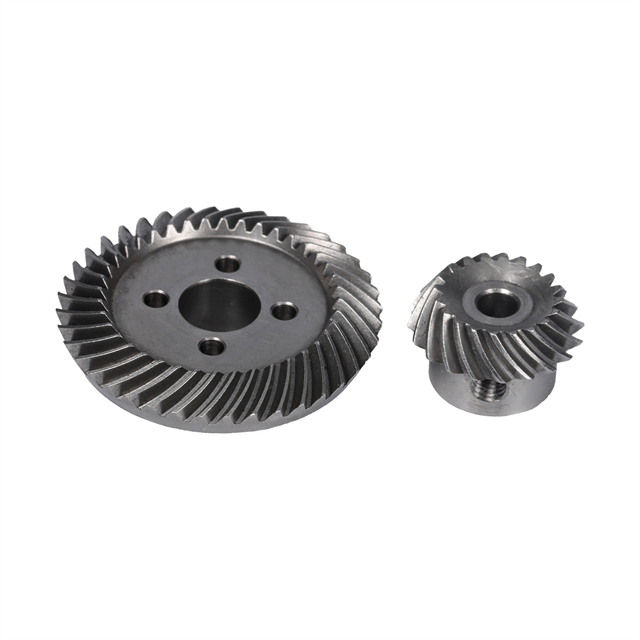
Spiral bevel gears excel at power transmission efficiency. Their curved teeth engage gradually, allowing multiple teeth to share the load simultaneously. This reduces stress on individual teeth and minimizes energy loss through friction. The result is a smooth transfer of power between intersecting shafts, often at 90 degrees, with minimal backlash. This efficiency is crucial in applications demanding high torque and speed, such as automotive differentials and aerospace propulsion systems.
Because the load is distributed more evenly, these gears can handle higher torque loads than straight bevel gears of similar size. This means equipment can operate more reliably under heavy-duty conditions without frequent breakdowns or excessive wear.
One standout benefit of spiral bevel gears is their ability to reduce noise and vibration. The gradual engagement of teeth prevents sudden impacts common in straight bevel gears, leading to quieter operation. This makes them ideal for environments where noise control matters, such as passenger vehicles, aircraft cabins, and precision industrial machinery.
The curved teeth also absorb shocks and vibrations better, enhancing operational smoothness. This smoothness extends equipment life by reducing mechanical stress and wear on connected components. Users often notice improved comfort and less maintenance downtime because of this quieter, smoother gear action.
Spiral bevel gears offer high customization potential. Manufacturers can tailor tooth geometry, spiral angle, and material composition to match specific application requirements. This flexibility allows gears to optimize performance for unique demands—whether that’s maximizing torque capacity, minimizing noise, or enhancing durability in harsh environments.
For example, aerospace gears might use specialized alloys and surface treatments to resist heat and corrosion, while industrial gears may prioritize toughness against heavy loads and contaminants. Custom designs also enable integration into complex machinery where space and alignment constraints exist.
This adaptability makes spiral bevel gears a versatile solution across industries, from automotive to heavy equipment and aerospace. Choose spiral bevel gears customized for your application’s load, speed, and environmental conditions to maximize efficiency and gear lifespan.
Spiral bevel gears require advanced manufacturing techniques. Their curved teeth and precise geometry demand CNC machining and specialized tooling. This complexity increases production time and cost compared to simpler gear types like straight bevel gears. Heat treatment and finishing processes add further expense but are necessary to ensure durability and performance.
The manufacturing process must control dimensional accuracy tightly. Even small deviations in tooth shape or alignment can cause noise, vibration, or premature wear. High-quality inspection tools like coordinate measuring machines (CMM) are essential to verify gear geometry before assembly. These factors make spiral bevel gears a more significant investment upfront, but the benefits often justify the cost in demanding applications.
Spiral bevel gears need careful maintenance to perform well over time. Proper lubrication is critical to reduce friction and wear between the mating teeth. Using the correct lubricant type and maintaining adequate oil levels helps prevent overheating and gear damage.
Alignment is another key consideration. Because spiral bevel gears mesh at an angle, precise positioning of shafts and bearings is vital. Misalignment can cause uneven tooth loading, increased stress, and accelerated wear. Regular inspections and adjustments help maintain correct alignment and prolong gear life.
Maintenance routines should also include checking for signs of wear, pitting, or scoring on gear teeth. Early detection of issues allows for timely repairs or replacements, avoiding costly downtime.
Despite their complexity, spiral bevel gears offer excellent longevity when properly maintained. Their curved teeth distribute loads evenly, reducing stress concentrations that cause wear. High-quality materials and heat treatments further enhance resistance to fatigue and surface damage.
However, these gears operate under high loads and speeds, which can lead to gradual wear over time. Contaminants in lubricant or improper lubrication accelerate this process. Environmental factors like temperature extremes and exposure to corrosive elements also affect lifespan.
To maximize longevity, it’s crucial to select gears designed for the specific operating conditions. Custom materials or coatings may be necessary for harsh environments. Consistent maintenance and monitoring ensure the gears remain reliable throughout their service life.
Spiral bevel gears differ significantly from straight bevel gears in tooth design and performance. Spiral bevels have curved, angled teeth that engage gradually, allowing multiple teeth to share the load. This results in smoother operation, less noise, and better handling of high speeds and heavy loads. Straight bevel gears, by contrast, have straight teeth that meet at an apex, causing teeth to engage all at once. This can lead to louder noise, more vibration, and higher impact loads.
Straight bevel gears are easier and cheaper to manufacture because of their simpler geometry. They work well in applications where noise reduction and smoothness aren't critical but cost and simplicity matter. Examples include power tools, agricultural machinery, and some automotive steering systems.
However, spiral bevel gears outperform straight bevels in efficiency, longevity, and quiet operation, making them the preferred choice for high-performance applications. Their curved teeth absorb shocks and vibrations better, which reduces wear and extends gear life.
Spiral bevel and hypoid gears both transmit power between shafts at angles, often 90 degrees. The key difference lies in shaft alignment. Spiral bevel gears operate on intersecting shafts, meaning the shafts meet at a point. Hypoid gears, however, work on non-intersecting, offset shafts. This offset allows hypoid gears to achieve higher gear ratios and better packaging in tight spaces, especially in automotive rear axles.
Hypoid gears also tend to handle higher torque loads and operate more quietly than spiral bevels due to their sliding tooth action. But they require more complex manufacturing and precise lubrication. Spiral bevel gears offer smoother rolling action with less sliding, which can mean less heat generation and wear in some uses.
Choosing between these two depends on space constraints, torque requirements, and desired gear ratio. Hypoid gears suit heavy-duty automotive and truck differentials, while spiral bevel gears excel in aerospace, industrial machinery, and lighter automotive applications.
Selecting the right gear type depends on multiple factors:
Load Capacity: Spiral bevel gears handle higher loads than straight bevels but may be outmatched by hypoid gears in very high torque settings.
Noise and Vibration: Spiral bevels offer quieter, smoother operation compared to straight bevels. Hypoid gears can be even quieter but need careful maintenance.
Space Constraints: Hypoid gears allow offset shafts, saving space. Spiral and straight bevels require intersecting shafts.
Cost and Complexity: Straight bevel gears are the most cost-effective and simplest. Spiral bevels involve higher manufacturing costs but offer better performance. Hypoid gears are the most complex and expensive.
Maintenance: Spiral bevel gears require precise alignment and lubrication. Hypoid gears demand even more stringent lubrication due to sliding contact.
In summary, spiral bevel gears provide a balanced solution for many industries needing smooth, efficient power transfer at an angle. Straight bevel gears fit simpler, budget-conscious needs. Hypoid gears serve high torque, compact packaging demands, especially in automotive sectors. Evaluate your application's torque, space, noise, and budget needs carefully to choose between spiral bevel, straight bevel, or hypoid gears for optimal performance and cost-effectiveness.
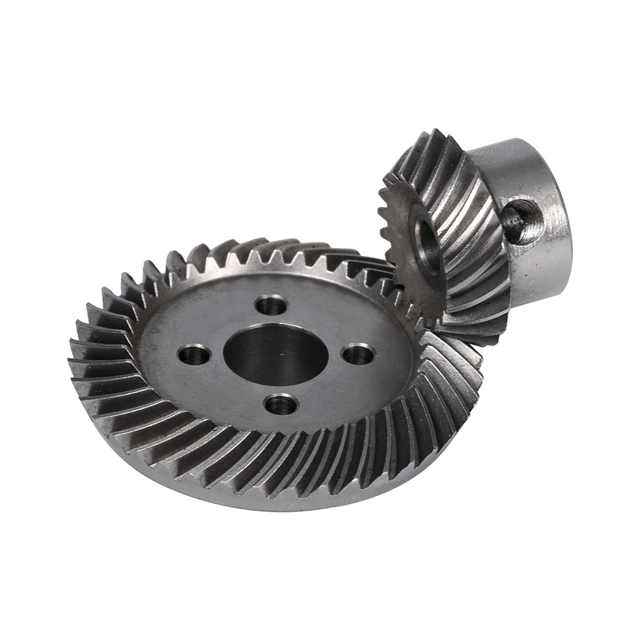
Maintaining spiral bevel gears starts with regular inspections. Check gear teeth for signs of wear, pitting, or scoring. Early detection helps prevent costly failures. Lubrication plays a vital role in reducing friction and heat. Use the recommended lubricant type, often high-quality gear oils designed for heavy loads and high speeds. Ensure oil levels stay adequate and replace lubricant periodically to avoid contamination buildup. Proper lubrication prevents metal-to-metal contact, extending gear life and maintaining smooth operation.
Correct installation is crucial for spiral bevel gears. These gears require precise alignment since their curved teeth mesh at specific angles. Misalignment causes uneven load distribution, increasing wear and noise. Use specialized tools and follow manufacturer guidelines to position shafts and bearings accurately. Tighten fasteners to specified torque values to avoid gear movement during operation. Installing gears in a clean environment reduces the risk of debris causing damage. Proper installation sets the foundation for long-lasting, efficient gear performance.
Overheating damages gear teeth and lubricant, shortening gear lifespan. To prevent this, monitor operating temperatures regularly. Use cooling systems or heat exchangers if the application generates high heat. Avoid excessive loads or speeds beyond gear specifications, which increase friction and temperature. Ensure ventilation around gear housings to dissipate heat effectively. If overheating signs appear, such as discoloration or lubricant breakdown, pause operation and investigate causes immediately. Preventive actions help maintain gear integrity and avoid unexpected downtime.
Spiral bevel gears, with their curved teeth design, offer efficient power transmission, noise reduction, and customization for various industry needs. Their application spans automotive, aerospace, and industrial machinery, providing durability and precision. As industries evolve, the demand for high-performance gears like spiral bevels will grow, emphasizing their importance in modern engineering. Yongfeng's spiral bevel gears deliver exceptional value through advanced design and manufacturing, ensuring reliable performance across demanding applications.
A: Spiral Bevel Gears are gears with curved teeth designed to transfer power between intersecting shafts, offering smooth and efficient operation.
A: The curved teeth of Spiral Bevel Gears engage gradually, minimizing sudden impacts and reducing noise and vibrations during operation.
A: Spiral Bevel Gears efficiently transfer power in drivetrains and differentials, offering quiet operation and handling high torque loads.
A: High-grade alloy steels, often treated with carburizing or nitriding, are used for Spiral Bevel Gears to enhance strength and wear resistance.


