
Views: 0 Author: Site Editor Publish Time: 2026-02-09 Origin: Site


CNC Machining304 stainless steel often appears familiar, yet it behaves very differently once the tool engages the material. Many shops treat it like mild steel and quickly encounter scrap, rapid tool wear, and unstable dimensions. These issues rarely come from the alloy itself. They usually result from process decisions that ignore how 304 responds to heat, pressure, and cutting forces. In this article, you will learn seven common mistakes in CNC Machining 304 and how experienced manufacturers avoid them to achieve stable cycles, predictable quality, and consistent production.
304 stainless steel strengthens quickly when it is compressed and heated. During CNC Machining, the cutting edge first deforms the surface before removing material. If the tool rubs instead of cutting cleanly, the surface layer hardens immediately. That hardened layer resists the next cut and accelerates tool wear. Many operators mistake this for poor tooling, but the real issue is how the material responds to inconsistent engagement. Understanding work hardening is fundamental to successful CNC Machining 304.
In CNC Machining 304, insufficient chip load causes the cutting edge to rub rather than shear. This rubbing elevates temperature at the surface while removing minimal material, which promotes rapid strain hardening in the austenitic structure. As hardness increases locally, subsequent passes experience higher cutting forces and accelerated edge wear. Low surface speed can worsen this effect by prolonging contact time. Maintaining a minimum chip thickness appropriate to tool diameter and geometry keeps the cut in a true shearing mode and limits heat-driven hardening.
Effective control of work hardening relies on continuous engagement and decisive entry conditions. Climb milling reduces rubbing at tool entry and stabilizes chip thickness. Adequate axial depth ensures the tool cuts below any previously hardened layer. Toolpaths should eliminate pauses, re-entries, and dwell at corners. Consistent feed rates through curves and transitions maintain uniform shear conditions. Together, these strategies prevent repeated cutting of hardened material and create a stable, predictable process for CNC Machining 304.
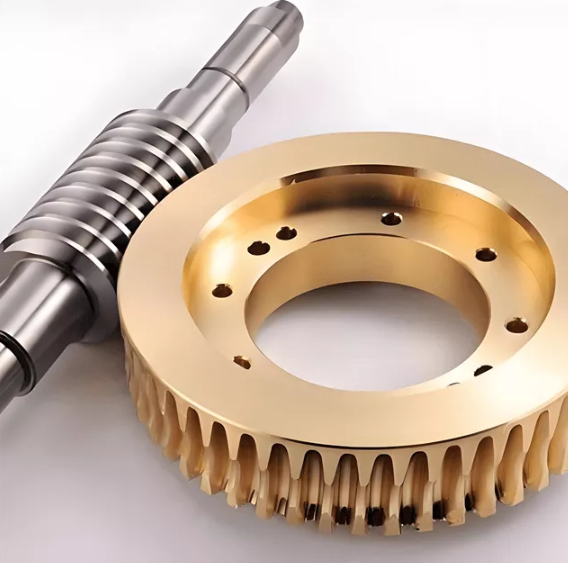
In CNC Machining 304, tool geometry defines how cutting forces are generated and controlled. Positive rake angles reduce shear stress and promote clean chip separation, which lowers heat generation and cutting pressure. Proper clearance angles prevent flank rubbing that accelerates work hardening on the machined surface. Edge preparation also matters, as overly honed edges increase compression rather than cutting. Even premium carbide performs poorly if geometry is mismatched to 304 stainless steel, making geometry the primary driver of stability, chip control, and surface quality.
Coated carbide tools offer a balance of hardness and thermal protection. Coatings such as TiAlN reduce friction and protect the cutting edge at elevated temperatures. They also help limit built-up edge, which is common in CNC Machining 304. While uncoated tools may cut well initially, coated tools maintain performance longer and support consistent production.
| Aspect | Coated Carbide Tools | Impact on CNC Machining 304 |
|---|---|---|
| Hardness | High substrate hardness combined with wear-resistant coating | Maintains edge integrity under high cutting loads |
| Thermal protection | Coatings such as TiAlN withstand elevated temperatures | Reduces heat damage at the cutting edge during CNC Machining 304 |
| Friction control | Low-friction coating surface | Improves chip flow and reduces cutting resistance |
| Built-up edge prevention | Coating limits material adhesion on the tool edge | Minimizes built-up edge, common in CNC Machining 304 |
| Tool life consistency | Stable performance over longer cutting cycles | Supports predictable tool life and consistent production |
| Production reliability | Less performance degradation over time | Improves process stability in CNC Machining 304 |
In CNC Machining 304, sharp cutting edges maintain true shearing action rather than compressive deformation. This reduces cutting force and limits heat buildup at the tool–workpiece interface. When edges dull, friction increases and the material work hardens, forcing the tool to cut a progressively harder surface. This leads to rapid wear progression and unstable surface finish. Monitoring edge wear and replacing tools before rounding occurs keeps chip formation consistent, stabilizes dimensions, and extends usable tool life across extended production runs.
Heat accumulation in CNC Machining 304 is driven by the alloy’s low thermal conductivity and high strain hardening behavior. Instead of carrying heat away, chips retain energy near the shear zone, raising cutting-edge temperature. As temperature rises, cutting forces remain high because 304 maintains strength at elevated heat levels. This combination accelerates tool wear and promotes thermal expansion in the workpiece. Even short cycles can see measurable growth, which shifts dimensions mid-process and undermines tolerance control if thermal effects are ignored.
Flood coolant cools broadly and lubricates the cut, but it often lacks the force needed to evacuate chips in tight features. High-pressure coolant delivers focused jets that penetrate the chip–tool interface, removing heat directly from the cutting edge. In CNC Machining 304, this targeted cooling prevents chip re-cutting and stabilizes cutting forces during deep pockets or slots. The improved chip evacuation reduces thermal spikes, allowing higher feed rates while maintaining surface quality and tool life.
Coolant effectiveness depends on consistency, direction, and coverage. In CNC Machining 304, poorly aimed nozzles leave hot zones that accelerate localized wear and uneven expansion. Properly aligned coolant streams maintain uniform temperature across the tool and part, reducing thermal gradients. This uniformity stabilizes tool geometry and limits part growth during machining. As a result, dimensional variation between early and late parts in a batch is reduced, improving repeatability and lowering the need for offset adjustments.
In CNC Machining 304, aggressive axial or radial engagement increases cutting forces beyond the elastic limit of the tool–holder system. As the cutter deflects, chip thickness fluctuates, which excites self-sustaining vibration known as chatter. This instability leaves repeating surface marks and accelerates edge fatigue. Because 304 stainless steel maintains strength at elevated temperatures, cutting forces remain high throughout the pass. Controlling engagement width and depth keeps deflection within predictable limits and preserves dimensional accuracy.
High-efficiency milling maintains a constant chip load by reducing radial engagement while increasing feed rate. This method lowers peak cutting forces and minimizes tool deflection in CNC Machining 304. Heat is distributed across a larger portion of the cutting edge, reducing localized wear. The stable cutting condition also allows higher material removal rates without chatter. When paired with rigid tooling and proper toolpaths, this approach improves tool life and surface consistency.
Optimizing material removal in CNC Machining 304 requires matching cutting forces to system stiffness. Excessively conservative parameters waste spindle capacity, while overly aggressive settings exceed structural limits. Evaluating tool diameter, holder rigidity, and machine power helps define a stable operating window. Within this window, consistent engagement and controlled chip thickness maximize throughput. This balance delivers efficient production while protecting tools and maintaining repeatable part quality.
Accuracy in CNC Machining 304 depends heavily on the combined stiffness of the machine, fixture, and tool system. High cutting forces generated by 304 stainless steel amplify any structural compliance, causing micro-deflection at the spindle, fixture, or workpiece interface. Even minor deflection alters tool position and leads to dimensional drift or tapered features. Rigid machine structures, well-supported fixtures, and minimal tool overhang work together to stabilize the cutting zone, ensuring consistent geometry, predictable surface finish, and repeatable results across production runs.
In CNC Machining 304, vibration rarely comes from a single cause. It usually results from the combined effects of tool length, holder stiffness, fixturing quality, and cutting parameters. By controlling these factors in a structured way, shops can significantly improve surface finish, extend tool life, and maintain dimensional stability.
| Control Area | Practical Measure | Typical Data / Metrics | Application Guidance | Key Notes |
|---|---|---|---|---|
| Tool overhang length | Minimize tool stick-out | Recommended L/D ≤ 3:1 for carbide end mills | Reduces bending and resonance during cutting | Deep cavities should be machined in stages, not with excessive overhang |
| Tool diameter selection | Use the largest feasible diameter | Increasing diameter by ~20% greatly improves stiffness | Enhances vibration resistance and lowers surface roughness (Ra) | Check internal corner radii and feature constraints |
| Tool holder type | Hydraulic or shrink-fit holders | Radial runout ≤ 3 μm (common industry target, ISO 15641) | Reduces cyclic marks and waviness on surfaces | Performance depends on correct setup and maintenance |
| Spindle runout | Control spindle nose accuracy | Target ≤ 2–5 μm for precision machining | Lower runout leads to more uniform surface texture | Older machines require periodic inspection |
| Workpiece support | Full-contact or custom soft jaws | ≥ 70% effective contact area recommended | Prevents micro-movement and localized vibration | Excessive clamping can distort thin parts |
| Clamping force | Apply controlled clamping load | Typical stainless range: 2–5 kN (size-dependent) | Balances rigidity and part integrity | Validate force carefully for thin-wall components |
| Cutting direction | Prefer climb milling | Climb milling lowers force fluctuation | Improves surface finish consistency | Machine backlash control must be adequate |
| Axial depth of cut (ap) | Reduce ap for finishing | Common finishing ap = 0.2–0.5 mm | Limits peak cutting forces and vibration | Must maintain sufficient feed to avoid rubbing |
| Radial engagement (ae) | Limit ae during finishing | ae ≤ 10–20% of tool diameter | Reduces excitation frequency and chatter risk | ae too small can increase friction and BUE |
| Spindle speed selection | Avoid resonance speed ranges | Identify via test cuts or vibration analysis | Skipping resonance zones smooths surface patterns | Resonance varies with tool and setup |
| Coolant stability | Maintain consistent coolant flow | Steady flow, no intermittent spraying | Prevents thermal vibration coupling | Poor cooling amplifies existing vibration issues |
Tip:During finishing in CNC Machining 304, reducing feed alone rarely solves vibration. Start by checking tool overhang, holder runout, and fixture support. Many surface finish issues are structural stiffness problems, not parameter limits.
Stable workholding in CNC Machining 304 requires controlling both rigidity and stress distribution. Fixtures should support the workpiece across its strongest surfaces to prevent elastic deformation under cutting forces. Clamping force must be sufficient to resist shear loads yet low enough to avoid part distortion, especially on thin walls. Repeatable datums improve positional accuracy across batches and reduce probing time. Using custom soft jaws, matched locating features, and consistent torque settings helps maintain dimensional stability while shortening setup time and improving overall process repeatability.
304 stainless steel has high ductility and a stable austenitic structure, which allows the material to plastically deform before fracturing. During CNC Machining, the chip undergoes continuous shear without clean segmentation, forming long, stringy chips. Low thermal conductivity further worsens this effect by softening the shear zone through heat accumulation. These continuous chips tend to wrap around cutters and workpieces, increasing cutting temperature and mechanical drag. Without proper control, they raise the likelihood of surface scoring, tool overload, and unplanned machine stops.
Effective chip breaking in CNC Machining 304 relies on both tooling and toolpath design. Inserts with engineered chip breakers apply localized bending stress that forces chips to curl and fracture. Toolpaths that vary engagement, such as trochoidal milling or interrupted passes, disrupt continuous chip formation. Peck drilling cycles introduce periodic relief that clears chips from the flutes. Together, these approaches reduce chip length, stabilize cutting forces, and lower thermal concentration at the cutting edge.
Chip evacuation is critical for protecting tools and maintaining cycle stability. In CNC Machining 304, recutting chips increases edge chipping and accelerates flank wear. High-pressure coolant helps lift chips away from the cutting zone, while proper tool orientation encourages gravity-assisted removal. Optimized path sequencing also prevents chip accumulation in pockets and slots. Shops that prioritize chip evacuation reduce spindle load fluctuations, avoid unexpected stoppages, and achieve more consistent machining cycles.
Surface finish should be driven by function, not by default preferences or visual expectations. In CNC Machining 304, fine finishes are technically justified when surfaces must seal against gaskets, reduce bacterial adhesion, or enable smooth relative motion. For example, sealing faces often require Ra 0.8–1.6 μm to ensure leak prevention, while hygienic components in food or medical equipment typically target Ra ≤ 0.8 μm to limit residue retention. Sliding or mating surfaces also benefit from controlled roughness to reduce friction and wear. Outside these cases, standard machined finishes often perform equally well.
Surface finish targets directly influence cutting strategy and tool loading. Achieving lower Ra values in CNC Machining 304 requires reduced feed rates, smaller stepovers, and lighter axial depths of cut. These conditions increase spindle engagement time and concentrate heat at the cutting edge, accelerating flank wear and edge rounding. Fine finishing passes may double or triple machining time compared to standard finishes. Additionally, tools dedicated to fine finishes often require earlier replacement to maintain consistency. Understanding this relationship helps teams evaluate whether tighter surface specifications deliver real functional value.
Cost-effective finish planning begins at the design and process review stage. Engineers should specify surface roughness only on features where it directly affects performance, leaving non-critical surfaces at default machining finishes such as Ra 3.2 μm. In CNC Machining 304, grouping finishing operations and selecting tools optimized for light cutting improves efficiency. Consistent finish targets across similar features also reduce setup complexity and tool changes. By aligning surface requirements with actual functional demands, manufacturers improve throughput while maintaining predictable quality and cost control.
This article shows how avoiding seven common mistakes makes CNC Machining 304 more stable and predictable. Proper control of work hardening, tooling, heat, rigidity, chip flow, and surface finish reduces scrap and tool wear. These practices support consistent quality and efficient production. Dongguan Yongfeng Gear Co., Ltd. applies these principles through precise machining, reliable processes, and professional services, helping customers achieve durable parts, controlled costs, and dependable delivery in CNC Machining 304 projects.
A: CNC Machining 304 involves work hardening and heat buildup, which increase tool wear and dimensional instability.
A: In CNC Machining, low chip load causes surface hardening, making subsequent cuts more aggressive.
A: CNC Machining 304 benefits from sharp, coated carbide tools with proper geometry and stable holders.
A: Yes, CNC Machining 304 performs better with consistent coolant flow to control heat and chip evacuation.
A: Poor rigidity in CNC Machining leads to vibration, poor surface finish, and reduced accuracy.


