
Views: 0 Author: Site Editor Publish Time: 2025-12-18 Origin: Site


When designing custom gears, one of the first decisions engineers face is selecting the right hardness. Is higher HRC always the best option? While higher hardness improves wear resistance, it can also introduce challenges like brittleness and increased costs. In this article, we'll explore the balance between high hardness and gear performance, helping manufacturers make better decisions for their custom gear designs.
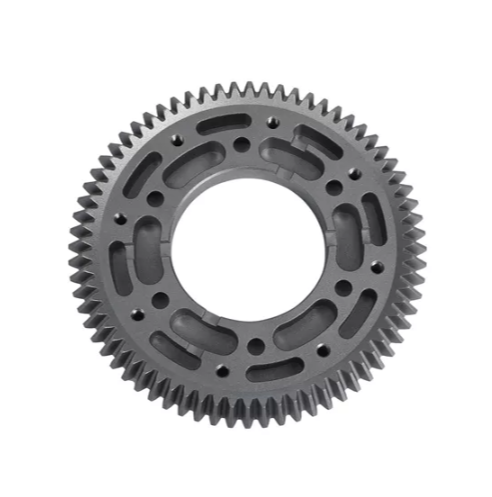
Hardness is a key factor in the performance of steel gears. The Rockwell Hardness Scale (HRC) is commonly used to measure how resistant a material is to permanent deformation. Harder gears resist wear and abrasion better, making them ideal for applications with high-contact stresses. However, it is essential to evaluate whether a higher HRC always translates into better performance, especially in gear manufacturing.
For custom gears, selecting the appropriate hardness is crucial to ensure that they meet the specific requirements of the intended application, from load-bearing capacity to shock resistance. Understanding the impact of hardness on gear performance allows manufacturers to make better material choices and avoid over-specifying hardness for certain applications.
Gears operate under significant stress, and higher hardness improves wear resistance, ensuring the gear can function for longer without significant surface degradation. This is particularly true for gears used in high-load applications, such as automotive transmissions, heavy machinery, and robotics, where gears face constant friction and wear. However, hardness can be a double-edged sword. While it increases resistance to wear, it can reduce toughness, making the gear more susceptible to fracture under sudden impacts or shock loading.
Designing custom gears requires balancing the need for wear resistance with the potential brittleness introduced by higher hardness. Hardness should be selected based on the specific conditions in which the gear will operate.
The primary benefit of higher hardness in gears is its impact on wear resistance. Harder materials resist surface degradation better, which means the gear can last longer in high-load applications. For example, gears in industrial equipment, automotive transmissions, or heavy-duty machinery benefit significantly from higher hardness levels (typically between HRC 55-60). These applications demand maximum performance and long-term durability, which high hardness helps to achieve.
However, in some custom gear designs, where the operational conditions do not demand extreme wear resistance, a lower HRC may be more cost-effective. For instance, HRC 48-52 is often sufficient for moderate-duty gears, reducing unnecessary manufacturing costs while still ensuring the required performance.
In cases where gears are subject to less aggressive wear conditions, such as low-speed machinery or infrequent usage, higher hardness may provide diminishing returns. A more balanced hardness range, such as HRC 45-50, might provide the optimal performance while maintaining cost efficiency.
Hardness is closely tied to a gear's fatigue strength. As hardness increases, so does the gear's ability to withstand cyclic loading. This is particularly important in continuous-duty applications, such as conveyor systems or industrial robots, where gears face repeated stress cycles. Gears made from higher hardness materials can resist surface fatigue for longer, reducing the need for frequent maintenance or replacements.
However, custom gears designed for intermittent-duty applications, such as manual tools or low-speed machinery, might not benefit from higher hardness and could instead benefit from a balance of strength and toughness. In these cases, a gear designed with sufficient toughness will handle occasional impacts without the risk of sudden failure, while still offering adequate wear resistance.
While increasing hardness improves wear resistance, it also makes gears more brittle. This trade-off between hardness and toughness is crucial in custom gear applications where impact resistance is essential. For gears exposed to shock loads, such as in automotive drivetrains or construction equipment, too high a hardness level could cause them to fail prematurely.
Engineers need to consider the specific application demands, balancing the need for wear resistance with the risk of brittleness. In applications where shock loading is frequent, such as in mining machinery or heavy-duty transmissions, gears made with slightly lower hardness might be preferable to avoid failure under impact.
In high-load applications, such as heavy machinery, high torque transmissions, or automotive gears, higher hardness levels are often necessary. These gears are subjected to continuous stress, where enhanced wear resistance can significantly extend their service life. For example, carburized steel with hardness in the range of HRC 58-62 is commonly used in such applications. This ensures that the gear can withstand high forces and maintain smooth operation over an extended period.
For custom gears in heavy-duty settings, selecting the right steel material is just as important. Carburized steels, such as 20CrMnTi or 18CrNiMo7-6, offer excellent wear resistance, particularly in gears exposed to high contact stress. These materials are designed to provide a hard, durable surface with a tough core, making them ideal for high-load applications.
For gears used in moderate-duty or low-load applications, such as light machinery or manual tools, extremely high hardness may not provide any additional benefit. In fact, it could increase manufacturing costs and machining difficulty.
For example, a gear in an industrial conveyor system or a mixer may perform optimally with a hardness level between HRC 48-52. These custom gears are not subjected to the same extreme conditions as high-load applications, and so a balance of toughness and wear resistance is more appropriate.
In low-load or intermittent-duty applications, reducing the hardness slightly can help keep costs down while maintaining adequate performance. A gear with a hardness in the HRC 45-50 range is often sufficient, providing a good balance between cost and durability.
For a clearer comparison, here's a table showing the recommended hardness ranges for different gear applications:
| Application Type | Recommended HRC Range | Typical Gear Materials |
|---|---|---|
| High-load (Heavy machinery, Automotive) | HRC 55-60 | Carburized Steel (20CrMnTi) |
| Moderate-load (Conveyors, Mixers) | HRC 48-52 | 4140 Alloy Steel, 1045 Carbon Steel |
| Low-load (Manual tools, Low-speed machinery) | HRC 45-50 | 1045 Carbon Steel |
While hardness improves wear resistance, it also makes gears more brittle. Gears with HRC values above 60, for instance, can resist surface wear excellently but may crack or chip under shock loads. For custom gears used in equipment that experiences sudden, unpredictable impacts (such as in power tools or construction vehicles), this brittleness can lead to failure.
In these cases, engineers need to ensure that the hardness level matches the expected stress levels. Gears exposed to frequent impact or misalignment should prioritize toughness, even if it means sacrificing some wear resistance.
Harder gears are more difficult to machine, and this can significantly increase manufacturing costs. High hardness levels require more advanced machining tools, slower cutting speeds, and specialized equipment. This is particularly relevant for custom gear manufacturers who need to manage production timelines and costs effectively.
For example, machining a gear with a hardness of HRC 60 requires tools made of carbide or even ceramic, which are much more expensive and wear out quickly compared to standard tools used for softer materials. This increased cost can make high-hardness gears impractical for some applications, especially when lower hardness levels would suffice.
The assumption that higher hardness always translates into a longer gear life is not always true. In many applications, the cost of increasing hardness may outweigh the performance benefits. For custom gears designed for low-speed or intermittent use, a moderate hardness range (HRC 48-52) provides the best value, balancing durability with cost-efficiency.
Even for high-load applications, over-specifying hardness may not provide significant improvements in performance. The wear resistance benefit gained by increasing hardness might be minimal in certain applications, especially when the gear is already functioning well at a lower hardness level.
Selecting the right steel is crucial for achieving the desired hardness in gears. Different types of steel respond to heat treatment in various ways, and it's important to match the steel material with the intended hardness range.
| Steel Grade | Hardness Range (HRC) | Best Use Case | Typical Applications |
|---|---|---|---|
| 1045 Carbon Steel | HRC 45-50 | Moderate-duty applications | General mechanical parts |
| 4140 Alloy Steel | HRC 50-55 | High-load applications | Gear shafts, heavy machinery |
| Tool Steels | HRC 55-62 | High-wear applications | Cutting tools, automotive gears |
For custom gears, materials like 4140 alloy steel or carburized steels are often used for high-performance applications, where both hardness and toughness are required. Selecting the correct steel ensures that the gear performs well under stress while maintaining durability.
When choosing steel for gears, consider the operational conditions, load requirements, and manufacturing processes. For custom gears, using a material with the appropriate hardness ensures that the gear performs as expected without compromising on toughness or increasing production costs unnecessarily.
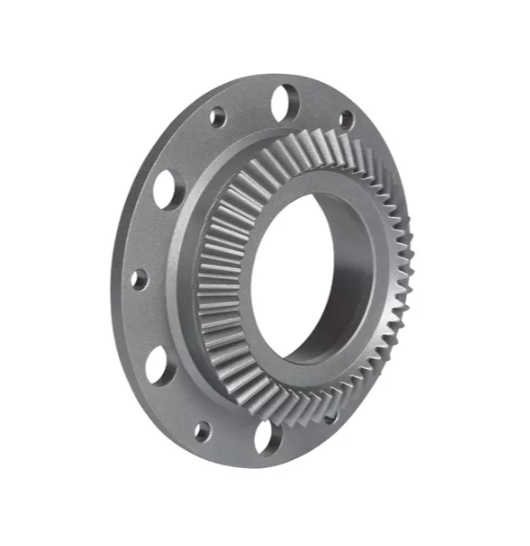
There are several heat treatment methods used to achieve the desired hardness in steel gears:
| Heat Treatment Method | Hardness Achievable (HRC) | Best Use Case | Advantages |
|---|---|---|---|
| Induction Hardening | HRC 50-55 | Localized surface hardness | Minimal distortion, fast process |
| Carburizing | HRC 60-63 | High-wear applications | Excellent surface hardness, tough core |
| Through-hardening | HRC 45-55 | Moderate-duty applications | Uniform hardness, cost-effective |
For custom gears, selecting the right heat treatment method is critical to balancing hardness, wear resistance, and dimensional stability.
Choose the heat treatment method based on the gear's requirements. For gears exposed to high wear conditions, carburizing provides maximum surface hardness, while through-hardening offers uniform properties for moderate-duty gears. Induction hardening is ideal for applications that require minimal distortion and moderate hardness.
When designing custom gears, the operational conditions—such as load, speed, and expected service life—should guide the selection of hardness. For instance, gears in low-speed applications may only need a moderate hardness range (HRC 45-50), while high-speed or heavy-duty gears may require HRC 55+.
Each custom gear design is unique, and the selection of both material and hardness should align with the specific needs of the application. For example, gears in automotive applications may require a higher HRC for wear resistance, while those in agricultural machinery may prioritize toughness over hardness.
In summary, higher HRC values can improve wear resistance but may also lead to brittleness and higher machining costs. It is crucial to select the right hardness based on the gear's intended use and material properties. For custom gears, balancing performance, durability, and cost is key. By choosing the appropriate hardness and material, manufacturers can optimize gear performance without unnecessary expenses.
When designing custom gears, always consider factors like load, speed, and impact. Over-specifying hardness can result in higher costs without substantial performance gains.
At Dongguan Yongfeng Gear Co., Ltd., we specialize in providing high-quality custom gears that balance precision and durability. Our products offer excellent wear resistance while minimizing costs, ensuring maximum performance for your gear applications.
A: HRC stands for Rockwell Hardness Scale, which measures a material's resistance to deformation. For steel gears, a higher HRC value means better wear resistance, but it may also increase brittleness. For custom gears, selecting the right HRC based on the application is essential.
A: Not necessarily. Higher HRC improves wear resistance but can reduce toughness, making gears more brittle. For custom gears, it's important to balance wear resistance with toughness to meet specific operational conditions.
A: Hardness affects wear resistance and fatigue strength. For custom gears, higher hardness can extend gear life in high-load applications but may lead to brittleness under shock loads. Proper hardness selection is crucial for optimal performance.
A: Lower hardness levels can reduce manufacturing costs and machining difficulty. For custom gears in low-load or moderate-duty applications, a balance between toughness and wear resistance is often more effective than high hardness.
A: Higher HRC often increases production costs due to harder materials and more complex machining processes. For custom gears, it's essential to evaluate if the additional hardness is necessary for the application to avoid unnecessary costs.
A: To select the right hardness for custom gears, consider the application’s load, speed, and impact conditions. Higher HRC is best for high-wear, high-load applications, while lower HRC can be sufficient for lighter-duty gears.


