
Views: 0 Author: Site Editor Publish Time: 2025-11-27 Origin: Site


Have you ever wondered how machinery transfers power so efficiently? Spur gears play a crucial role in this process. These mechanical marvels are fundamental in industrial applications, ensuring smooth and reliable power transmission. In this guide, you'll learn what spur gears are, their importance in industry, and how they function. We'll explore their design, applications, and benefits, providing a comprehensive understanding of these essential components.
Spur gears are the simplest type of gear. They have straight teeth that are parallel to the gear’s axis. This design makes them easy to produce and efficient in transferring power. They work by meshing one tooth at a time, which creates a positive and constant speed ratio between gears. However, this also means they can be noisy during operation, especially at high speeds.
Key characteristics include:
Straight, parallel teeth
Constant velocity ratio
High power transmission efficiency (95%–99%)
Simple design and easy to manufacture
Noise generation at higher speeds
A typical spur gear consists of several main parts:
Teeth: The raised portions that mesh with another gear’s teeth to transmit motion.
Pitch Circle: The imaginary circle where the teeth of two gears effectively engage.
Root Circle: The base circle beneath the teeth.
Face Width: The width of the gear teeth, which affects load capacity.
Bore: The central hole that fits onto a shaft.
Hub: The thickened center area around the bore, providing strength and mounting support.
The teeth are designed with an involute profile, which ensures smooth and constant transmission of motion. This profile reduces slipping and maintains a constant angular velocity ratio.
Spur gears differ from other common gear types mainly in tooth design and performance:
| Gear Type | Tooth Orientation | Noise Level | Efficiency | Typical Use |
|---|---|---|---|---|
| Spur Gear | Straight, parallel | Higher | Very high (95-99%) | Low to moderate speed applications |
| Helical Gear | Angled (helix) | Lower | High | High-speed, quieter operation (e.g., automotive) |
| Bevel Gear | Conical teeth | Moderate | Moderate | Transmit motion between intersecting shafts |
| Worm Gear | Screw-like teeth | Low | Lower | High reduction ratios, compact spaces |
Spur gears are preferred when simplicity, cost-effectiveness, and high efficiency are priorities. However, for quieter and smoother operation, especially at high speeds, helical gears are often chosen.
Tip: When designing or selecting spur gears, ensure the gear teeth profile matches the required load and speed to avoid excessive noise and wear.
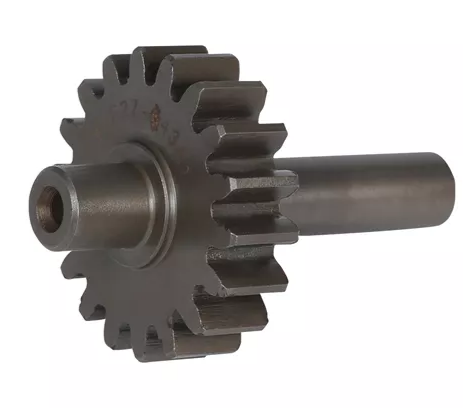
Spur gears are widely used in various types of machinery due to their straightforward design and reliable performance. They serve as essential components in equipment that requires precise power transmission between parallel shafts. Common machinery applications include:
Machine Tools: Spur gears help control motion and speed in lathes, milling machines, and drills, ensuring accuracy and repeatability.
Industrial Mixers: They transfer torque efficiently to mix materials uniformly.
Printing Presses: Spur gears synchronize rollers for consistent print quality.
Packaging Equipment: They drive conveyors and mechanical arms for fast, precise packaging processes.
Their ability to maintain a constant velocity ratio makes them ideal for machines where timing and coordination are critical.
In automotive transmissions, spur gears often appear in manual gearboxes and auxiliary systems. They provide reliable torque transfer between engine and wheels. Key roles include:
Gear Reduction: Spur gears reduce engine speed to suitable wheel speeds, improving fuel efficiency.
Torque Multiplication: They increase torque for acceleration and climbing.
Synchronization: Spur gears mesh with synchronizers to enable smooth gear shifts.
Though helical gears are more common for quiet, high-speed operation, spur gears remain valuable for their simplicity, cost-effectiveness, and robustness in certain transmission stages.
Conveyor systems rely heavily on spur gears to drive rollers and belts, moving products smoothly across manufacturing lines. Their straightforward design allows easy integration and maintenance in conveyor drives. Additional industrial uses include:
Gear Pumps: Spur gears provide precise fluid flow control in hydraulic and lubrication systems.
Material Handling Equipment: They power hoists, cranes, and lifts, offering dependable load bearing.
Agricultural Machinery: Spur gears transmit power in tractors, harvesters, and seeders.
Robotics: Used in robotic arms and actuators for simple, repeatable movements.
Their versatility and efficiency make spur gears a backbone component across numerous industrial sectors. When selecting spur gears for industrial applications, consider the operating speed and noise tolerance to ensure optimal performance and longevity.
Spur gears are known for their high efficiency, typically transferring power with minimal loss—often between 95% and 99%. Their straightforward tooth design ensures smooth and consistent motion transfer without slippage. This reliability makes them ideal for applications demanding precise speed ratios and torque control. Because their teeth mesh one at a time, spur gears maintain a constant velocity ratio, which is critical for accurate mechanical timing.
One of the biggest advantages of spur gears is their cost-efficiency. Their simple geometry allows easy manufacturing using standard machining processes, reducing production time and expenses. This simplicity also means fewer components and less complexity during assembly and maintenance. As a result, spur gears often cost less than more complex gear types, like helical or bevel gears, making them a budget-friendly choice for many industrial applications.
Spur gears are built to last. Their robust design and materials—typically hardened steel or other durable metals—allow them to handle high loads and resist wear over time. Properly maintained spur gears can operate reliably for years, even in demanding industrial environments. Their straightforward tooth profile also makes inspection and maintenance easier, helping prevent premature failure due to wear or damage.
Regularly check lubrication levels and gear alignment to maximize spur gear efficiency and extend their operational lifespan.
Manufacturing spur gears starts with precise design and engineering. Engineers use advanced CAD (Computer-Aided Design) software to create detailed models of the gear teeth, pitch circle, and hub. This digital design ensures accuracy in tooth shape, size, and spacing, which is critical for smooth gear meshing and optimal performance. The involute tooth profile is carefully modeled to maintain a constant velocity ratio and minimize wear.
Engineering teams also analyze load requirements, speed, and torque to select the appropriate gear dimensions. Simulation tools help predict gear behavior under different conditions, reducing the risk of failure. This stage is essential to produce gears that meet specific industrial application demands.
Material choice directly affects a spur gear’s durability and efficiency. Common materials include:
Steel: Often case-hardened for wear resistance and strength.
Stainless Steel: Used for corrosion resistance in harsh environments.
Brass: Suitable for lower load and quieter operation.
Plastics (e.g., POM, Acetal): Used in light-duty applications where noise reduction and cost savings are priorities.
Steel remains the most popular due to its strength and longevity. Once the material is chosen, precision machining begins. CNC (Computer Numerical Control) machines cut the gear teeth to exact specifications. Processes like hobbing, shaping, or milling create the straight teeth typical of spur gears.
Heat treatment may follow machining to enhance hardness and wear resistance. This step prolongs gear life, especially in heavy-duty industrial uses.
After manufacturing, spur gears undergo strict quality inspection to ensure they meet design standards. Key checks include:
Dimensional Accuracy: Verifying tooth size, pitch, and profile using gear measurement tools.
Surface Finish: Ensuring smooth tooth surfaces to reduce friction and wear.
Hardness Testing: Confirming material treatment success for durability.
Runout and Concentricity: Checking alignment to prevent vibration and noise.
Some gears undergo dynamic testing, simulating real operational loads to assess performance under stress. Any defects found lead to rework or rejection, maintaining high-quality output. Employing precision CAD design and CNC machining coupled with rigorous inspection ensures spur gears deliver reliable, long-lasting performance in demanding industrial settings.
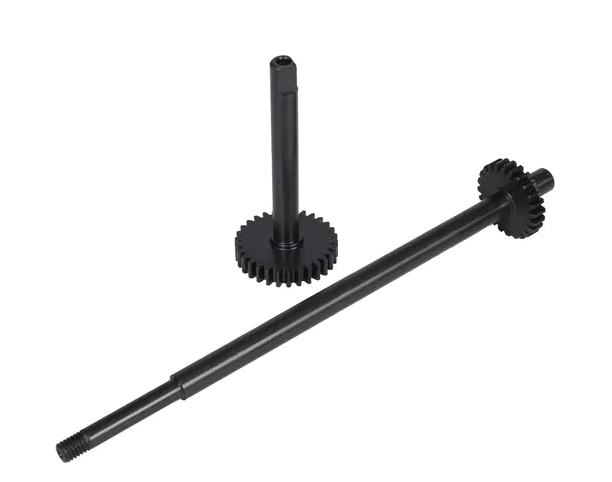
Selecting the correct spur gear starts with understanding key size parameters. The module is crucial—it defines the size of the gear teeth and is the ratio of the pitch diameter to the number of teeth. Gears must share the same module to mesh properly.
Other important size factors include:
Number of Teeth: Affects gear ratio and torque transmission.
Pitch Diameter: The diameter of the pitch circle where teeth engage.
Face Width: Influences load capacity and strength.
Bore Diameter: The hole size for mounting on a shaft.
Hub Diameter: Adds support and affects mounting stability.
Choosing the right size ensures smooth meshing, reduces wear, and prevents noise or vibration. Incorrect sizing can cause gear teeth to stick, wear prematurely, or damage the system.
Material choice impacts durability, noise, cost, and application suitability.
Metal Spur Gears: Typically made from steel or stainless steel. They offer high strength, wear resistance, and handle heavy loads well. Case-hardened steel gears resist surface wear, ideal for high-torque applications. Metals are preferred in demanding industrial environments.
Plastic Spur Gears: Made from materials like POM (acetal) or nylon. They are quieter, lighter, and cost-effective for low-load, low-speed uses. Plastic gears resist corrosion and require less lubrication but aren't suitable for high torque or heavy-duty tasks.
Choosing between metal and plastic depends on load requirements, operating environment, noise sensitivity, and budget.
Compatibility extends beyond size and material. Consider:
Pressure Angle: Commonly 20°, it affects tooth shape and load distribution. Mating gears must share the same pressure angle.
Gear Alignment: Proper shaft alignment prevents uneven wear and noise.
Operating Speed: Spur gears perform best at low to moderate speeds; high speeds may increase noise and wear.
Load Capacity: Ensure the gear can handle expected torque and shock loads.
Lubrication Needs: Proper lubrication extends gear life and maintains efficiency.
Matching these factors ensures reliable gear operation and long service life. Always verify that mating spur gears have matching modules and pressure angles to guarantee smooth engagement and prevent premature failure.
Regular lubrication is crucial for spur gears to perform efficiently and last longer. Lubricants reduce friction between the gear teeth, preventing excessive wear and heat buildup. Without proper lubrication, metal surfaces grind against each other, causing premature damage and potential gear failure. Using the right type of lubricant—such as gear oils or grease formulated for spur gears—ensures smooth operation and minimizes noise.
Lubrication also helps protect gears from corrosion and contaminants. In industrial settings, where dust and debris are common, a good lubricant forms a protective barrier. The frequency of lubrication depends on operating conditions, load, and speed. High-speed or heavily loaded gears may require more frequent lubrication checks.
Routine inspection is essential to catch early signs of wear or damage. Look for:
Tooth wear or pitting: Small cracks or surface flaking on teeth indicate stress.
Misalignment: Uneven wear patterns suggest shafts or gears are not properly aligned.
Noise or vibration: Unusual sounds during operation can signal gear issues.
Lubricant condition: Dirty or depleted lubricant reduces protection.
Early detection allows timely maintenance, preventing costly downtime. Use visual checks and, if possible, gear measurement tools to monitor tooth profile and backlash. Align shafts carefully to avoid uneven load distribution that accelerates wear.
To maximize spur gear lifespan:
Maintain proper lubrication: Follow manufacturer guidelines for lubricant type and schedule.
Ensure correct alignment: Use precision tools during installation and check alignment regularly.
Control operating conditions: Avoid sudden shocks or overloading beyond gear capacity.
Keep gears clean: Prevent dirt and debris buildup around gear teeth.
Monitor temperature: Excessive heat can degrade lubricant and gear material.
Implementing these practices reduces downtime, lowers maintenance costs, and keeps your machinery running smoothly. Schedule regular lubrication and inspection routines to detect wear early and extend spur gear service life significantly.
Spur gears, with their straightforward design and high efficiency, are vital in various industrial applications. They excel in power transmission, offering reliability and cost-effectiveness. As industries evolve, spur gears may integrate advanced materials and technologies for enhanced performance. Choosing the right spur gear involves considering size, material, and compatibility. For top-quality spur gears, Yongfeng provides exceptional products tailored to industrial needs, ensuring durability and efficiency. Their expertise in gear manufacturing guarantees long-lasting solutions for diverse applications.
A: Spur gears are the simplest type of gears with straight, parallel teeth, used for efficient power transmission between parallel shafts.
A: Spur gears are used in machinery like machine tools and industrial mixers for precise power transmission and motion control.
A: Spur gears offer high efficiency, cost-effectiveness, and simplicity, making them ideal for low to moderate speed applications.
A: Use proper lubrication and ensure correct alignment to minimize noise in spur gears during operation.


